Americans fall into a spiral of fall. “You can't stand it for a long time”

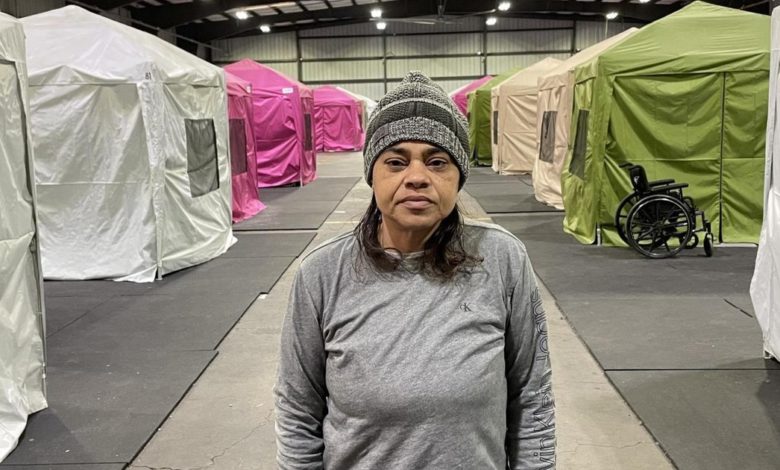
When George Waltz was the first time to be homeless, he was only 16 years old. “My parents were drunkards,” says a man with a long white beard. Because of violence, he decided that he would feel safer outside the home. He couldn't stay there anymore.
Accidents at work in a sawmill destroyed his knees. Private problems have also arisen. It is seven years without a roof over the head, and life on the streets of Eugene, Oregon finished him.
Walking around Eugene, you can see people with shopping carts and plastic bags on almost every corner. Confused people talk to each other, cry, scream and wander confused on the pavements.
Due to the situation in Eugene and Portland, the governor of Oregon Tina Kitek announced a state of emergency throughout the state and turns on that the problem of homelessness appears on the headlines throughout the country.
Eugene became the same symbol of the crisis of homelessness in the United States. But many other large cities in the whole country are also struggling with the problem – their authorities are not able to help properly.
– I was robbed several times. I could never rest because I was always afraid. Depression and mental problems came with fear – recalls George Waltz. He hated himself, lost his mental balance and shouted at passers -by on the street.
“Now I am a mentally ill man,” he says.
Symbol of American homelessness
In Eugene, stories such as George Waltz's story are common. The city in the forests of Oregon gained sad publicity in the US in 2019 – as a commune with the largest number of homeless people in relation to the general population. 3 thousand 575 people at 175 thousand There are nowhere to live here.
Where does this crisis come from? The answer is given by someone who has been dealing with this problem for decades. Terry McDonald is almost a tycoon in local social care.
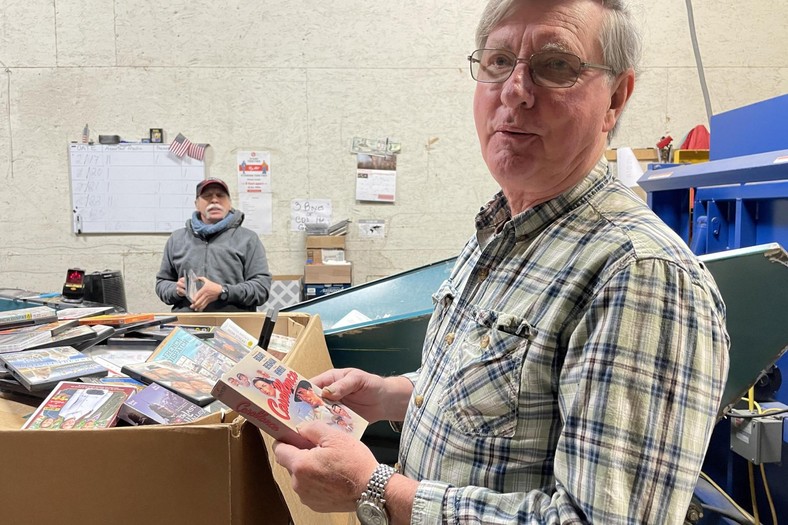
Entrepreneur Terry McDonald
His organization conducts, among others Several shelters for the homeless in Eugene, maintain a company dealing with recycling and mail order sale of books, and also builds housing complexes for social apartments. And yet even he can only help to a limited extent – there are simply too few apartments.
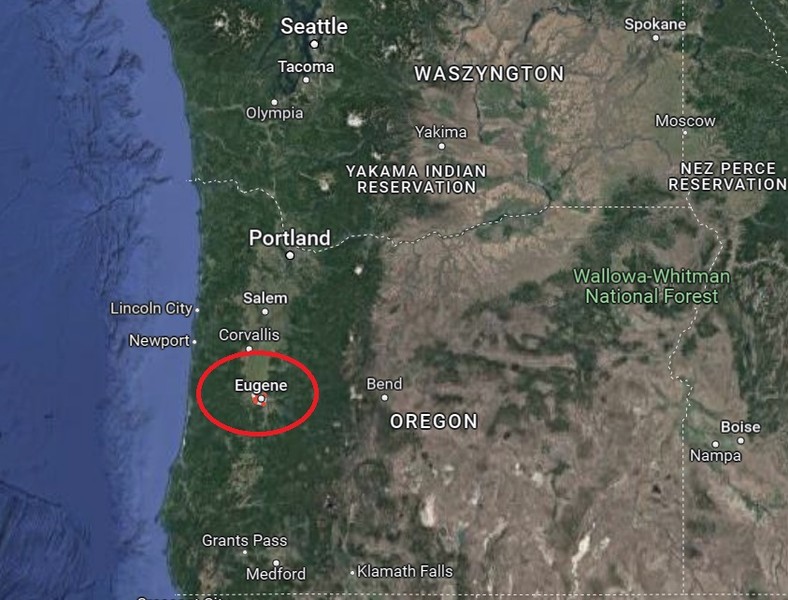
Eugene, Oregon. (Google Maps)
“Over the past 20 years, demographics have changed a lot here,” he says. – Oregon lies between Bay Area (California) and Seattle (Washington) technological metropolises – those who cannot afford a house move here – he says. There are few apartments. Prices are rising – according to state law, the landlord can raise monthly fees by up to 14.6 percent this year.
Stalemate
Inflation and an increase in rents make the purchase of a house or renting an apartment even more impossible than before. This problem occurs in many places in the USA. In Oregon itself, the governor estimates that over 36,000 will be needed in the next decade. new homes a year to meet housing needs.
However, building lands are expensive. McDonald estimates that new buildings cost slightly below 2.5 thousand. hole. In addition, there is a lack of government support infrastructure on the west coast of the USA. That is why the Terrego Foundation works like a company. “We must be solid to generate resources,” says McDonald, proudly talking about the success of his numerous ventures.
The rest of the text is under video material.
Older people are particularly affected homelessness. People who can no longer afford rent or receive too low pensions because they were unable to build their own financial reserves.
Collapse
Many people lost their homes during a serious forest fire in 2020, others live in damaged camping trailers, where more and more apartments are becoming unfit for living. However, to create apartments for them, money is needed. And these are not there. “We simply can't force ourselves to raise taxes in this country,” says McDonald.
– When you live at home normally, you can think about what you want to do in a month and plan your life. When you are homeless, the horizon of your life is limited to the next hours. Where can I sleep safely today, where is the heat?
“You can't stand it for a long time without falling into a mental illness,” says McDonald. Drugs and alcohol only seemingly provide a bit of comfort in such situations. Therefore, it is extremely important for people to return to the shelter in six months – to prevent a spiral of falling.
Needed from all over the country
In smaller and much more conservative cities of Oregon, which cannot afford social infrastructure or do not want it, the police encourage the homeless to move to Eugene.
Sometimes, however, people in need come to Eugene from places thousands of kilometers away in the US, because the news spread that help is available here. Casandra Johnson also does not come from this region, but from more than 3,000 km. Sad circumstances brought a 48-year-old to Eugene.
As a small woman says, after the death of her son her life fell apart. She wanted to go to Seattle properly to take her life there – as far as possible from her son's death. He still carries his ashes with him.
On the train before Eugene she fainted and got stuck in Oregon. He has been living in Eugene for a month and a half. Initially, she stayed in a shelter that offers a roof over her head only at night. “When it was really cold, I put on a few jackets and pants or heated in the city library,” he says.
Despite this, she stayed in the city – also due to the help available here. Now he is treated for schizophrenia and many other health problems: diabetes, gastrointestinal disorders, arthritis. Johnson suffers from so many diseases that it is difficult for her to mention them.
Local entrepreneurs frustrated
How does the city community deal with the crisis, which is the first association about Eugene in the rest of the country? One of the social workers talks about his frustration of the city authorities. – We have been a blue (democratic) city for decades and nothing is improving. They are doing something wrong!
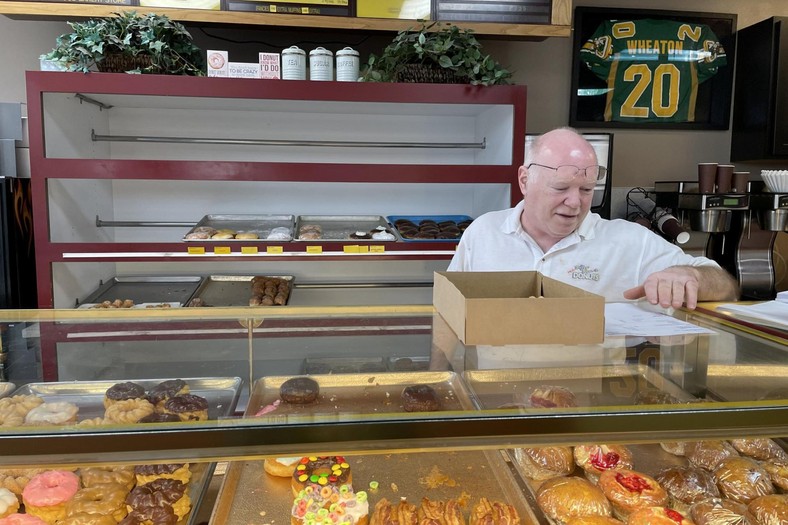
Dean Weaver is the owner of a donut store in Eugene
Local owners of companies such as Dean Weaver are also frustrated, who has been running a donut bakery in the western part of the city for decades. He says that in the last five years the situation has become worse. – People come to the store and throw syringes with heroin into the toilet. Sometimes they scream at my employees or defecate in front of the store door.
He says that the authorities do nothing about it. “They once arrested you for the invasion,” recalls Weaver. Now the police almost never take action against interfering with order. And even if criminals are arrested, “they are happy with it. At least there is a hot shower in prison.” Without fear of punishment, many homeless would feel encouraged to have destructive behavior.
Although social media are full of residents' complaints about theft, harassment and littering of the city, which the homeless commit, hardly anyone has the courage to express their anger because of neglecting public space. However, the nerves of some Eugene residents, including Dean Weavera, seem strained.
Pessimistic perspectives
Last fall, a recording appeared on the internet, on which he wraps the homeless woman in front of his store. Weaver claims that he only tried to extinguish the fire that she started in front of his store. In retrospect, you cannot reproduce exactly how the incident occurred. There is no fire on the recording, but you can hear WEAVER saying: “Don't set fire to here.”
After the incident on the internet, there were calls for a boycott and angry phones to the donut store. “But most of them came from outside the state,” recalls Weaver. He says that his steel customers remained loyal, but other businessmen were afraid.
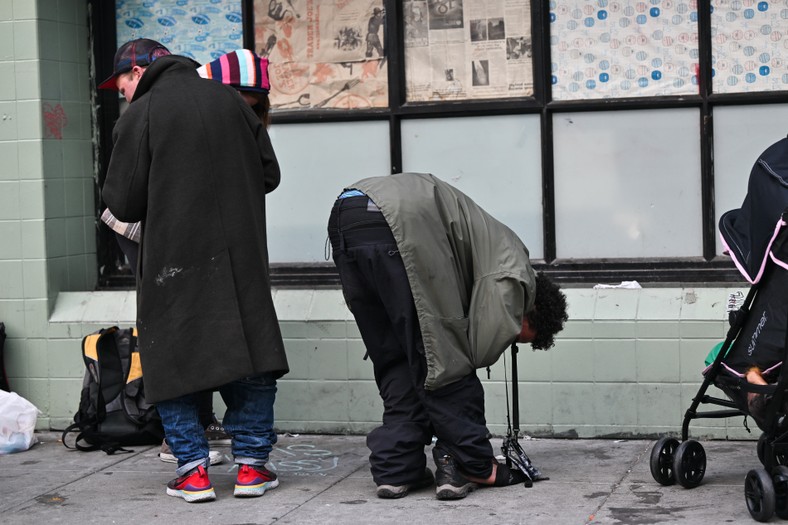
Homeless people in San Francisco
Some companies have already been closed due to a lack of public order, says the shopkeeper. Weaver still wants to stay. Dączczka business is the work of his life. – I want my children to take over him when they grow up.
Meanwhile, the local scene of non -governmental organizations is afraid that the situation will get worse. Serious money from Covid -19 aid packages will be used until 2025 – says a social worker.
Spark of hope
There are also fewer and fewer apartments. Organizations have neither enough sleeping places or enough employees. These complaints can also be heard in other American cities. Employees are exhausted and suffer, aware that they cannot help everyone.
But there are also stories of success in Eugene. George Waltz received a room in a protected apartment from Sheltercare. After seven years spent on the street, he has a roof over his head again. He takes medicine for depression and can organize his thoughts.
For the first time in his life, he looks positively to the future and dreams of a house with a veranda, in which he will finally find peace. Casandra Johnson also feels good care and believes that he can find a way back to a stable life. He doesn't think about suicide anymore.