2025-05-13 17:44
publication
2025-05-13 17:44
According to the Minister of Finance Andrzej Domański in Europe, the myth of the strength of the Russian economy falls. In his opinion, among the Member States, the belief is growing that sanctions are acting, and this in turn increases their readiness to further steps, including to reach for frozen Russian assets.
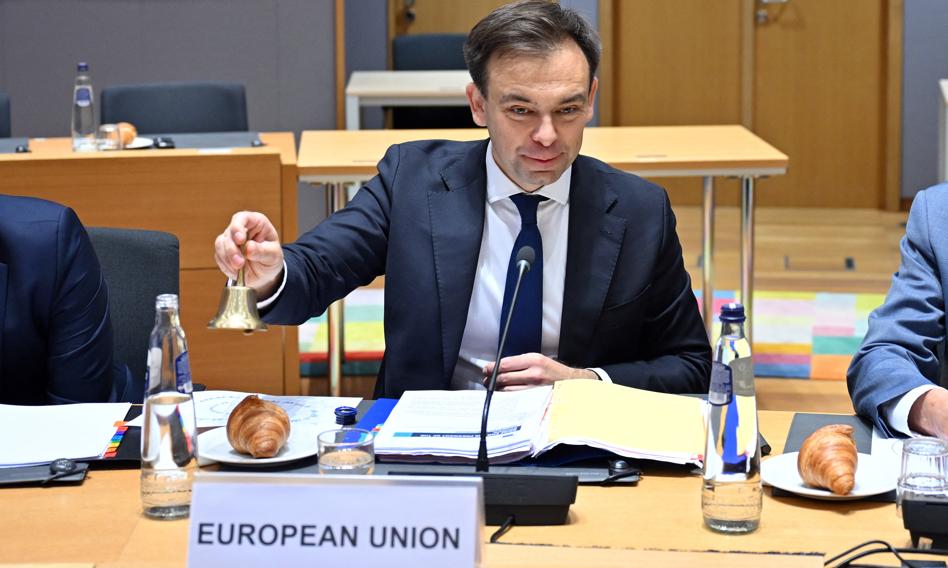
One of the topics of the meeting of finance ministers, which Domański presided over the Polish presidency on Tuesday in connection with the Polish presidency, was the state of the Russian economy. The results of his research were presented by the Swedish economist Torbjoern Becker, director of the Institute of Transformation Economy in Stockholm. The purpose of the presentation – as Domański said – was to “dispel the myth that the Russian economy was doing well.”
“This is not the case. We know that inflation is much higher than the official data. We know that the growing part of the Russian budget is financed from taxes, not from oil or gas revenues” – he emphasized. “And this is important, because if we know that the Russian economy is weakening, it means that sanctions work, and this encourages further actions if the need arises,” he emphasized.
In the opinion of Domański, Wola is growing to act in this matter among the member countries. “We are increasingly talking about the issues of frozen Russian assets,” he added. It is about the money of the Russian Central Bank, which after the assault to Ukraine in 2022 was immobilized by the EU. Until now, the community has benefited from profits generated by trading in frozen assets, but reaching for the measures arouses the reluctance of some countries.
Russian economy in the fourth year of war. Is the fall announced for years approaching?
In 2024, Russia won about 3000 km2 of Ukraine, or 0.5% of the territory of this country, paying 45,000 soldiers for it. What do the economic costs of war look like in its fourth year and will the collapse of the Russian economy announced for years will eventually become a fact?
EU Commissioner Valdis Dombrovskis said that the prospects of the Russian economy remain very closely related to hydrocarbon exports. “The most effective way to reduce the income driving the Russian war machine is to reduce the export of fossil fuels,” he said.
As he explained, this is the goal of the 17th Sanction Package, which the EC recently proposed, and which member states will pre -agree on Wednesday. As a result, the black list of Russian ships belonging to the so -called Shadow fleets that allow the Kremlin to avoid the price limit on Russian oil imposed as part of Western restrictions. This also – as Dombrovskis argued – is served by the EC plan regarding the complete termination of Russian gas imports until the end of 2027.
“Of course, we also notice that while the EU gradually withdraws Russian fossil fuels, Russia supplies other consumers, but it is also worth noting that these consumers pay much less than Europe, so it is still important to maintain this pressure,” said Dombrovskis.
According to him, the EC is ready to work on subsequent sanctions, including solutions that will not require unanimity. Such an example is the embargo imposed by the EU on Russian and Belarusian fertilizers.
From Brussels Magdalena Cedro (PAP)
mce/ mms/