“Nothing that is happening in Romania now resembles democracy.” Harsh conclusion, after the historic fine given to the banks by the Competition Council

The big problem related to the announcement of the Competition Council about the huge fine given to the ten banks is the fact that a matter with such an important stake, both financial and especially trust, “was instrumentalized in a shockingly dubious manner from absolutely all points of view”, believes journalist Cristian Grosu, editor-in-chief of the Governance Course.
“The results of the mega-investigation of the Competition Council on the banking system in Romania were announced – more “on sources”, then in the afternoon through an official statement, then more on TV, more with memes on social networks – on Sunday. Sunday: shocking results – fines of three quarters of a billion euros for the banks that make up the ROBOR index”, notes the journalist.
What else Cristian Grosu says:
- “The biggest “capture” in the history of the Consurance Council was not presented professionally, possibly with a press conference, accompanied by the rigor of the responsibility that the biggest investigation regarding the banking system in Romania entails and with the precision of a report that was worked on for 4 years: It was leaked with imprecise data about two days before “on sources”, and then detonated on Sunday, with the official data, confirmed in the evening on television by the president of the Council, speaking almost among the few commentators who debated the negotiations in one of the most dubious ways to designate a political prime minister from outside the parties that won the elections: only good for Monday's negotiations, only good for the crisis, only good for the political crisis, only good for inflation, only good for taking over the political scene, only good for everything.
- If someone had told us, a few months ago, when the first information came out in the public space about the investigation that the Bank Competition is doing, we would NOT have thought that the results of the investigation would be announced to us at such a time and in such a way.“
“I am among those who believe that the Romanian economy is not a truly competitive one: if you were to see how much of the economy is based on transfer pricing files and you would also add how much of the economy is corrupted by the political patronage that spins small and medium-sized businesses at the local level, and in Bucharest on the large “strategic” public contracts, I don't know if we would reach 50% competition”, the journalist confesses, in his opinion article.
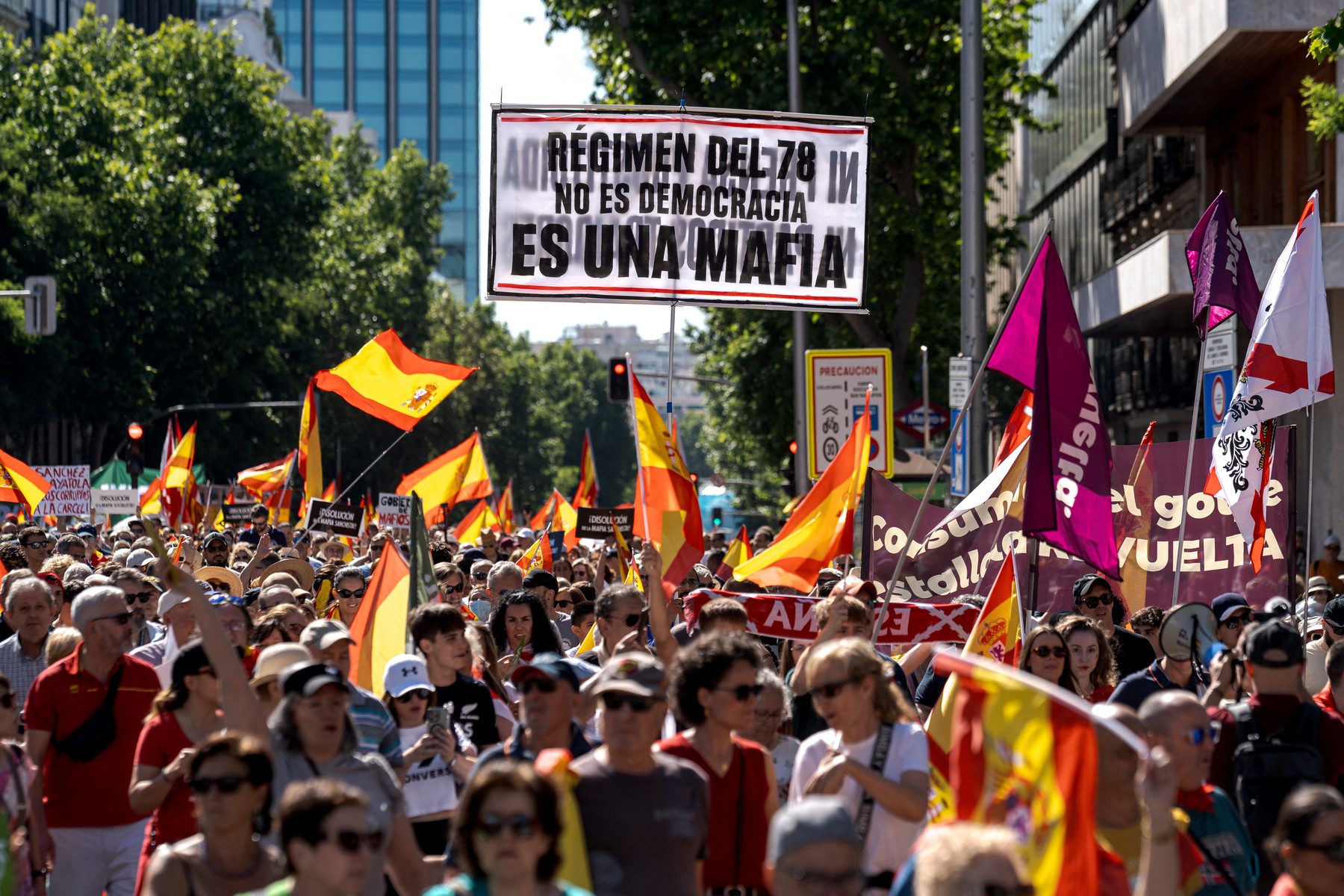
“Nothing that is happening in Romania at the moment resembles democracy”
And his conclusion is as harsh as possible.
“Nothing that is happening in Romania at the moment resembles democracy – and this is happening at a time when the systemic faults between East and West are moving, geo-economic interests are resettling around Romania, with huge economic forces ready to invade the Romanian business system – that is, at a time when institutions such as the Competition Council and other strategic ones – which put or erase companies and economic sectors from the map – should be beyond any doubt of honesty and above all doubt”, he also writes.
“Instead of that, we have very precise “calendars” to divert the seriousness of some investigations into the swamp below the political scene, and the deep sense of insecurity that neutralizes the dose of confidence without which no healthy economy can function”, Cristian Grosu pointed out.
The fine of 700 million euros given by the Competition Council
On Sunday, the Competition Council announced that it had sanctioned ten banks with fines totaling 3.73 billion lei (over 700 million euros) for violating the competition rules, namely the competition law and the Treaty on the Functioning of the European Union, by coordinating behavior in the ROBOR setting procedure.
The Competition Council submitted that, following its investigation, it found that the banks participating in the setting of the ROBOR coordinated their behavior through an exchange of confidential and strategic information, especially regarding the price, regarding the level of the ROBOR in the fixing procedure.
“The independence of quotations during the fixing period is important, even more so in the case of maturities for which the volume of actual transactions is reduced (3, 6, 12 months), the average of these transactions cannot be used as a relevant indicator. The result of the fixing procedure is used to calculate interest for some loans. Thus, an increased level of this index can be favorable to creditors, but it directly affects consumers and other debtors whose contracts are reported at ROBOR”, explained the Authority of Competition.
In an interview for the HotNews public, the president of the authority, Bogdan Chirițoiu, said that the process of establishing the ROBOR by the ten big banks sanctioned with record fines by the Competition Council “was flawed”, and their “behavior” created the conditions for an increase in this index.
“See you in court!” – was Chirițoiu's message for the ten banks fined 710,000,000 euros, which want to contest in court the sanctions received from the Competition Council.
The banks have at their disposal a period of 60 days from the receipt of the justification of the sanctioning decision to present plans of measures by which they will eliminate the anti-competitive practices, plans to be approved by the Competition Authority.
The decision of the institution headed by Chirițoiu can be appealed to the Court of Appeal within 30 days from the communication of the reasons.
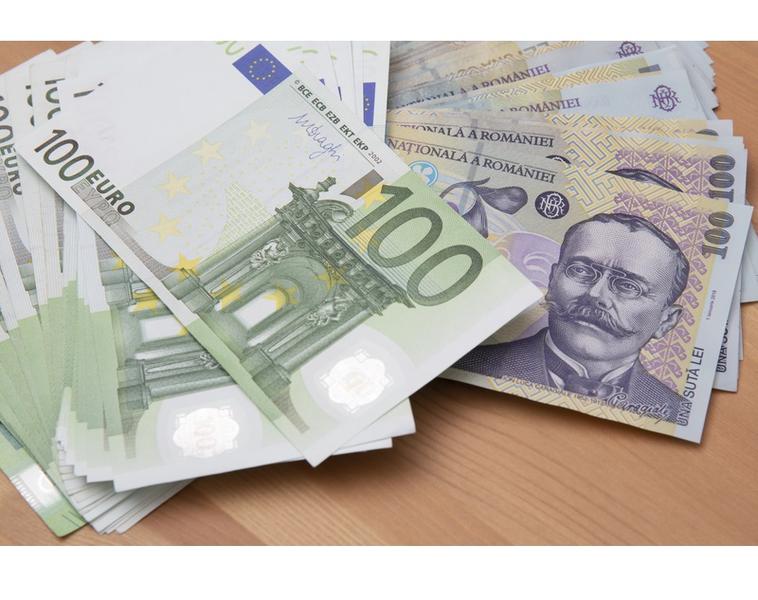
Image: euro-lei-money, Photo: Dreamstime