Where the famous battle of Posada actually took place. How did Basarab succeed in defeating the strong Hungarian army

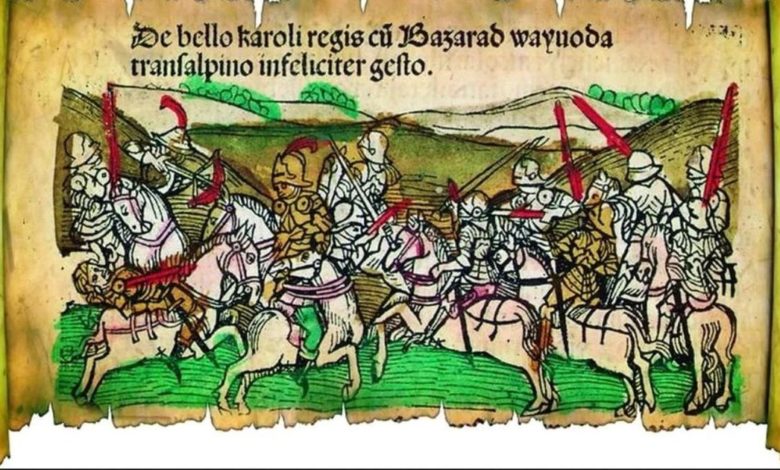
695 years ago, in 1330, the ruler of Basarab I of the Romanian Country returned a brilliant victory against the Hungarian soldiers led by Carol Robert d'Anjou, the King of Hungary. An appreciated historically explains how this victory was possible, but also where the battle can be located.
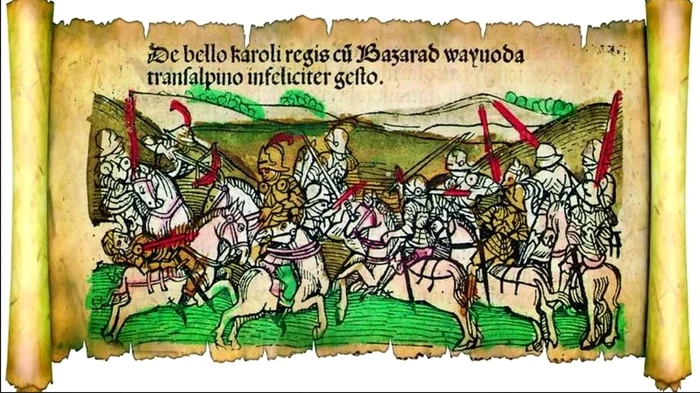
Basarab I returned a brilliant victory at Posada Photo Historia
Historians and researchers in the country and abroad have very different opinions related to the exact place of the famous battle, with multiple opinions. Several historians have located the battle in the Argeș area, on the Rucăr-Bran corridor.
The historian P. Dragalina wrote, in the history of Banat Severin, that the battle of Posada would have taken place in “Craina Gorge”, between Orşova and Mehadia, because the Hungarian king, after defeat, would have stopped except in Timisoara. Dimitrie Onciul believes that the victory of Basarab was held “in the mountains near Curtea de Argeş”. Ad Xenopol was of the opinion that the battle would have been beyond Gherghiţa in the mountains. Nicolae Iorga, both in the history of the army and in the study of the Carpathians in the battles between Romanians and Hungarians, said that the place of famous struggle was “Posada … on the road leading from Campulung to Bran”. Also for Posada, on the same road, Na Constantinescu was pronounced, as well as Victor Motogna and St. Ştefănescu.
“I think the battle of Posada can be located in the Dâmbovicioarei Gorges area, being a narrow area according to the battle and in addition you can go into Transylvania.told “Adevărul” Cornel Popescu, the director of the Argeș County Museum and a doctor in history.
Basarab I reigned in the Romanian Country for not less than 42 years, between 1310-1352. And the brilliant victory from Posada ensured the independence of the Romanian Country.
Undercover spies
And in the victorious victory in the battle of Posada of 1330, a key role was played by the spies by Basarab I to study the opponent, spies sent under cover of “messages”.
After the Hungarian army entered the territory of the Romanian Country, on the fortress of Severin, Basarab I sent several “messages” with peace proposals. But these “messages” were actually spies of the Romanian Country. They analyzed the troops led by King Carol Robert d'Anjou, coming with numerous essential strategic information, which were subsequently at the base of Basarab's decision to carry the decisive battle with the Hungarian army.
“There were several key elements that contributed to the victory in Posada. Basarab I was a very good strategist who knew how to choose the place of the battle, the Hungarians were harassed to the pass.says the historian Cornel Popescu.
In Posada, the Hungarian army lost thousands of people, and many enemies were taken prisoners.
After the battle that lasted a total of three days in November 1330, Carol Robert d'Anjou escaped with great emotions, changing his clothes with a soldier not to be recognized, returning home to Timisoara accompanied by a small group of soldiers.