If we really want to understand the relationship of young people with the vote, we cannot talk about young people as a unitary block.
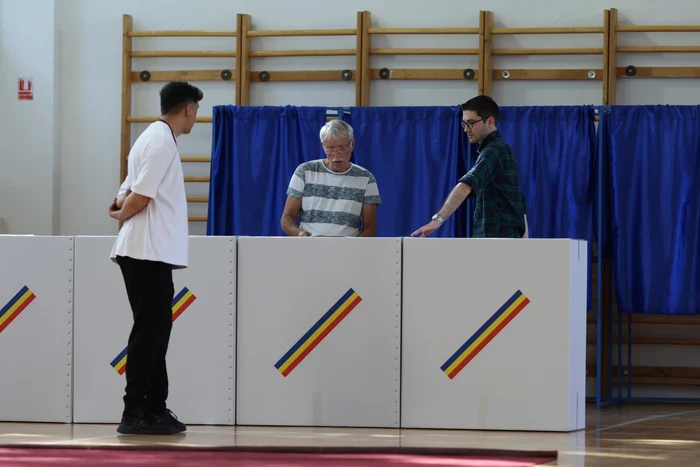
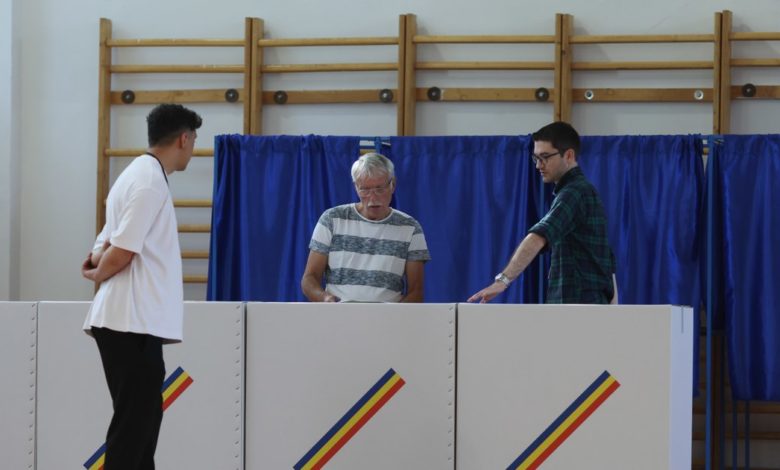
Information for the first vote, on social media. Photo: Inquam Photos – George Călin
Young people in Romania do not form a homogeneous electorate, and the differences between those in the urban and rural areas are not only visible, but structural. “Participation tends to be a little bigger among young people in the urban environment. Also, boys tend to be more interested in politics and believe that they have more political knowledge than girls – a difference that appears constantly in all such studies.”
stresses Claudiu Tufiș, lecturer at the Faculty of Political Sciences, University of Bucharest, for “Weekend Adevărul”. Thus, 20% of young men say they are interested in politics, compared to only 15% of women, indicating a constant gender difference in the attitude towards civic involvement, according to the mentioned study.
From access to education and information to digital literacy and vulnerability to misinformation, the gaps are deep and often ignored in the public discourse. “I did not necessarily look at the intentions of voting urban-rural segmented, but there is a reality that we cannot ignore: Romania has the biggest difference in the European Union between young people in the urban and rural areas, when it comes to the level of education. There are six times more young people between 18 and 24 years old in the rural area.explains Alexandru Manda, lawyer, public policies consultant and the initiator of the campaign “Young people vote”.
40% of young people admit that I don't know much about politics
The official data show that Romania has the highest rate of school dropout in the European Union – 16% in 2023, increasing compared to 2019. The disappearances between the urban and rural areas are dramatic: over 31% of rural young people, compared to only 5% in Urban. And this reality has direct consequences on how young people in the rural area relate to the vote. “The lower the level of education, the higher the degree of influence and the risk of falling disinformation. Young people in the rural area are more likely to be influenced by populist messages or artificially generated contents in the online environment – images, clips or texts that have no other purpose than to induce frustration and revolt against the political class.”.
The first vote, between confusion and manipulation on social media
Beyond the figures in this electoral cycle, the real stake is what happens to those young people who now take the first steps in the democratic life-those who vote for the first time, who are just beginning to outline their civic and political beliefs. It is the generation that, if supported and listened to, can become the core of a constant participation in the following years. “What is actually interesting is to see what happens to the generation that votes for the first time – the 18, 19, 20 years, if they remain active.”. Why? Once young people enter the democratic process and vote for the first time, the chances of them repeat this gesture in future elections increase significantly, explains Claudiu Tufiș.
“The data in the political science shows that if you started the young person to vote, it is very likely to maintain this behavior throughout your life. So, if young people mobilized in 2024 will remain civic active and in 2025, we have real reasons to hope that a new generation of constant voters are for the first time. Vote, then they will participate more in the vote..
This dynamic of the first vote is not only theoretical – it is directly observable, in the field, where young people begin to interact for the first time with the democratic process. Alexandru Manda, in direct contact with them through the initiative “Young people vote”, emphasizes the fact that “Most young people who vote for the first time are informed of social media. Sometimes from Tiktok, sometimes from Reels, jokes or posts on Instagram and Facebook. Unfortunately, it is very difficult for many of them to distinguish between real and false information.”. The reality is that 40% of young people admit that I do not know much about politics, 34% say they have average knowledge, and only 26% are considered well informed in this area, the data from the study of FES Romania 2024 shows.
23% of young people have more knowledge than effective interest in politics. Photo: Shutterstock
In other words, many young people do not even know what the duties of the function for which they are going to vote, whether it is president, parliamentary or mayor. And in the absence of a solid formal education in this regard, the voting decision becomes a choice based on impressions, not understanding. “This is where the role of the school and the role of education for democratic citizenship.Manda points out.
All these are all the more important as the level of political knowledge among Romanian young people follows a distribution similar to the interest for politics. When we put into relationship the stated interest with the level of knowledge, a clear association results: 63% of young people have a level of information that corresponds to the interest they manifest. A segment of 14% is more interested in politics than informed, while 23% are in the reverse situation – they have more knowledge than effective interest. Only 12.5% of the young people questioned fall within the profile of the “ideal citizen” – that is, those young people who are both interested and well informed about politics.