The most expensive watches in the world. They don't work better at all, but they cost a lot. Why?

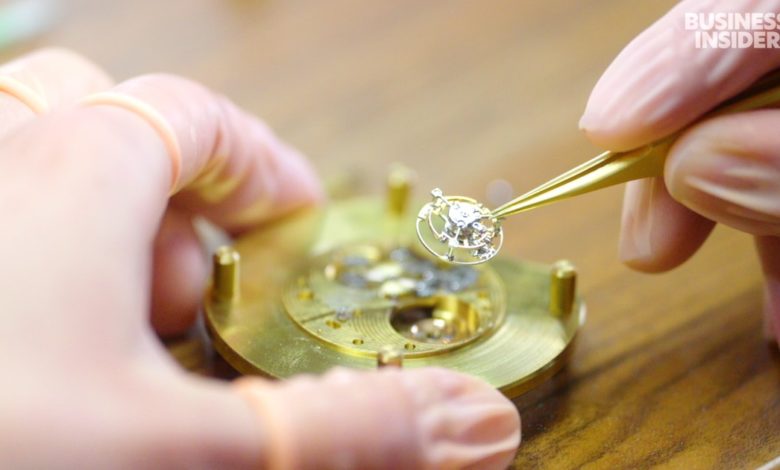
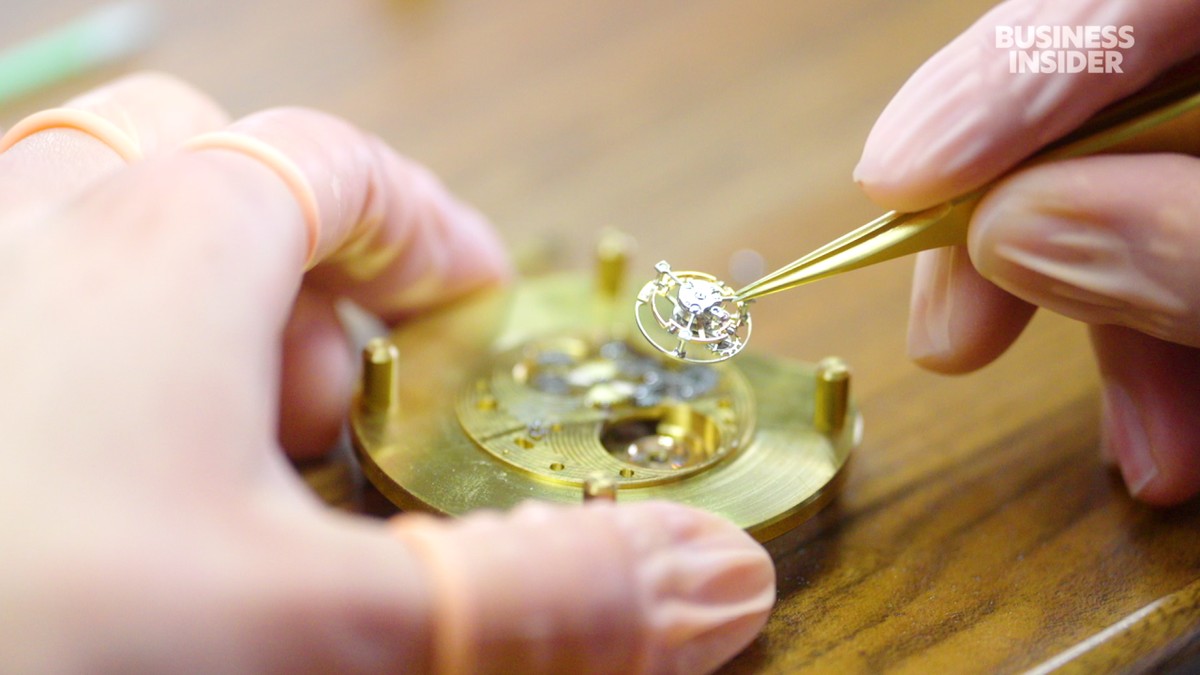
Narrator: This spring is thinner than the strand of human hair and is an important part of Tourbillon, which can be found in the most expensive watches in the world.
A collector bought this watch with Tourbillon for $ 5.8 million. At the auction at the Christie's auction house in 2023.
Kelly Yoch, director of customer relations, Watches of Switzerland USA: Complications in this watch are quite unusual, and the price of this copy is 476 thousand. hole.
Narrator: Tourbillon was created to counteract the influence of gravity on the pocket watches placed vertically.
They were more accurate thanks to him.
Currently, however, it no longer improves watches.
So what makes these watches so expensive?
And why do customers pay a high price for a watch that doesn't work better at all?
To answer this question, you need to understand what Tourbillon is.
The mechanical watch has a balance wheel attached to the rolled hair spring, which allows it to rotate forward and back.
This movement causes that another wheel called the paddling wheel moves to the tooth at regular intervals, creating a characteristic ticking sound.
In the case of Tourbillon, however, this whole mechanism called Zapwyt is placed in a metal cage, which also constantly rotates.
This additional turnover eliminates the influence of gravity in pocket watches.
Nowadays, pocket watches have been replaced with modern hand watches, which are mainly set horizontally, so they do not require Tourbillon for accuracy.
For some reason, however, it is not only extremely desirable, but it is often distinguished and can significantly increase the cost of the watch.
Kelly: Making such watches is an extremely difficult art, which significantly increases the price of the watch.
That is why a simple watch, which only shows an hour, costs 20, 30, and sometimes even 100,000. hole.
Narrator: How difficult is this art?
Just ask Remy Cools-a 26-year-old watchmaker who specializes in all stages of the Tourbillon production process.
Remy Cools, watchmaker: My work is a bit like the orchestra conductor.
I have to do everything – from being a craftsman to being a general director.
Narrator: His studio is located near Lake Annecy in France, i.e. about 50 km from Geneva – the world capital of watches, where the best brands have their headquarters, such as Patek Philippe and Rolex.
He and his associate, Clémence Thériat, are in the process of creating a second collection of watches with Tourbillon.
36 pieces will be created, which Remy calls Tourbillon Atelier.
Remy: It is fascinating that Tourbillon gives the watch a sense of movement.
This mechanism is like a beating heart.
It's a complication that lives.
Narrator: Completing one watch takes about a month, so Remy and Clémence will work on them for the next three years.
One of the reasons why these watches cost so much is the number of elements needed for Tourbillon.
The whole watch consists of about 200 parts, 50 of which forms a Tourbillon.
Each of them must be extremely precise, with an accuracy to thousands of millimeter.
Remy's Tourbillon is made of elements cut out of brass and steel.
Remy himself carves raw materials in basic shapes, using CNC for precise cutting of various teeth and wheels.
Remy: The measurements are good, so the machine begins to process the element.
Narrator: The automated processing of all these small elements takes a long time.
It takes 15-20 minutes to make each of the smaller parts, and over an hour to make more complex.
Then Remy must compare each element with the project on the computer to make sure it is consistent with the specification.
Remy: This element looks good.
Narrator: For each element, the Remy must adjust the appropriate settings, such as cutting speed, which can sometimes last longer than the processing itself.
The cut metal must be subjected to multiple heat treatment to strengthen it.
First, this is done in a process called hardening, in which the steel is heated, and then quickly cooled with charcoal powder.
Remy: All parts are hardened in this way.
The elements are very fragile, like glass.
Narrator: Then Remy re -heated element in a process called letting go.
The color changes from yellow to brown and blue.
Now you need a careful eye and a certain hand.
To transform this round element into a gear, Remy will have to manually cut each of the 80 teeth.
He often arranges 10 elements in a pile to save time.
Remy: We are one of the last companies cutting the wheels with this method called a traditional cutting tooth on the tooth.
The teeth have four or five microns, and one microns are one thousandth of a millimeter.
There are very few watchmakers who can do it.
Narrator: Remy and Clémence are graduates of Lycée Edgar Faure in Mortaau, France.
This school is known for training the best young watchmakers who go to the famous Swiss watchmaking companies.
Remy: I studied there for six years.
In my opinion, this is one of the best schools of this type.
Narrator: Remy worked briefly for Greubel Forsey in Switzerland before he founded his own brand in 2019.
Clémence worked at Ptek Philippe before she joined him.
He is the first and only employee of Remy, and in the company he has been working for about a year.
Clémence thériat, watchmaking: My great -great -grandfather was a watchmaker.
My grandfather told me about him when I was little.
I wanted to do it since I was 13.
Narrator: Nowhere are all these trainings, passion and attention to detail are not more visible than at the stage known as phasing.
Remy: It's a real art.
Only here you can see the real hand of the watchmaker.
Narrator: It is also one of the most time -consuming parts of the process.
Each edge is scrupulous not only for aesthetics, but also to reduce friction and prevent unintentional resistance of elements.
Remy: This is the most difficult task because it requires technique and knowledge.
It takes seven to eight hours to finish one wheel.
We are talking about one wheel to one watch.
There are three wheels for one watch, so you need to sacrifice many hours.
Narrator: The next element is polished and coated with metal, such as gold or ROD, to prevent oxidation and add colorful gloss: yellow, pink or gray, depending on the coating used.
Remy: It is an operation that requires delicacy and precision.
Narrator: Remy first experiments with different samples to make sure that the colors are in line with expectations.
There are different types and styles of Tourbillon: single axle, three -axis and even flying, which are only mounted on one side.
Some cages perform full rotation every 60 seconds, as in the case of Remy's watch.
Some are slower and others faster, but the faster the rotation, the more a fragile mechanism, which is already extremely delicate, especially when it comes to the hair spring.
Every day, Clémence's tasks may vary.
Today, he assembles the elements that Remy prepared.
First, he tests the balance of the pendulum, and then cut the hair spring to the right length to match it.
Remy: The machine simulates oscillating in a pendulum, which helps us define the correct length.
Narrator: Clémence uses the watchmaker's magnifying glass to shape the bend and a little lift the external scroll called Breguetic hair.
Clémence: I just installed a hair spring to the shuttle.
Narrator: When everything is in place, Clémence assembles the whole in a cage, using various small pliers and other specialized tools.
Clémence: I screw the cage screws, which crowns the work.
The spiral is mounted in the Tourbillon test cage.
This is how it looks.
It requires a lot of patience.
Narrator: Tourbillon installation can take several days.
Then Remy checks everything and places the mechanism in the platinum casing of the watch.
He will perform a few final check -up tests and make sure that the whole is tightly closed and waterproof, and then he will last for the last time the watch in search of dust particles.
A lot of time and effort is devoted to creating Tourbillon, and customers are ready to pay for it.
Why do they do this if watches are not more accurate?
Kelly: Every time you take your watch, you look at the work of art regardless of its price.
It's about buying what you love and what you speak to you.
Narrator: Tourbillones are often awarded a sapphire crystal.
At Watches of Switzerland, one of the world's largest luxury watches in the world, customers can find watches with the Tourbillon of most famous brands.
Kelly Yoch, who has been operating in the industry for 28 years, says that her task is also to show collectors a wide range of available products from independent producers that they could not even hear about yet.
Kelly: It is up to us that you should educate customers that other watches should have in their collection.
I love everyone who devotes time to creating such a work of art from beginning to end.
I really believe that if you love what you do, you will appreciate someone like Remy with all your heart.
Narrator: Let's look at, for example, this very detailed Tourbillon on the subject of the year Dragon from Bovet.
This is one of only 12 new copies for 2024, which is sold for almost $ 0.5 million.
Kelly: It is really important to present the back of this watch.
You look at something that took someone for many hours.
This is a real work of art.
Looking at the back of the watch, you look at the craftsmanship and work put into decorating the mechanism.
It's really amazing.
I could sit and stare at this Tourbillon for hours.
Crowd: Piotr Nazek