Hackers are characterized by healthy skepticism. As soon as they look at a system, the instinct tells them to hack it. But even the most cunning hackers would have difficulty hacking one of the safest voting systems that have been developed so far: Methods of choosing a new pope. According to Bruce Schneier, the author of the book “A Hacker's Mind”, after almost two millennia, the Catholic Church approached perfection in this art. What can we learn from this process?
We should first admit that like all elections, The papal conclave is controversial. There is often controversy when probably candidates, or papabilias their Vatican observers call them, they discreetly fight for the favor of their cardinals. In the “conclave”, the best -selling novel by Robert Harris, on the basis of which the Oscar -winning film was shot, one can get the impression that the papal choices are full of intrigues, scams and behind -the -scenes systems. Historians suggest that this is not complete fiction.
Further -month elections have already aroused strong emotions, and Catholics in the US call to choose a pope more “similar to Trump” to reject the liberalism of the deceased Pope Francis. However, six of the ten American cardinals who may vote were appointed by Francis and seem to be more adapted to his approach. In fact The Argentine Pope appointed 108 of 135 cardinals entitled to vote, which can significantly affect the result.
Even if the controversy circulate around the direction of the Catholic Church and the composition of the completely male college of electors, the voting process itself is relatively non -contact because has been codified over the centuries.
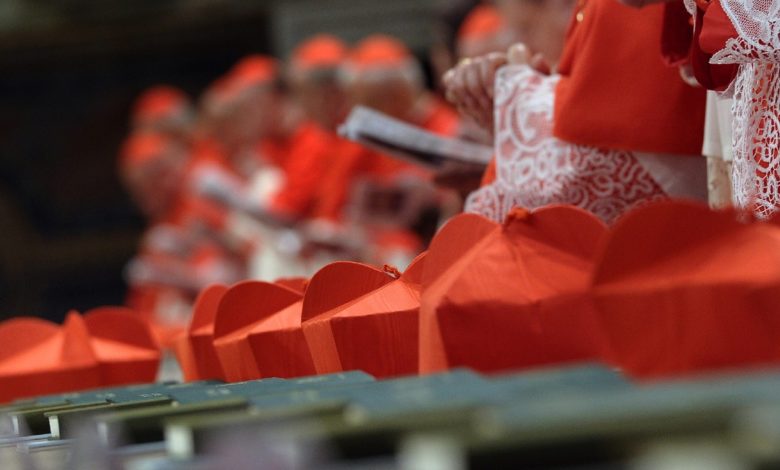
Voting cardinals who come from all over the world and remain in isolation during the conclave, write down the name of the preferred candidate on the card and take the oath in front of the altar of the Sistine Chapel every time they vote. Each voting round is supervised by three randomly selected controllers. The sleeves of the cardinals are made of translucent lace (probably to avoid fraud). Every voice is read, no matter how time consuming it is. It is often necessary to achieve the final result.
Schneier suggests that three conclusions can be drawn from the papal process. First, each stage of the election system is transparent for all participantseven if the voices are secret. Secondly, there are small and simple elections among the voters they know less susceptible to manipulation. Third, when the selection process evolves for a long timecan become “surprisingly good”.
Continuation of the material under the video
There are many small -scale choices that can be conducted in a similar, though less complicated way, but Safe voting on a large scale is difficultespecially when technology is involved.
“There is no such thing as a safe vote that is purely digital,” says Schneier. This fact is proven each year at the Def Con conference, where Hackers regularly reveal the disadvantages of the latest American digital voting systems.
Should Americans follow an example from cardinals?
The challenge related to ensuring the safety of voting cards is Particularly severe in the United Statestaking into account the scale of elections and the scope of issues presented to voters. This makes automation necessary, even if it is risky, according to Matt Blaze, a professor at the University of Georgetown, who examines the integrity of election.
Blaze suggests, however, that there is a way to minimize the risk associated with automation. Physical voting cards (including correspondence) remain necessary, but can be recorded and calculated electronically using optical scan technology. This automation process can then be checked using a technique known as risk -limiting audits.
– I'm an optimist, [wierzę]That We can conduct an election with a very high degree of integrityeven using the monstrous ballot cards we have in the United States – says Blaze.
EPA / Alessandro di Meo / PAP
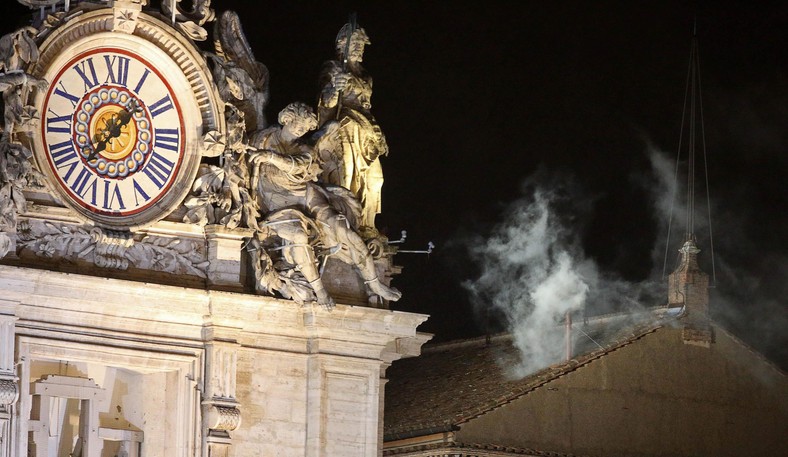
White smoke rises from the chimney on the roof of the Sistine Chapel. Vatican, March 13, 2013
They exist much larger threats to democracy than imperfect voting mechanisms: inciting politicians, such as Donald Trump, who refuse to accept justified results; manipulation and disinformation using artificial intelligence; and foreign interference, etc.
However, even here the history of papal elections can be informative, considering how adaptive they were. – Papal conclave do everything in their power to ensure that voters and observes consider the trial to be honest. Democracies can learn a lot from this – says Gina Neff, Executive Director of the Mindero Center for Technology and Democracy.
For many centuries, voting for popes was marked bribery, intimidation, riots, schisms and prolonged quarrels. The election in 1268 lasted two years and nine months. Improving this process required good faith, continuous adaptation and effective verification mechanisms. With a little luck, hackers can help the rest of us achieve this goal faster, signaling threats and proposing safer solutions in voting systems around the world.
I’m Ashley Davis as an editor, I’m committed to upholding the highest standards of integrity and accuracy in every piece we publish. My work is driven by curiosity, a passion for truth, and a belief that journalism plays a crucial role in shaping public discourse. I strive to tell stories that not only inform but also inspire action and conversation.