
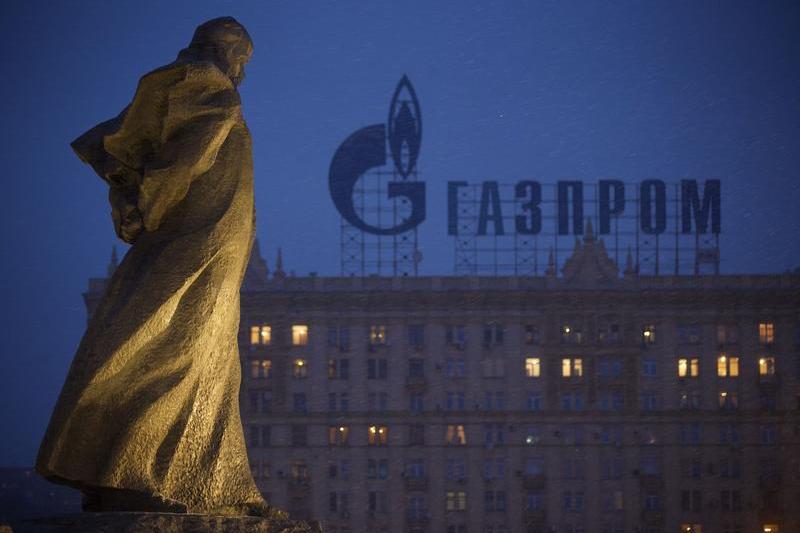
Gazprom, Photo: Alexander Zemlianichenko / AP – The Associated Press / Profimedia
The European Commission evaluates whether or not can legislate to prohibit EU companies to sign new contracts for Russian fossil fuels, a high -ranking official of the Community Bloc said on Tuesday for Reuters.
He also works on the elaboration of legal options that allow companies in the EU to terminate the existing contracts for the supply of Russian gases without experiencing sanctions, the official said.
As some European states threaten to block any EU sanctions targeting Russian gas, the Commission instead analyzes other tools to speed up the end of European dependence on Russian energy. The Community Executive intends to establish options in this regard in a “roadmap” to be presented on May 6.
The Commission analyzes options-including EU commercial measures-which could prohibit European companies from concluding new Russian fuel contracts, said the official, who spoke under anonymity about the confidential plans that are still being elaborated.
The intention to prohibit new contracts aims to reduce the procurement of the Russian Lichefied natural gas (GNL) of the European companies.
EU imports of Russian GNL increased in 2024
Although Russian gas deliveries have decreased after Ukraine's invasion by Russia, EU imports of Russian GNL increased last year. In 2024, 19% of the total supply of the Community Gas Bloc and GNL also came from Russia.
The Commission also evaluates the possibility of providing companies a legal basis to invoke the force majeure and to withdraw from Russian gas contracts without paying penalties for this decision, the official said.
A spokesman for the European Commission has refused to comment on the subject.
The Commission explained that any measures to restrict Russian energy imports must affect Moscow more than the EU and take into account the impact on Europe's energy security and fuel prices.
After publishing the roadmap, the Commission intends to organize deliberations with EU Member States and companies.
If the Commission decides to go forward with any of the legal instruments, it will then propose legislation in this regard. Thus, depending on the type of proposed tool, the approval of the European Parliament and a solid majority of EU states may be necessary.


