
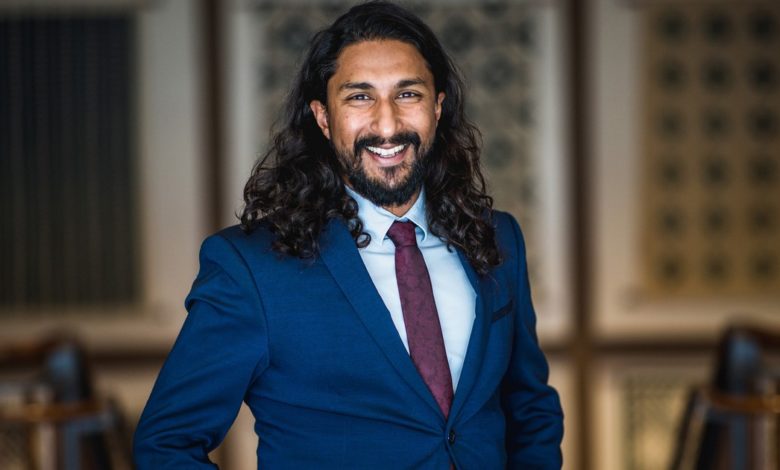
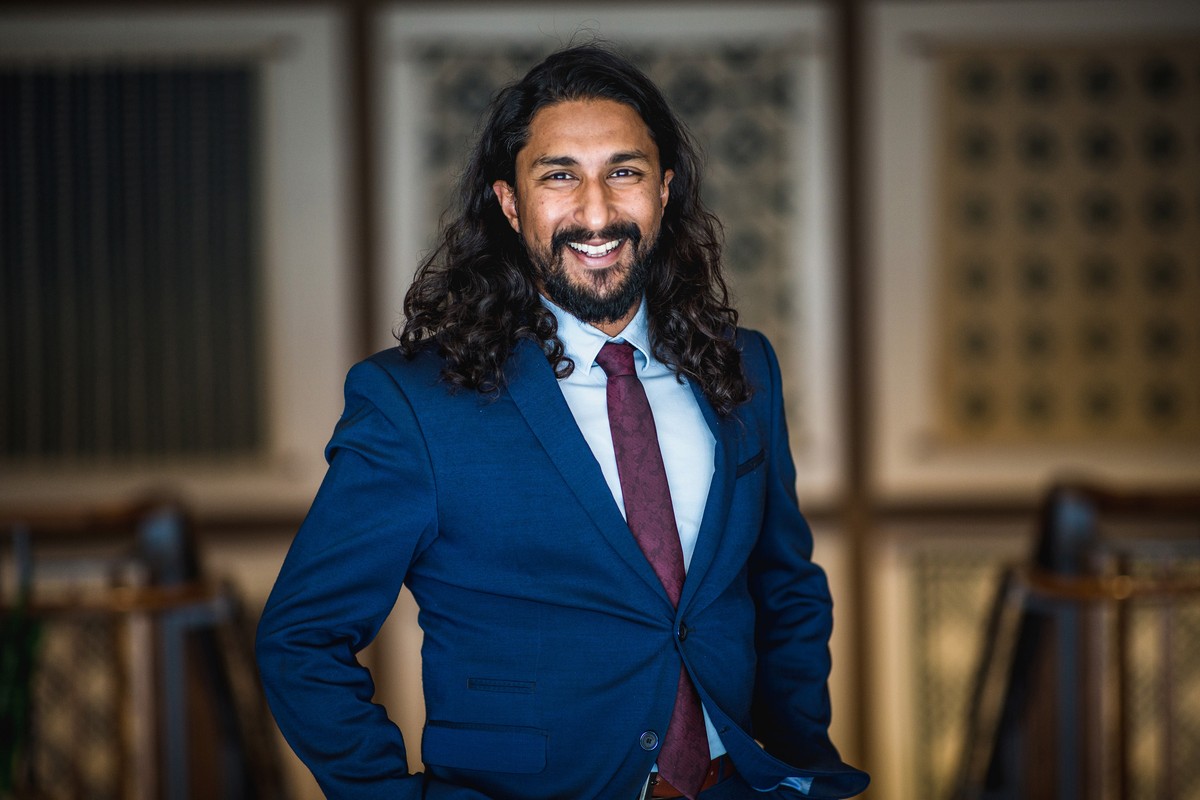
He was born in India, raised among the sands of the Arabian desert in Oman. He finished high school as a 16-year-old in the 1980s-I was a bit of a geek-he admits with a smile. He graduated from mechanical engineering at the prestigious Indian Institute of Technology, and in the age of 22 – management and corporate finances at Stanford University.
He thinks he got to Stanford at such a young age thanks to the essay he sent to the dean. – I quoted in it a few quotes from Nietzsche and Pink Floyd, I mentioned quite good school results, musical talent and unique, various life experience. I suspect that they just wanted to see what a freak it is – he laughs.
After graduation, he came to Wall Street – first to the bank of Lehman Brothers, and after his fall to Barclays Capital. After five years of work in investment banking and M&A, which he today describes as a “devastating soul”, he began to feel burning. In the summer of 2008 he took a six -week vacation and went to Africa.
He saw a different reality. – I understood that I lived in a world where people with access to money, power and tools were not interested in any real change. And those who really wanted to change something did not have funds for it – he recalls. Two years later he returned to Africa and decided to stay there.
Today, as a co -founder and managing partner of Launch Africa Ventures, he manages one of the most influential Venture Capital funds on the continent. – We founded this fund with my business partner, Janade du Plessis (former Chief Investment Officer at the African Development Bank) in 2020, seeing a huge gap on the market – says Zach.
In just 18 months they collected over $ 36 million. from over 200 investors from the private sector) from 40 countries. These funds were allocated to investment in 133 startups from 22 African countries, selected from a pot of over 5,000. verified companies. – We have a reputation of a founder friendly fund. We do not set absurd conditions. We invest very early and provide a lot of non -financial support – he emphasizes.
Incorrect assumptions about Africa
The bluntly criticizes the traditional approach of the West to Africa: – For decades, the West treated Africa in an extreme way – either as a place requiring eternal humanitarian help, or as a source of cheap raw materials. In none of the cases is about development.
– We drain Africa from resources and create benefits abroad – explains West. Gives an example of cocoa and coffee. A significant part of global production comes from Africa, but real money flows to Europe, the USA and Asia, which they process raw materials.
– The only way to extract nations from poverty is entrepreneurship – he argues. – We need to strengthen people to build businesses and serve their communities through them.
Equalizing opportunities and “cobweb effect”
Launch Africa Ventures focuses on investments in fintech, digital education, logistics and mobility, healthcare, as well as in agriculture and supply chains in this area. Financial inclusiveness is particularly important – a large part of the African population lacks access to basic banking services. Digital solutions allow access to loans, savings and assets. This makes people more economically active – explains Zach.
In his opinion, Uber is one of the most influential startups in Africa. – At first glance it may seem surprising, but let's consider what this platform changed in the lives of millions of people: it has previously enabled unemployed people to earn on a dignified life. Leasing companies were created, startups create digital vehicle scanning systems for insurance companies. Money goes to their virtual wallets, as a result including thousands of people in the formal financial system.
I call it “a cobweb effect” – he explains. – Startups of this type have a much greater impact on people's lives than a corporation or government.
Innovations that are not enough talk about
When asked about specific examples from the Launch Africa Ventures portfolio, he mentions companies that could surprise European investors.
– We have a company from Cape Town – Impulse Biomed, which has developed the world's first reusable Epipen. In the United States, the one -time cost of purchasing an epipena can range from 500 to 1 thousand. dollars. This startup has created a reusable device with replaceable vials for less than $ 100 – he says. The company is waiting for the product to be approved by the FDA to launch it to the American market. She has already received preliminary approval in some EU countries.
Cloudline is another example-the company uses helium balloons, powered by lithium-ion batteries, to monitor distant areas where traditional methods are dangerous.
In Nigeria, Launch Africa Ventures invested in a startup fighting with false drugs – Rxall. Their mobile spectrometer uses UV radiation to analyze the chemical composition of medicinal products. “You can cheat the QR code, but you can't cheat chemistry,” comments West. Insurance companies pay extra for the cost of implementing this service because it reduces the number of claims and increases the efficiency of therapy.
“Black Tax” – an invisible barrier for young entrepreneurs
Africa is the youngest continent of the world – the average age of residents is only 18 years old. This young population is digitally running. – Today, the most numerous users of the X platform are Africans – notes Zach.
Despite this, entrepreneurship in Africa encounters specific cultural barriers. One of them is the phenomenon that Zach describes as “black tax”.
The first postcolonial generation is a generation that has gained access to higher education. People who grew up in the 1960s and 1970s could gain diplomas from medicine, law or finance – he explains – the problem is that even if they wanted to become entrepreneurs, they could not.
Educated Africans feel obliged to financial support their families – parents, uncle grandparents, aunts, cousins. They must first “pay off the debt” towards their loved ones, who devoted a lot to sending them to college.
This explains the age difference between the founders of the startups in the USA and Africa. The average age of the founder of the startup in the USA is 20-30 years. In Africa 35-50 years. Only the second, third generation of graduates can afford the risk of entrepreneurship.
The World Economy Center moves to Africa and Asia
– Innovations always follow demand, not supply – explains the businessman. – And the greatest demand is created now in Africa. By 2050, Africa will be more populated than India and China together. Over 850 million inhabitants will be less than 25 – this is a huge market for the future.
Technological progress is equally important. – 15 years ago, averaging, Gigabyt of data cost almost $ 50 in Africa. Today it is less than $ 2 – he explains. As early as 2010, there were more smartphones in Manhattan itself than all over Africa. Today there are more smartphones on the continent than in North America. In addition, thanks to local production capabilities, e.g. in Rwanda, such a smartphone can be produced for less than USD 50.
According to Zach, these changes mean a fundamental shift in the global economy. – This is nothing new in history. A long time ago the Dutch empire dominated, then British, then American. The world is changing – he notes.
– In business, you are always looking for the lowest costs with the highest return on investment. So why limit to 200 million Americans when you can reach 2.5 billion people in Africa and Asia? – he asks rhetorically.
Investing money is easier than investing time
Launch Africa Ventures organizes an annual meeting for their investors and friends of the organization in Cape Town, where investors meet with the founders of companies. This is not only an opportunity to establish business contacts, but also to exchange knowledge.
“The founders from emerging markets are thirsty for intellectual connections,” says Zachariah George. – If a fund like ours can be a platform for creating these connections, I can sleep peacefully.
Zach I think that mentoring is one of the most underrated assets. – Investing money is easier than investing time. Someone asks me by 5,000 euro for an investment? Please, there is a check here. But if they ask me to become an advisor? This is a greater commitment. Time is more valuable than money – he emphasizes.
A way to migrate
When asked about how in the era of aging European or Asian societies, which will fight for immigrants, stop talents in Africa, he replies that technology is an antidote for migration.
– Believe me, I meet African entrepreneurs every day. They don't want to leave. When we provide them with a bright path to build companies in their homelands, they will stay there.
Africa and Eastern Europe – surprising similarities
According to Zach, the Launch Africa model could also work great in our region. What is happening in Africa today reminds him of the transformation of Central and Eastern Europe after 1989. This is the beginning of the cultural and socio-economic revolution.
He adds that Eastern Europe has more in common with Africa than many would like to admit. – We differ in appearance, but our value systems are convergent. Together Eastern Europe, India, Africa and the Middle East have the greatest purchasing power in the world. With its young population and the growing technological ecosystem, Africa can become a key partner in this system.
– Africans do not need mercy. They need capital, knowledge and possibilities. And this gives business, not humanitarian aid – sums up Zachariah George. – Africa is not waiting for salvation, but is constantly building its future. Do you want to be part of this story? Take a place at the table. But treat us as equal partners.


