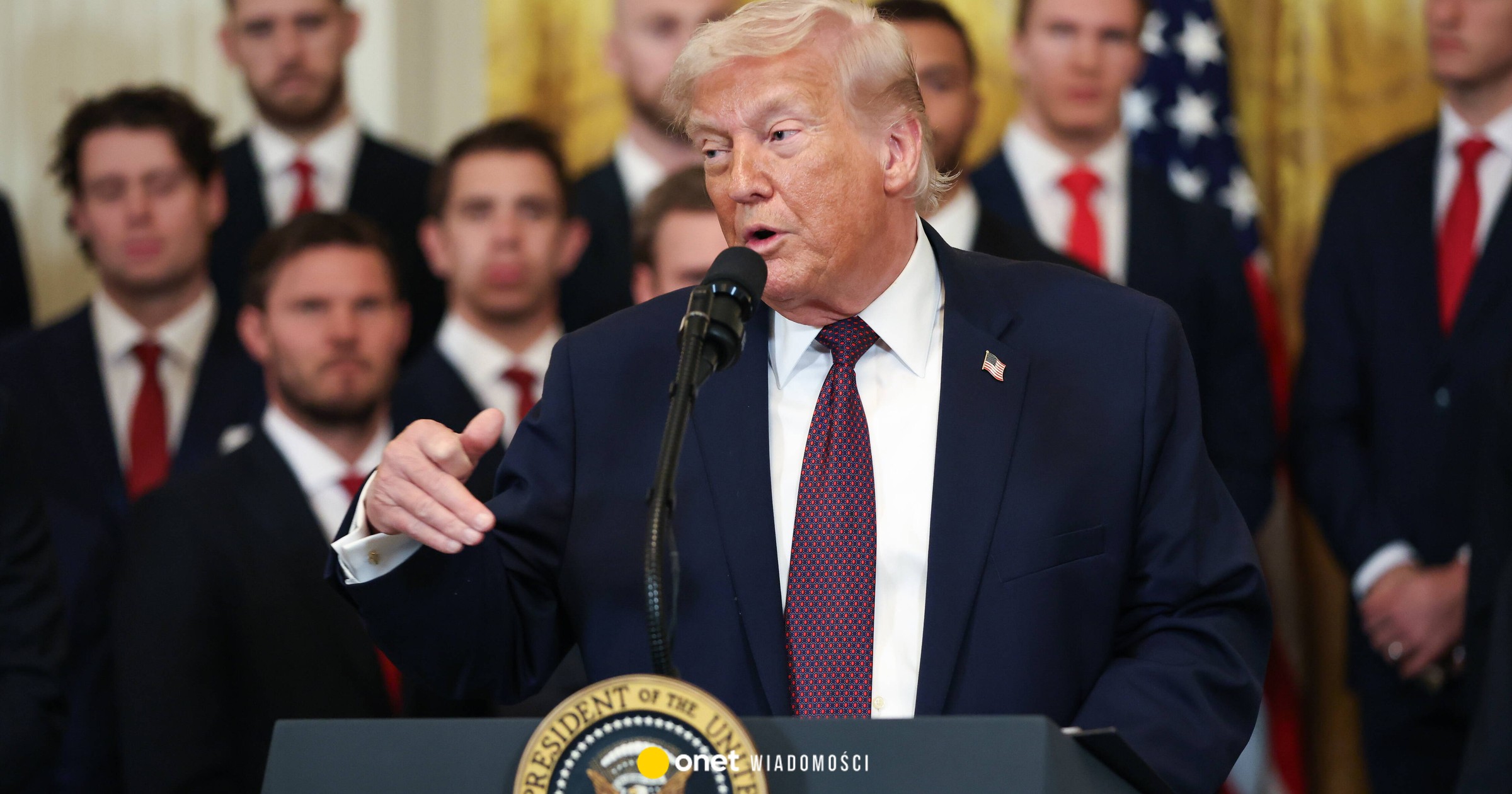
Three months have passed since Donald Trump's return to the White House, and in Ukraine there was no breakthrough towards peace. Talks between Washington and Moscow focused almost exclusively on repairing bilateral relations, while attempts to ensure even a limited suspension of weapons – whether in the Black Sea or around the energy infrastructure – they failed.
It is true that Trump did not “gave Ukraine to Putin”, as many were afraid of explicit split between Zelanski and the new US president, who was broadcast all over the world from the Oval Office on February 28. The White House even talks about “progress” in the dialogue with Moscow – despite the fact that the number of fatalities among civilians in the main Ukrainian cities is still growing. For its part, Russia carefully signals that one should not expect a real breakthrough in the case of Ukraine and demands from Kiev far -reaching concessions.
So far, no one has even presented the basic sketch of a peace plan that could satisfy the Kremlin and would not mean the total surrender of Ukraine. In the current situation, the most likely result is the continuation of the war. But even if the conversations end in failure, this does not have to cross out the “new reset” in American-Russian relations.
There are at least three reasons why the tensions between Washington and Moscow will probably soften, even if Kiev, Kharkiv, Suma, Odessa and countless other Ukrainian cities will remain under Russian fire.
Ukraine goes to the background
First of all, for Trump the European policy and the future of Ukraine are not priorities. He consistently signaled both the EU and Ukraine that although the United States would prefer the war to end, they were not going to play an active role in achieving a peace agreement. Instead, America Trump transfers responsibility for any future agreement and its enforcement to Europeans.
This would allow him to limit his involvement in the matter of Ukraine and focus on other areas of American politics. Considering his plans for the annexation of Greenland, the deportation of a million migrants, conducting commercial wars with most of the world and confrontation with China, Ukraine can easily go down to the background.
Secondly, Trump does not perceive Russia as a serious threat in itself. In the face of an unprecedented trade war with China The American president wants to avoid rapprochement with Moscow with Beijing. To keep Russia away from China, Trump must maintain a dialogue with the Kremlin – and this means that it will most likely not increase the sanction pressure on Putin.
Thirdly, Moscow makes it clear to Washington that the double -sided agenda of both countries can go far beyond the war in Ukraine. Although the potential of economic cooperation may be limited, Russia may be useful when it comes to regulating crises in Syria, Israel and Iran. All this means that for Trump it is important not to escalate tension with Putin. Even the minimum normalization of relations can be presented as a large achievement for both the White House and the Kremlin.
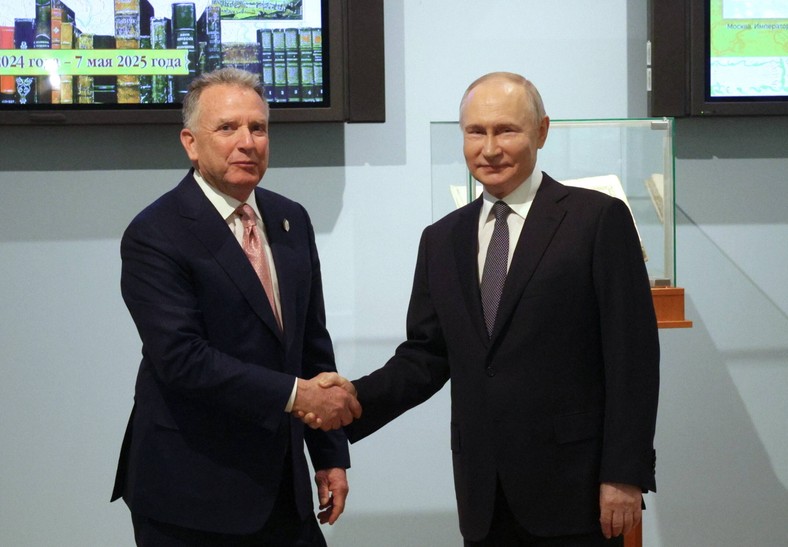
EPA / GAVRIIL Grigorov / Sputnik / Kremlin Pool / PAP
Russian President Vladimir Putin and a special US envoy to the Middle East Steve Witkoff during a meeting in St. Petersburg, Russia, April 11, 2025.
That is why both sides will probably think twice before they decide to escalate the situation. Even if peaceful talks were unsuccessful, There are several realistic scenarios for the development of relations on the US-Russia line.
Partnership without obligations
Given the current trajectory, the most likely scenario is the further pursuit of “reset” without serious obligations on both sides. To maintain Russia's involvement and encourage Moscow to cooperate beyond the issue of Ukraine, it would be enough for the US to signal the withdrawal of military and financial assistance for Kiev and take steps to reduce military presence in Europe.
Putin can interpret these movements as the promised US exit from the conflict, which in practice would transform Washington from the opponent into a difficult but potentially useful partner – at least on some issues. Full abolition of sanctions would not be necessary because Moscow understands that such a step would be politically difficult for Trump. But withdrawing support for Ukraine would be a sufficient reason for the Kremlin to still call Trump “genius”.
Continuation of the material under the video
In this scenario, the burden of Ukraine's support would fall directly on the EU. Anticipating such a turn of cases, Brussels is already working on strengthening her own defense capabilities and increasing help for Kiev. To be honest, the European Union actually has financial resources to continue to support Ukraine in “active defense” mode.
However, without access to the American defense industry, military assistance for Kiev will be more and more difficult to maintain. In the most favorable scenario for Moscow, Trump could, following the example of Israel, prohibit the transfer of American weapons to Ukraine – even if the EU was willing to cover the costs.
Whether Trump will allow the EU to buy American weapons for Ukraine will depend not only on its relationship with Zelanski, but also on the wider trajectory of US-EU relations. Considering the ongoing trade war and the ambitions related to Greenland, It is difficult to predict how this transatlantic dynamics will look in six months.
Minimum relations
The most optimistic scenario for Ukraine is that Trump, trying to alleviate tensions with Western allies and its own political establishment, will blame for unsuccessful conversations directly to Putin, and then join Europe in punishing Russia for refusing to end the greatest war in Europe for 80 years.
However, no one should expect a complete change in Trump's worldview. The commercial conflict and confrontation with China will remain his main priorities in the coming years. At best, Kiev can count on further military support at the current level, provided that the EU takes most of the financial burden. In this scenario, Trump may agree to impose additional sanctions on Russia and to largely suspend a two -sided dialogue. Nevertheless, even in the face of re -tensions, some efforts to maintain minimal contacts with Moscow will probably be continued.
Ironically, even with the warmest relations between Washington and Moscow, the greatest threat to Russia may be the escalation of the US-China trade war, which causes a decrease in oil prices. As a result, Trump may remain Putin's “friend”, while causing the Russian economy more damage than any regime of sanctions.
Friendship in spite of
The less likely scenario assumes that the US will completely withdraw support for Ukraine, relations between Washington and Brussels will deteriorate further, and Trump will be willing to significantly expand cooperation with Russia. It is worth noting immediately that the potential of such cooperation remains limited and no dramatic breakthrough should be expected. Moscow will not abandon his partnership with China, but can play an active role in a new agreement on Iran, demonstrate flexibility in the Syria case and offer limited support for Israel.
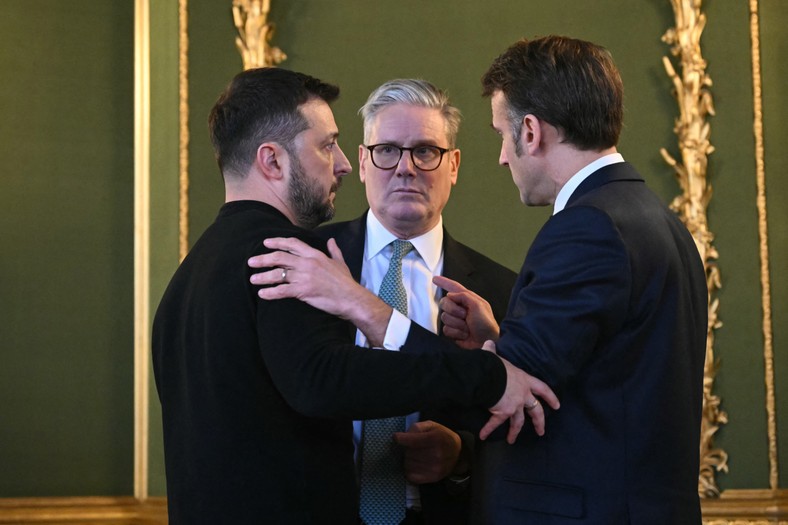
Justin Tallis / Pool / AFP / AFP
The President of Ukraine Wołodymyr Zielnski, Prime Minister of Great Britain Keir Starmer and French President Emmanuel Macron after meeting during the peak in London, March 2, 2025.
To arouse greater enthusiasm in the Kremlin, Trump would have to bear at least some sanctions – perhaps those regarding the air and Russian export sectors. In return, Moscow could propose large joint projects in the Arctic and – more broadly – the renovated version of the “pact about non -aggression and mutual understanding”, which will clearly mark out the zone of influence. As part of such an agreement, Russia could commit to limited neutrality in the Asia and Pacific region in exchange for refraining from interference in European affairs.
The Kremlin certainly has the ambition to conclude an agreement on such a scale. For Putin, this would almost make a sign of equality between two powers.
Which scenario is most likely?
The first scenario – reduction of tension with limited cooperation – still seems to be the most realistic. However, one should not forget that Trump's approach in the last three months has been very chaotic, unpredictable and often contrary to traditional US interests. His aggressive economic moves push the global economy towards the slowdown, which will inevitably also affect the United States. In November 2026, half elections are planned, and the democrats will probably regain the majority in the congress – and this would complicate Trump's presidency and divert his attention from foreign policy.
So far, “reset” with Russia has not taken any clear shape. Both sides still discuss only how to open the embassies again. And it is quite possible that if any progress is actually made, Trump will be criticized on the part of national opponents and US allies.
Even for the newly elected president, an attempt to fight the whole world – except Russia – will not be easy. Despite his inexhaustible energy, Trump is unlikely to make a revolution in foreign policy overnight. As we saw earlier, he rarely focuses on one issue for a long time. In these circumstances, the idea that he could provide a deep and lasting partnership with Putin seems unlikely.
It seems more likely to partially withdraw from Europe and reduce support for Kiev. This, in turn, leads us back to the question about the role of Europe in the future of Ukraine. Whatever happens in negotiations between the US and Russia, one thing is certain: Kiev will not accept surrender, and the European Union does not give up supporting Ukraine's law to defend.
I’m Ashley Davis as an editor, I’m committed to upholding the highest standards of integrity and accuracy in every piece we publish. My work is driven by curiosity, a passion for truth, and a belief that journalism plays a crucial role in shaping public discourse. I strive to tell stories that not only inform but also inspire action and conversation.