China is looking for allies in the commercial war triggered by Trump. “Destruct the global economic order”

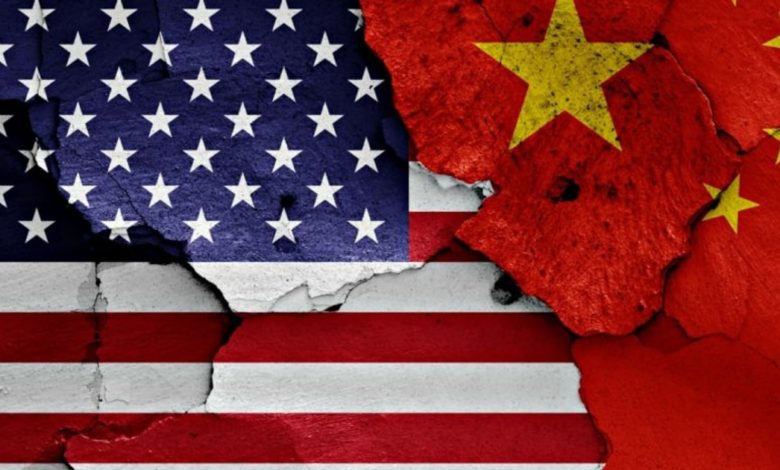
China is trying to attract other states to its side in the commercial conflict with the United States, warning that the rates imposed by Donald Trump will destabilize the world economic order.
China accuses the US to destabilize the world's shutterstock world economic order
China is trying to attract other states on its side, while the US imposes new rates, in an apparent attempt to form a common front that forces Washington to give back. A few days after the beginning of these efforts, the results are partial, as many countries are not willing to align with the main target of the commercial war triggered by President Donald Trump, according to AP News.
Beijing has so far refused to initiate some discussions, declaring that it will “Fight to the end” In a tariff war, which caused Trump to increase taxes for Chinese imports up to 125%. In turn, China responded with 84% rates applied to American products, which entered into force on Thursday.
Trump's measure seems to have the purpose of restricting an unprecedented trade – between the US and most of the world – at a direct confrontation between Washington and Beijing.
“A straight cause attracts many supporters”said the spokesman of the Chinese Foreign Ministry, Lin Jian, in a Thursday briefing. “The US cannot win the support of people and they will fail.”
China is trying to get closer to the EU
Beijing has focused especially on Europe, a phone call between Prime Minister Li Qiang and the President of the European Commission, Ursula von der Leyen, being considered by the official press “A positive signal transmitted to the world ”.
“China is willing to collaborate with the EU to implement the important consensus agreed by China and EU leaders, to strengthen communication and exchanges and to deepen cooperation in the field of trade, investments and industry.”the Xinhua Chinese State Agency said.
According to her, Chinese trade minister Wang Wentao said the rates “It seriously violates the legitimate interests of all countries, blatantly contravenes the WTO rules, seriously affects the multilateral commercial system based on rules and destabilizes the global economic order.”
“It is a typical act of unilateralism, protectionism and economic intimidation”Wang said.
China, willing to negotiate with the US under other conditions
“China is willing to resolve divergences through consultations and negotiations, but if the US insists on their way, China will fight to the end.”he warned.
In Hong Kong, the Local Office of the Chinese Foreign Ministry has reaffirmed Beijing's refusal to negotiate with the US under current conditions.
“We must say solemn US: a barbarous armed with rates, trying to force other countries to sound and implore mercy, will never receive that call from China.”wrote Huang Jingrui in an editorial published in South China Morning Post.
If the US is truly sincere about a dialogue, “He must immediately correct his wrong practices and adopt a correct attitude of equality, respect and mutual benefits.”Huang said.
Not all countries want to ally with China
Although the dissatisfaction with Washington are increasing, not all countries are eager to align with China, especially those with a history of conflicts with Beijing.
“We express our point of view independently, and the position of Australia is that a free and equitable trade is beneficial.”said Australian Prime Minister Anthony Albanese. “We have relationships with all the countries, but we defend our national interest and we are independent.”
China imposed, in 2020, a number of official and unofficial commercial barriers against Australia, after the Canberra government demanded an independent investigation into the origin of the Covid-19 Pandemic.
India would also have refused China's calls to cooperation, and Russia, although considered the closest geopolitical ally of Beijing, has been completely bypassed by the new tariffs imposed by Trump. Taiwanese Foreign Minister Lin Chia-Lung announced on Wednesday that Taiwan is preparing discussions about the US tariffs.
The US imposed a 32% rate for imports from Taiwan, a strategic partner in the field of security and trade. Taiwan produces most of the high performance chips that the US and other states want and has a long -time commercial surplus.
Southeast Asia nations, such as Vietnam and Cambodia, are in a difficult position. They have benefited from moving China factories due to high costs, but are now affected by new rates and do not have many alternative markets outside the US, already working with extremely low profit margins.
Markets grow but the risks persist
Global markets increased on Thursday, Japan's reference index ascending by over 9%, while investors welcomed Trump's decision. The German Dax initially increased by over 8%, and later by 7.5%, reaching 21,141.53. CAC 40 from Paris rose with 7.2%, and the FTSE 100 from the UK advanced by 5.4%, up to 8,090.02.
However, US stock clues have dropped slightly, as well as oil price. Chinese actions had more moderate growth, in the context of escalating the tariffs imposed by both sides.
Futures contracts for S&P 500 were 0.4%down, and those for Dow Jones by 0.2%.