The noble crypts, hit by the curse of the treasures. Hand -wrathful places have kept disturbing legends

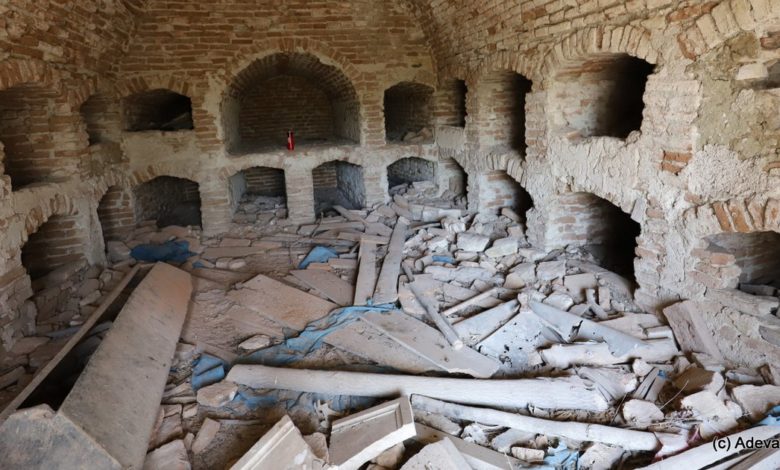
Numerous noble crypts in western Romania, in the past symbols of influential families, have been devastated. Legends about hidden treasures and the carelessness of the communities have led to the destruction of funeral monuments that have retained precious historical testimonies.
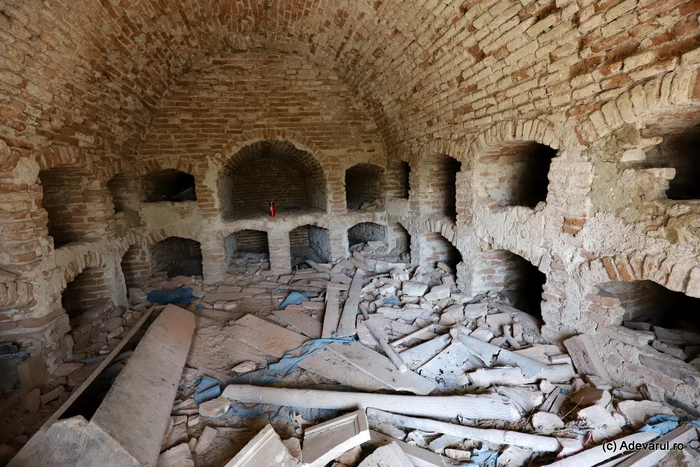
Makray family crypt. Photo: Daniel Guță. TRUTH
Dozens of noble castles and mansions in western Romania were ruined in the 20th century, and with them the crypts of the families who lived were destroyed. The reasons why not only the castles, but also the places of forever were destroyed after their former tenants left them.
The locals often told that the horns were perceived as extremely rich, so that the villagers imagined that they were buried with expensive jewelry and gold, the local legends caused the villagers to act, in the long-kept places, without fearing the graves.
With the establishment of the communist regime, numerous wealthy families passed among the “enemies of the people”. The estates were collectivized, the mansions were devastated, and some of their owners arrived in prison. The crypts of the Hungarian families suffered a similar treatment, arising from the “class” hatred fueled by the communist authorities.
Sometimes the crypts were regarded as representative monuments of the Hungarian aristocracy, and the acts of vandalism were fed by ethnic and political resentments. After 1990, while the descendants of the old noble families did not return to the country, the negligence and carelessness of the communities contributed to their destruction. And after 1990, the pursuit of treasures determined the criminals to commit destruction.
Broken coffin, bones scattered in the Makray family crypt
Located 10 – 20 minutes by car from Hunedoara, the villages of Peștișu Mic commune, at the foot of the Poiana Ruscă mountains, are sought by tourists for their natural “treasures”, some interesting caves, which were inhabited in prehistory.
Less known is the story of the Makray family, which has long mastered the settlements on the Nandului Valley. She is a documentary attested from the time of Ioan de Hunedoara, in the middle of the fifteenth century, but some researchers claimed to be one of the first Hungarian families established in these lands, three centuries earlier. Other researchers from the past showed that nobles Makray had Romanian or German roots.
Some of their estates in the villages of Nandru, Valea Nandrului, Josșu and Peștișu Mic were devastated during the riot led by Horea, Cloșca and Crișan, but the biggest damage was caused in the 20th century.
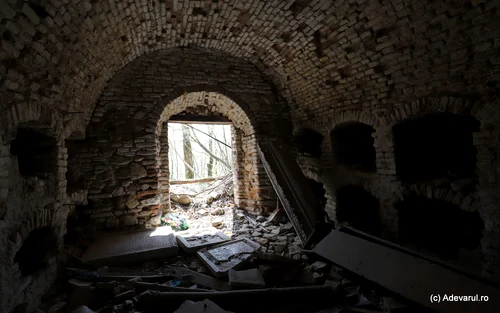
Image 1/3:
Makray crypt photo Daniel Guță Adevărul (3) JPG
“It was a boyar mansion in the center of the village of Peștișu Mic, of these groups, but it was over time. And the crypt of their family was destroyed. I remember when I was a child, that we were playing there. But the coffins were broken, because the people believed that the boyars were buried. He kept hives there, but then the forest grew and hides the place where the tombs are ”, He tells an elderly local from the village of Peștișu Mic.
Poieni crypt keeps tragic memories
In the crypt of the Makray family, some researchers claim that he was moved, from Orăștie, the body of Zsofia Torma (1832 -1899), the first woman archaeologist in the history of Romania, who discovered the valuable remains of Turdaș civilization and researched the caves inhabited in the Stone Age on Valea Nandrului.
The abandoned crypt depicts a gloomy view. The room is destroyed, and among the rubble and broken funeral stones are scattered the bones removed from the broken coffins.
In the village of Poieni Strâmbu from Timiș county, another place at the foot of the Poiana Ruscă Mountains, was once the field of Poieni Strâmbu, the property of Contese Leopoldina Stojanovits. In the summer, the “greatness”, as the locals called (from “Măria Sa”), spent their time here, in a holiday home on a hill, of which today only the foundation remained.
Leopoldina had only one son, Bogdanovich Ferencz. At 19, in love with a young woman from Budapest, she would have come to duel with a rival and lose. Some say he died in the duel, others that, ashamed and grieving, he shot.
“About the reason for the tragic gesture of the 19 -year -old, the acquaintances still carry various hypotheses. The most plausible seems to be an unfortunate love: he wanted to marry, but the family could not accept this union. In this sense, the rumors about a duel seem to be unfounded. Timisoara ”, they informed the Hungarian newspaper “Independent” in 1881.
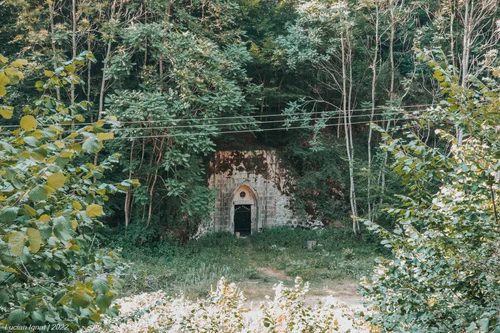
Image 1/5:
Poieni Poieni Crypt Lucian Ignat (3) JPG
The Countess built a crypt in the Poieni forest, where she buried her son. After a few visits, he disappeared without trace. The crypt, dug in the rock, had two rooms. In the first, was the crystal coffin and, at the entrance, Lord was buried, the dog's dog.
“Only a year after the funeral, the coffin was robbed, and the body thrown in Bega. Of anger, the greatness brought it back, built into an interior room and closed the crypt with a wrought iron gate.” inform the press of the time.
In the 1980s, the crypt was dynamite. Ferencz was removed from the coffin and left on a sheet. Vandalization continued. The gate was stolen, and through the cracks of the wall you can see the remains of Ferencz today. Leopoldina has been living in Budapest for the last few years and, in 1906, sold the Poieni domain.
The Lazar Grophor Crypt, devastated in the pursuit of treasures
The crypt of the Lazăr family, located in the Brazi forest near the former school camp in Lăpușnic, Hunedoara county, was also completely devastated. In the last centuries, the members of the family of the Lazăr Grofilor were buried here. Among them was Stephanus Lazăr de Csiktaplocza, who died in 1869, whose remains were brought here from the Ilia cemetery.
In the autumn of 1918, the castle was devastated by the locals, and with the establishment of the communist regime, the wealth of the Lazăr family was confiscated. The buildings of the mansion became the headquarters of the collective agricultural household, and the furniture, the archive and the library have disappeared. The arboretum was destroyed, and in 1949, the entire Lazăr family was forced. Laszlo Lazăr was sentenced to 3 and a half years in prison for the “fault” to have paid his employees better than the 1947 decree.
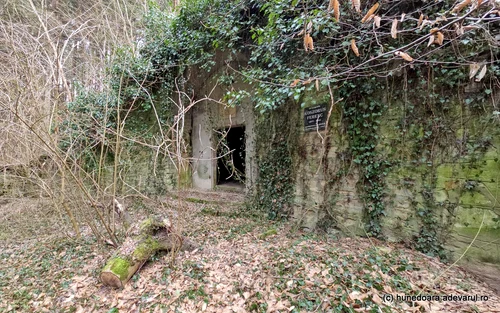
Image 1/12:
Lazar family crypt in Lăpușnic photo Daniel Guță Adevărul (15) JPG
After his release, he returned to the village and worked as an agronomist engineer. His family took refuge in Hungary, and in the 2000s, part of the estate was returned to the followers. Today, the former mansion is ruined, the stables raised by the Communists are abandoned, and the school camp established on the former family land has been abandoned. After the 1990s, the crypt in the Brazi forest, recessed with old art monuments, was desecrated. It was spread the legend that the tombs had hidden treasures, and the rumors attracted gold and “curses.”
“All the graves were robbed, and the chapel was destroyed. It is said that the family left a curse on those who reached the remains,” Tell a local.
The crypt of the piles of Mureșan Bretea, ruined and loaded with legends
In the village of Bretea Mureșană, from Hunedoara county, the ruins of a cavou chapel, over a century old, keep the memory of a noble family and the legends that surround it.
Instead of a former boyar estate, where in the past the Nagy family castle rose, nature has made its place. The crypt, near the remnants of the secular trees in the former park, became the target of the profane in search of treasures.
According to the local tradition, the Nagy family would have been extremely rich, and the cave would have been decorated with a gold leaf.
“Her wealth was due to both the exploitation of the peasants, but especially to the discovery of a huge treasure, from the time of the Dacians and the Romans, on the Măgura hill. According to tradition, the castle had secret tunnels and exits to Măgura and Sămăma, secret tunnels that left both the castle and under the crying,” The authors of the 2005 monograph of the Ilia commune showed.
Groful Albert Nagy and his son, Husar Laszlo Nagy, who fell on the front in 1914, were buried here. After the Communists came, the estate was transformed into a collective farm, and the crypt became a warehouse for chemical fertilizers. After 1990, the mansion disappeared completely, and the land was granted to investors who abandoned it.