“I still remember this thrill.” This is what the professional search for ancestors looks like

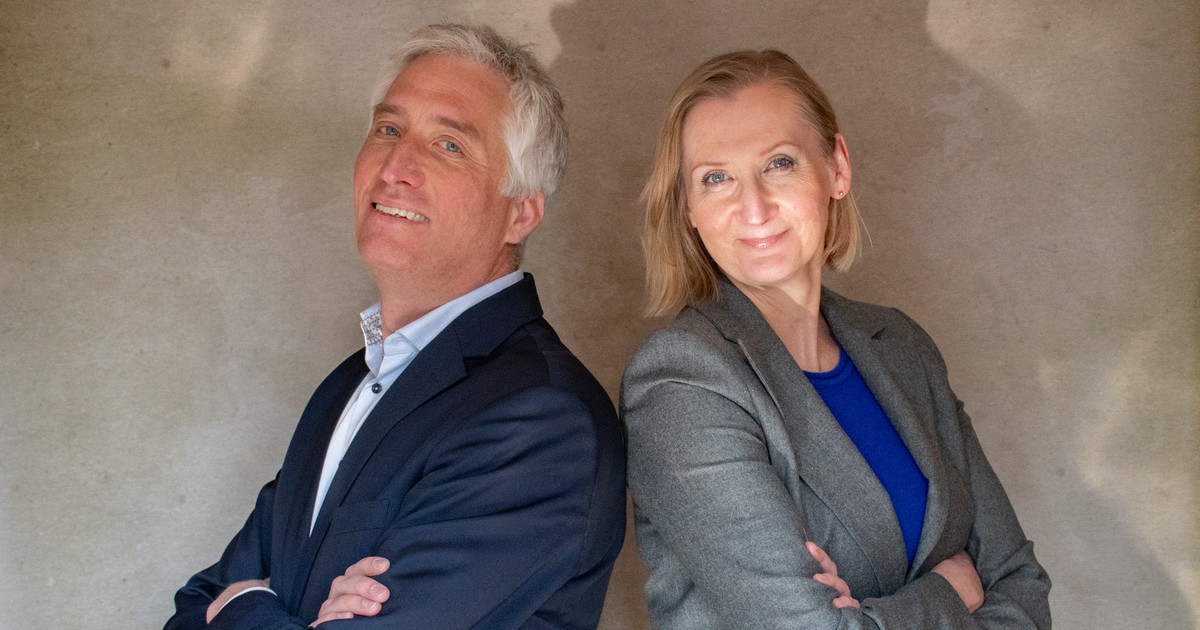
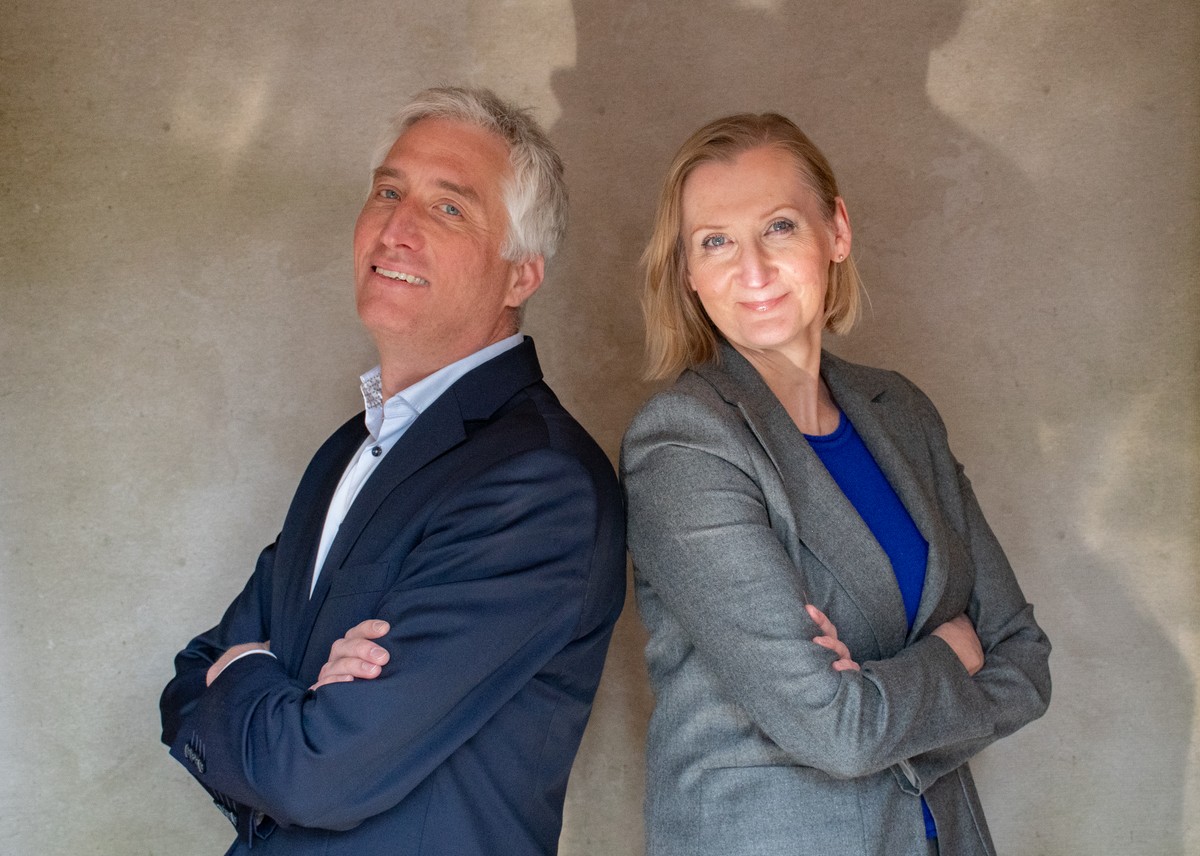
Mateusz Madejski, Business Insider Polska. What exactly does your daily work look like? The client comes to you and says that he wants to find out where he actually comes from?
Dawid Walendowski, ancestor of the ancentate: At the beginning we want to arrange two things with the client. First of all, the starting point of the client, which is what he already knows about his family. And secondly – it is his goal, i.e. where he goes, why he wants to find answers to all these questions.
Read also at Business Insider
Dawid Walendowski: I would say that there are basically two groups of our clients. The first is the one who simply wants to learn something about her roots – and is primarily motivated by curiosity. The second one has practical motivation, it can be said official.
Meaning?
Anna Wiernicka: They are often, for example, people who want to confirm Polish citizenship and come from countries outside the European Union. But not only. We also worked for families from around the world who want to confirm their Jewish roots – for example, to apply for Israel's citizenship. Naturally, there are also purely inheritance matters.
“There are always emotions with us”
There are people who are distant against the history of their family?
Anna Wiernicka: Yes, it happens that someone needs only a document and nothing else is interested in. But more often it is that someone reported to us to obtain such a document, and then family story pulled him in a lot and wanted to explore it. In the end, people who are very emotionally distanced against the whole process are relatively rare.
Dawid Walendowski: Often our clients are not private individuals, but also, even law firms. Well, in such cases there are not many emotions here.
Anna Wiernicka: Or a trust fund reports, which manages property, where there are no heirs and must, for example, close inheritance proceedings. So we are looking for these heirs. And even if we don't find any of the living, it doesn't have to be a query without emotions. For us, for example, such searches are interesting, because then family stories are drilling. We live with this story too, it is difficult to do it purely instrumentally. Each family history has its own taste, each is different.
Dawid Walendowski: Even if it happens that a story does not arouse emotions in clients, it always wakes up with us.
Where do your clients come from?
Anna Wiernicka: We didn't have any client from Antarctica or Greenland. But besides, we work for people looking for their roots in Poland from all over the world. Of course, there are a lot of them with the USA, Canada or Israel, but also from South America, Africa, Australia and New Zealand.
Is it so that Poles or people with Jewish roots are looking for their roots most often?
Dawid Walendowski: It was in Poland, especially in the Second Polish Republic, more national minorities. Belarusians, Germans, Ukrainians … and people with such roots also often report us.
And the Poles who live in Poland?
Anna Wiernicka: Of course, such customers are also, but there are not many of them. There are companies – also those friendly with us – which specialize in such orders.
“These are really difficult stories”
I am sure that you have dealt with many exciting stories.
Anna Wiernicka: That's true. Recently, we had a story where the granddaughter wanted to discover her biological grandfather – because there was double adoption in the family. I mean, she was adopted, but her father also came from adoption. We managed to find her “native” grandmother, but not the “native” father.
Dawid Walendowski: There are really difficult stories. Once a American came to us, who came from a family with Polish roots. Her grandfather was violent – there was a divorce and in the family. And it happened about 100 years ago, i.e. at a time when divorces did not actually happen at all. This grandfather disappeared at some point – the family did not know what had happened to him. We managed to determine that this grandfather returned to Poland, we also found a place of his burial.
How much time does the search last?
Anna Wiernicka: It depends on how many offspring we want to determine. Sometimes you can reach information in 12 hours. But such time really only allows you to reconnaissance. However, there are projects taking several dozen hours, and sometimes even several hundred. Of course, such projects can be divided into different phases. Sometimes it happens that we have a 20-hour project, but then the customer wants to continue it.
Work requires many travels?
Anna Wiernicka: Sometimes, of course, yes, but not always – we also cooperate with researchers who live in different parts of the country and outside Poland. However, in the past I traveled very often, visited, for example, Ukraine or Belarus, because it was necessary.
It happens that building a family tree proves impossible?
Dawid Walendowski: Unfortunately, it is such a job that it is difficult to arrange a specific effect. Therefore, we operate for hours. And our task is to allocate a certain number of hours to best answer the questions asked. So we usually can't say how many generations in such a tree will come out in advance.
See also: Hardly anyone knows about it. The creator of the iconic brand on the Seine had Polish roots
But do you make a family tree?
Dawid Walendowski: Yes, it is often an attachment to our reports.
What does it depend on, how much can it be determined?
Anna Wiernicka: From a lot of things, for example, from what social layer ancestors belonged to. If they lived in one city or settlement, it's obviously easier. But it happens that people then often moved from place to place in search of opportunities for a better life. For example, millers often did not have their own mill, and they were tenants who hired in various nearby mills. So if someone had a ancestor who was a “free shooter” without property, the search is longer and more difficult.
How is it looking for then?
Anna Wiernicka: The methods are various. Court entries, documents from collection to the army, of course parish documents … Of course, it is not that everything is preserved. But there is usually something.
My family comes partly from the areas that today belong to Belarus, and partly – from the areas that currently constitute Ukraine. I bet that searching for documents in these places would not be easy.
Dawid Walendowski: Not necessarily. It often turns out that in Warsaw it is more difficult to find documents than in a borderland town. After all, few places were as destroyed as our capital during World War II.
What happens when you dug up difficult stories in the client's family? In any case, you tell him the truth, but do you sometimes want to save unpleasant details?
Anna Wiernicka: In such cases, I want to talk to the client in front of all before I present anything in writing. If someone wants to know everything, of course I tell him everything. If someone asks to save him the details, of course I do not present them. But certainly my task is not to conceal anything. Especially if it is to have any therapeutic meaning – then you have to say everything from A to Z. And I have to say that it often healing it, when someone discovers the whole truth.
It happens that someone counts that you will find him noble blood, and he comes out that he is a descendant of peasants?
Dawid Walendowski: To be honest, contrary to appearances, people quite rarely want to look for their noble roots. These are really few cases with us.
Anna Wiernicka: I have a slightly different story. My husband was convinced that he had peasant roots. It turned out that on the one hand he has noble origin, and on the other – Jewish.
See also: Inflation pressed us for Piłsudski. That is, the fascinating book I found at my grandmother
There were stories like a movie?
Anna Wiernicka: We once dealt with the history of a Jewish family. We came to her tenement house. The then owner did not want to let us into her. It turned out that the Jewish family promised the owner's ancestor, that he would prescribe his own tenement house, as he would store them, but instead he gave them to the Germans. The Jewish family was arrested and went to Auschwitz. To this day I remember this thrill when I climbed the stairs of this tenement house.