“We get to the one”. Prof. Kamiński and Judge Antas explain the effects of the CJEU judgment


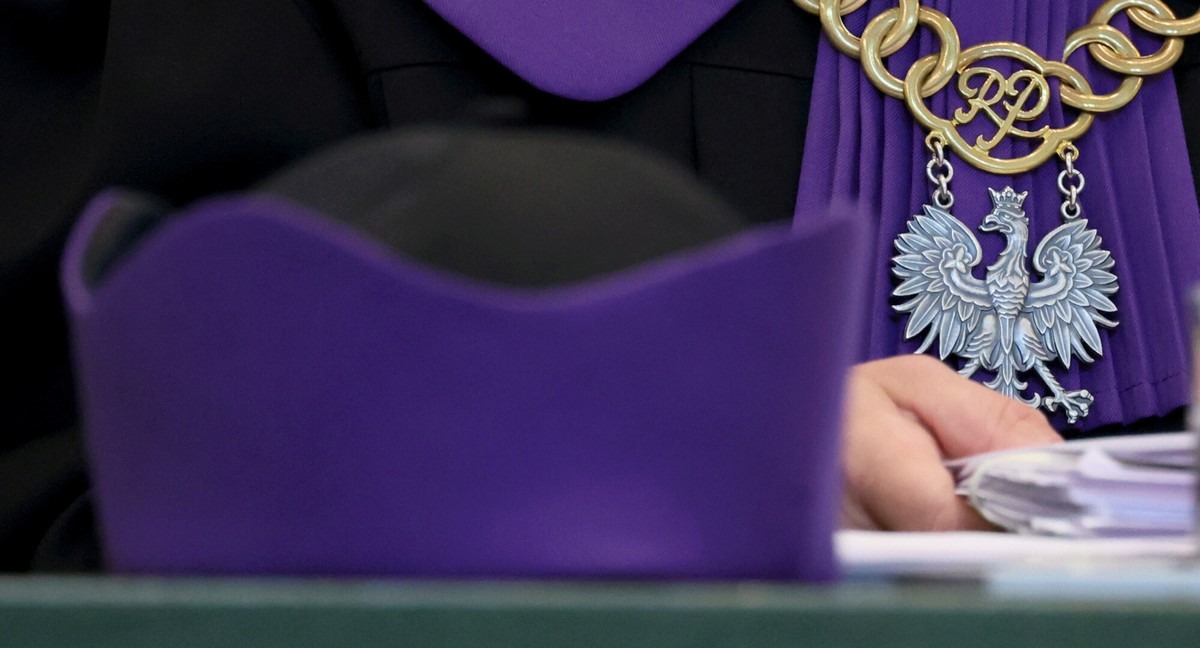
When the court authority of the last instance does not meet the requirements of independence and impartiality, the judgment issued by him should be considered not beyond when it is indispensable to guarantee the priority of Union law. This is how the CJEU ruled in response to the question of the Court of Appeal in Krakow regarding the validity of the Chamber of Extraordinary Control and Public Affairs of the Supreme Court (Case C -225/22). What does the CJEU judgment mean in practice, can each Supreme Court be challenged?
See also: Important decision of the CJEU. It is about the judgments of the Supreme Court
Which Supreme Court judgments can be challenged?
Above all The CJEU ruling refers directly to the Extraordinary and Public Affairs Chamber. It is a chamber that decides, among others Electoral protests, determines the validity of the election, but not only. Cassation complaints and extraordinary complaints, which often relate to disputes about usury, loan agreements, declines, etc. Therefore, first of all, the rulings of this chamber may be considered not to be considered.
However, as noted by judge Marek Antas, president of the Association of Graduates and Applicants of the National School of Judiciary and Prosecutor's Office, it is difficult to expect a different decision to other chambers of the Supreme Court. The CJEU speaks in the operative part about the court rulings of the last instance. – It cannot be ruled out to undermine the judgment of another Chamber of the Supreme Court on the basis of the judgment of the CJEU. On the other hand, I do not think that such practice is applied to common court rulings without legal questions addressed to the CJEU – explains Judge Antas.
Lawyers point out, however, that not every Supreme Court judgment can be considered not.
What conditions must be met so that the judgment is considered not to be
In discussions, especially on social networks, there were voices that the CJEU allows us to consider every judgment issued with the participation of a judge appointed at the request of the National Council of the Judiciary chosen after 2018. However, lawyers warn against such generalization and automatism. – Recognition of the judgment as non -CJEU has made it addicted to two premises that must be met – explains prof. Ireneusz C. Kamiński from the Jagiellonian University and the Institute of Legal Sciences of the State Academy of Sciences. – First of all, Union law must apply, and secondly, recognizing the judgment is not invaluable to guarantee priority. Therefore, if the case is outside the scope of EU law, the CJEU judgment does not apply. It will be similar if the case is covered by Union law, but there is no need to provide priority – explains prof. Kamiński.
Marek Antas gives a specific example. – If, for example, IKNISP settled the judgment awarding the return of the usury loan, then the recognition of the Chamber's decision would be not contrary to the principles of EU substantive law, which is opposed to usury. Similarly, it can be, for example, in franc matters – explains Judge Antas.
Each court may rule differently
However, this is a point of view of two lawyers, not all judges. For what to do with the Supreme Court's decision, the common court will decide to which the case will return. It will be a second instance court, appeal or district, depending on the case. In short: the Supreme Court will issue a ruling, but what to do with it, whether to recognize or not, will be decided by a court whose judgment he dealt with.
– It is therefore a common court to which the case of the Supreme Court will return to, will decide whether the Union law applied and whether it has priority – explains prof. Kamiński. It may therefore happen that the court considers the Supreme Court to be unwell, but according to one of the parties and contrary to the judgment of the CJEU, because, for example, the Union law did not applyor it had and was properly used. What then?
– Then We will deal with an even greater mess, but such a fate was prepared for us by politicians – says judge Antas openly.
– maybe he will remain a cassation appeal to the Supreme Court, but that means that There will be even greater chaos in our judiciary. We are threatened with such a ping-pong. That is why decisive and effective actions are needed to solve the problem. We bend differently and completely destabilize the system – says prof. Ireneusz K. Kamiński.