On September 5, the European Commission punished Google for abusing the dominant position on the EU advertising technology market. The penalty has two elements: a fine of EUR 2.95 billion [ok. 12,5 mld zł]and also the obligation to introduce changes to the company's business model that will stop abuse.
In response, US President Donald Trump issued a statement on how “Europe hit today on another great American company”. He warned in social media: “We cannot allow it to happen with the brilliant and unprecedented American ingenuityand if this happens, I will be forced to start the proceedings [na podstawie] Section 301 In order to annul the unfair penalties imposed on these American companies paying taxes ” – proceedings that probably led to the imposition of customs by the US.
But, with all due respect, Trump ignores the key issue: there is no discrimination here. The Commission sanctions cases of abuse of the dominant positionthat take place on the EU market, regardless of whether they are run by EU companies or from outside the EU.
What's more, American antitrust organs do the same in relation to the American market. Incidentally, The Federal Trade Commission in Washington initiated an investigation into Google and Amazon advertising practiceslargely in accordance with the guidelines of the Commission.
Continued article under video material
Google has already gained on Brussels's decision once
Let's go back 20 years to the time when I was an EU Competition Commissioner. In 2004, the Commission imposed sanctions on Microsoft after a long investigation, including constructive discussions, including with co -founder of Bill Gates, then general director Steve Ballmer and her then legal advisor Brad Smith. Ultimately, the commission imposed a fine of almost EUR 500 million and, even more important, ordered to change the company's business model.
Interestingly, Complaints that led to the initiation of investigation came mainly from American companiesincluding start-ups from the beginning of the Internet economy. They complained that Microsoft, who – thanks to his merits – legally gained a highly dominant position in operating systems for personal computers, used his position on neighboring markets, hindering the activities of other companies in various ways, thus suppressing innovation.
From the time we started our investigation, I remembered especially One of such American start-ups with a rather intriguing name: Google. I remember how the then director of Eric Schmidt visited the commission to praise our “courage”.
By the way, European corporate leaders, who sometimes call on a commission to less stringently enforce the rules of competition, should also remember about these cases from the past – Especially if they want a more innovative and competitive European economyexactly like all of us. Perhaps they should look at this issue from a broader perspective and think twice.
By her decision on Microsoft, the EC-and with her example several other competition bodies around the world-enabled Google and other start-ups to achieve great success. In fact, she put pressure on Microsoft to change her behavior And he adopted a corporate culture based on cooperation, not monopolization, supporting Open Source projects and promoting partnerships with other companies.
Many analysts believe that these changes, stimulated by the earlier determination of competition protection bodies, help explain Microsoft's success over the last decade, under the direction of CEO of satyi nadelli.
We take an example from Americans and fight monopoly
In this context, Trump's view that the EU competition policy is driven by discriminating motivations towards American companies is simply unfounded.
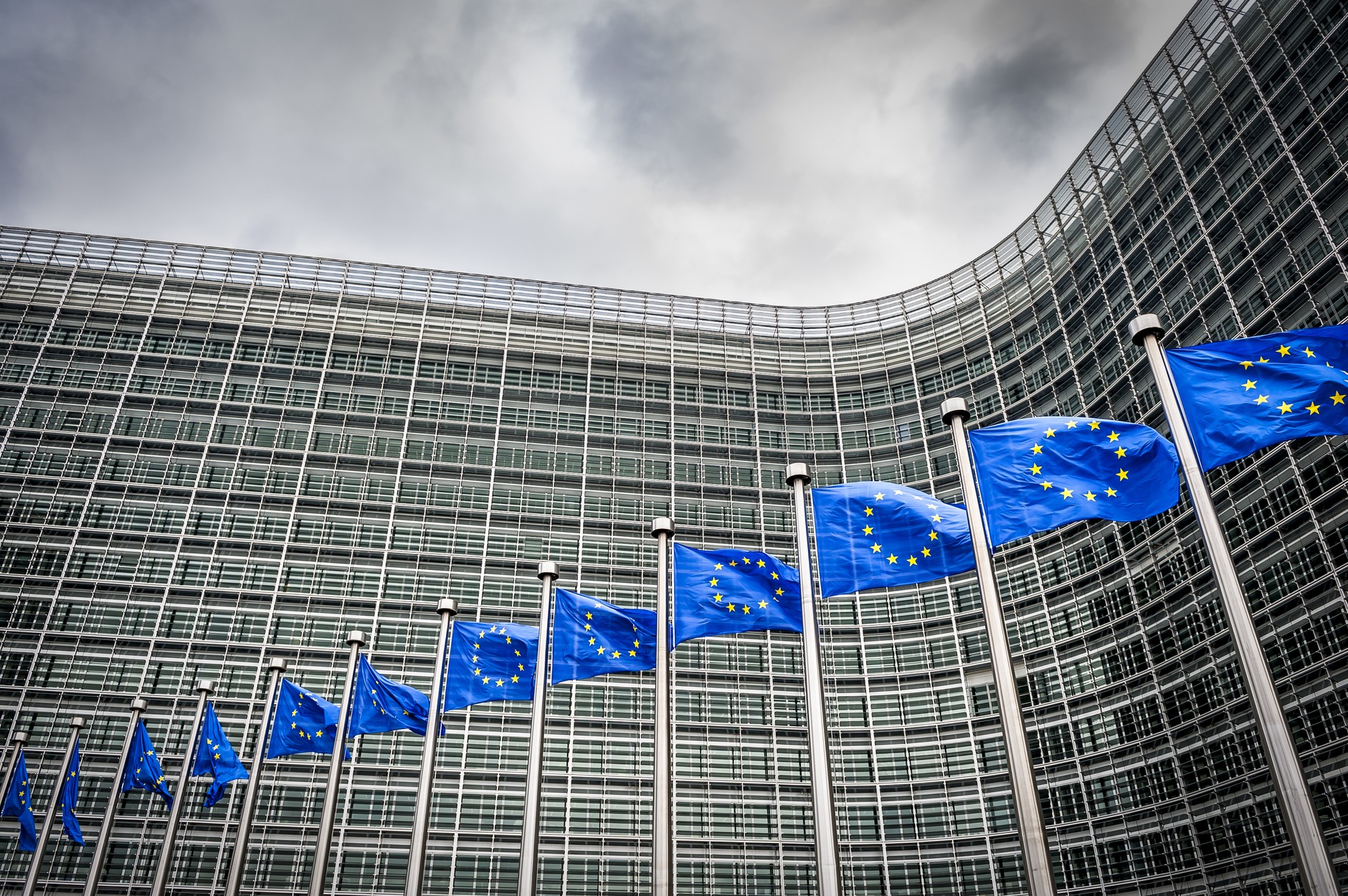
EU flags in front of the headquarters of the European Commission in Brussels. Illustrative photoLazyllama / Shutterstock
In fact, in every national or supranational context, such as the EU, institutions such as competition protection authorities and central banks They were created in accordance with the outstanding American tradition – dating back to the end of the 19th century (Sherman Antimonopoly Act) and the beginning of the 20th century (Act on the Federal Reserve) – just to prevent such abuse, whether by companies on the market or by governments abusing future generations through high inflation.
Of course, it is not a surprise thatleaders with an autocratic vision They would not feel at ease in institutions who entrusted the rule of preventing the absolutization of power from the past. But it was the United States that directed post -war Germany, and later the EU, to this track.
By occupying the country after World War II, America imposed the newly formed Federal Republic of Germany to create two institutions: First, Deutsche Bundesbank – an independent central bank modeled on the federal reserve system. It aims to avoid hyperinflation repetition that contributed to the arrival of Nazism.
Secondly, the Bundeskarttellamt Competition Officemodeled on the Federal Commission of Trade and the Antitrust Department of the Department of Justice, with the right to prevent the appearance of cartels and trusts in the heavy industry. This is another factor that contributed to Hitler's aggression and World War II.
Then, at the request of Germany – and based on the democratic and economic revival of the country – These two institutions were transferred to the EU level.
So today we must thank the United States not only for their decisive help in saving the continent from Nazism and fascism and to protect it against Soviet communism, but also For injecting post -war Europe such a powerful antidote for aberration from the past. Perhaps Trump will forgive us if we are not ready to give up this great American heritage.
I’m Ashley Davis as an editor, I’m committed to upholding the highest standards of integrity and accuracy in every piece we publish. My work is driven by curiosity, a passion for truth, and a belief that journalism plays a crucial role in shaping public discourse. I strive to tell stories that not only inform but also inspire action and conversation.