Hunedoara and Oțelu Roșu, “twinned” through steel. The fate of the former metallurgical centers in southwestern Romania

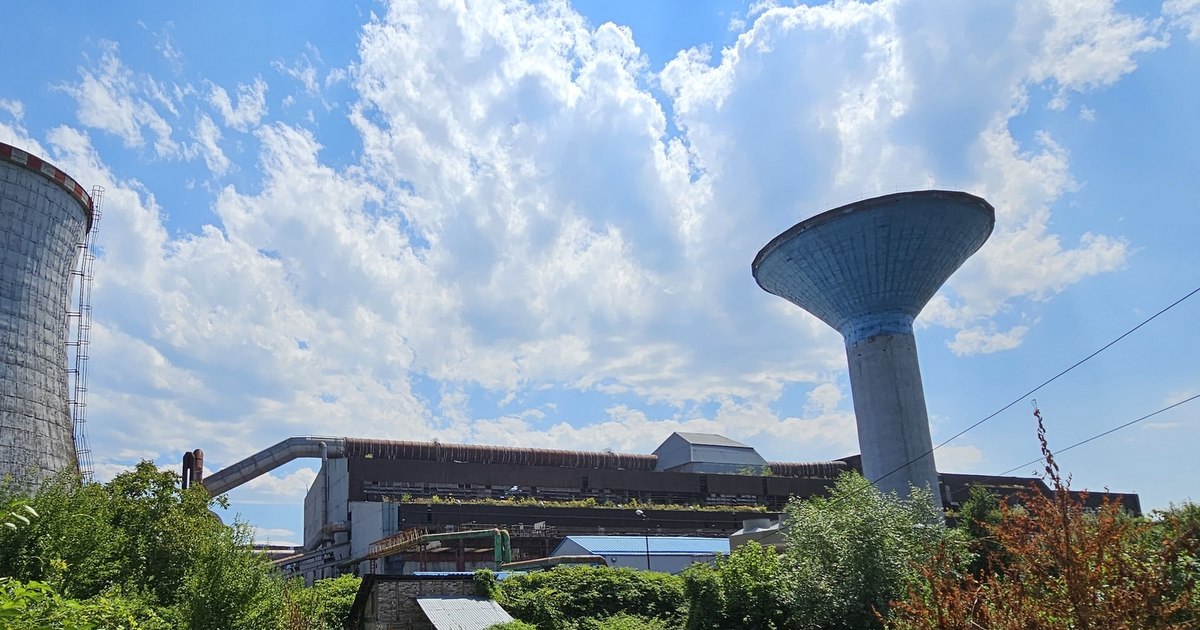
Located at a distance of only 80 kilometers, the cities of Hunedoara and Oțelu Roşu are also close due to their industrial history. They were important steel centers, and their factories, closed in recent years, will have the same patronage.
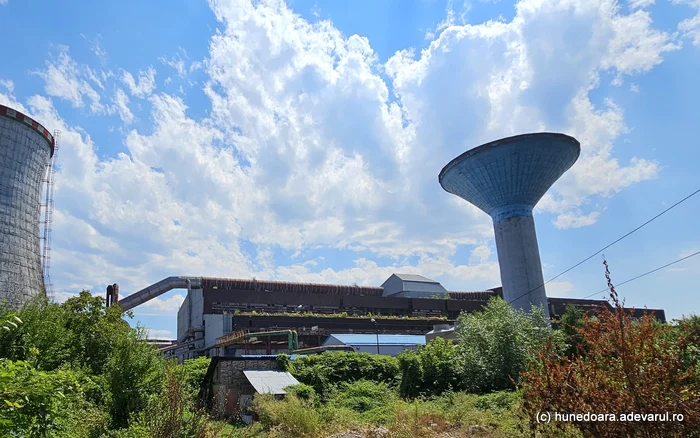
The combine from Oțelu Roşu. Photo: Daniel Guță. TRUTH
The Iron Gates of Transylvania, the legendary pass between Șara Hațegului and the Banatul Montan, connects the counties of Hunedoara and Caraș-Severin, two important metallurgical centers in the last three centuries.
The steel cities at the foot of the Poiana Ruscă Mountains
The Poiana Ruscă mountains, divided between the two counties, have preserved rich iron deposits, some of which have been exploited since Antiquity. In the 18th century, when the historical regions of Banat and Transylvania were under the rule of the Habsburg Monarchy, the first modern furnaces were built in the lands of Hunedoara and Caraș.
Several metallurgical plants developed in both regions in the 19th century, being expanded in the 20th century and transformed into steel mills that absorbed most of the local workforce.
The combines in Reșita and Hunedoara and the factories around them had over 20,000 employees in the 70s and 80s, and those in Oțelu Roșu and Călan were approaching 10,000 workers.
The labor force was provided by local residents, by workers who migrated to the new worker towns from the villages of the Banatul Montan and the Poiana Ruscă Mountains, by commuters from the communes around Reșița, Caransebeș and Hunedoara, or by Romanians drawn to the area from all corners of the country.
The factories based their production of steel and metal components on the local raw material, brought from the numerous iron mines in the southwest of Romania, on the stone and dolomite quarries in the area, on the coal from Valea Jiului, coked at Călan, and on imports of coal and iron ore from neighboring countries, but also from distant places, such as Brazil and Australia.
Romania's heavy industry, considered less and less viable after the liberalization of the market, went into decline after 1990, and industrial capacities were gradually reduced, against the background of restructuring, privatization and the closure of large combined companies. The plant in Călan was destructured in the 2000s, and the combine and the Car Manufacturing Plant in Reșita went through restructuring and privatization, drastically reducing the number of employees.
A new rolling mill is expected at Oțelu Roșu
The combines in Oțelu Roșu and Hunedoara have reached the brink of extinction, their activity being stopped in recent years, after having operated almost continuously since the 19th century. However, both will end up under the same patronage, of UMB Steel.
The plant in Oțelu Roșu was taken over in December 2024 by the group led by the entrepreneur Dorinel Umbrărescu, and recently the same company and the shareholders of ArcelorMittal agreed to purchase the steel plant in Hunedoara from ArcelorMittal.
The first investments in the Oțelu Roşu plant were made during 2025, and recently the international press announced new investments.
“UMB Steel from Romania has contracted the company SMS for the supply of a Continuous Mill Technology (CMT) 700 rolling mill, which will allow the production of 700,000 tons per year of bars, compact coils and rolled wire, in a continuous process, without interruptions”, informs, at the beginning of February, the Eurometal platform, of the European federation representing distributors and traders of steel, pipes and metals.
According to Eurometal, the new unit, the first of its kind in Europe, modernizes the existing infrastructure of the Oțelu Roşu plant, allowing the uninterrupted production of long scrap products, by continuously feeding the rolling mill with products cast directly from the steel mill.
“UMB Steel aims to respond to the growing demand for sustainable construction materials, mainly supporting the highway construction activities of the UMB Group. SMS will deliver the turnkey facility, providing the mechanical, electrical and automation systems required to integrate the new foundry and rolling mill into the existing steel complex in Oțelu Roşu”, Eurometal note.
The Electric Arc Furnace (EAF)-based rolling mill in Oțelu Roșu has been shut down since 2012, when it operated under the name Mechel Ductil Steel Oțelu Roșu, then owned by the former Russian group Mechel, completes the platform.
The combine in Hunedoara, in the process of acquisition
The steel mill in Hunedoara stopped its activity in the fall of 2025, when it still had about 500 employees. On February 9, the General Shareholders' Meeting of ArcelorMittal Hunedoara approved the sale of the company's assets to the company UMB Steel SRL, for a total price of 12.5 million euros, to which VAT is added.
The sale includes all land, buildings, installations and the slag dump, contained in an area of more than 250 hectares.
“In total, the transaction concerns approximately 1,060,000 sq m of land within the perimeter of the industrial site, 494,000 sq m of land located outside the site and 928,000 sq m, representing the slag dump and its related lands”, shows the document published by ArcelorMittal Hunedoara.
UMB Steel will assume all environmental obligations and liabilities associated with the assets sold, activities previously carried out at the industrial site and at the slag dump. Pending the completion of the transaction, plans regarding the fate of the combine have not been announced by the UMB Steel Group.
The plants that gave the name to the city of Oțelu Roșu
Oțelu Roșu and Hunedoara are among the oldest metallurgical centers in Romania. The plants in Oțelu Roșu, a town with 8,500 inhabitants located on the Bistrei Valley and crossed by the Hațeg – Caransebeș road, began their activity at the beginning of the 19th century, under the name of Ferdinandsberg.
This is where the cast iron produced in the Rusca Montană and Ruschița smelters was processed. In the interwar period, the factories in Oțelu Roşu were part of the “Titan – Nădrag – Călan” trust of the magnates Max and Edgard Auschnith, and after the war they were nationalized.
In the 1950s, the Oțelu Roşu plant produced sheet metal and was the only plant in Romania that delivered steel bars (4,000 tons annually) and cold rolled iron (1,200 tons annually), documents of the time showed. Over time, the metallurgical center was expanded, and the number of its employees reached more than 5,000 people.
An electric steel mill went into operation in the 1970s, and the new complex also included rolling mills, an oxygen plant, a lime and dolomite plant, a foundry and mechanical workshops. After 1990, the combine went into decline. It was privatized in 1999, when it still had over 3,000 employees. In three years, the number of workers was reduced to about 600, and several departments were closed. In recent years, a small part of the old factory has remained in operation.
The city under the furnaces
In the vicinity of Hunedoara, the first modern furnace was built in Toplița, on Valea Cernei, in the second part of the 18th century. At the beginning of the 19th century, another furnace, built in Valea Govăjdiei, took its place, operating until the years of the First World War. Closer to Hunedoara, on the banks of the Streiului, another furnace was built in Călan, in the middle of the 19th century, and the Călan Iron Works would develop around it.
The first furnace in Hunedoara was inaugurated in 1884, and until 1902 five furnaces were built here, which, like the old smelters in Toplița and Govăjdia, used as raw materials the metal ores extracted from the Teliuc and Ghelari iron mines, the wood from the vast forests of the Poiana Ruscă Mountains, transformed into braziers, and the limestone extracted from the Hunedoara quarries, also located in Land of the Foresters.
In the 20th century, the factories gradually expanded, and in the early 1970s the plant had over 20,000 employees. Its production exceeded three million tons of steel – almost half of Romania's production half a century ago. Hunedoara, together with the localities of Ghelari and Teliuc, then had a population of over 80,000 inhabitants, a quarter of whom worked in the steel complex.
After 1990, many production facilities deemed unviable – including the Siemens-Martin steel mills, coke plant, agglomerator and blast furnaces – were closed, decommissioned and demolished, and staff numbers were gradually reduced through layoffs and restructuring.
The Hunedoara steel mill was privatized in 2003, after a series of restructurings started in the mid-90s, which led to the reduction, in stages, of the number of employees from almost 20,000 in 1991, to around 2,500 at the end of 2003, when the plants were taken over by the current ArcelorMittal group, formerly LNM.
In 2025, it had less than 500 employees, but despite the reduced number of workers compared to its period of maximum productivity, the Hunedoara plant had remained one of the important employers of the municipality, with a population of around 50,000 inhabitants.