Saint Mary Little: What are you not allowed to do on September 8 – superstitions and folk traditions


The feast of the Birth of the Virgin, also known as Saint Mary Mică, celebrated annually on September 8, remains one of the most beloved and respected religious moments in the Orthodox calendar. On this day full of spirituality, the believers retain the ancient traditions, customs and superstitions related to the Virgin Mary.
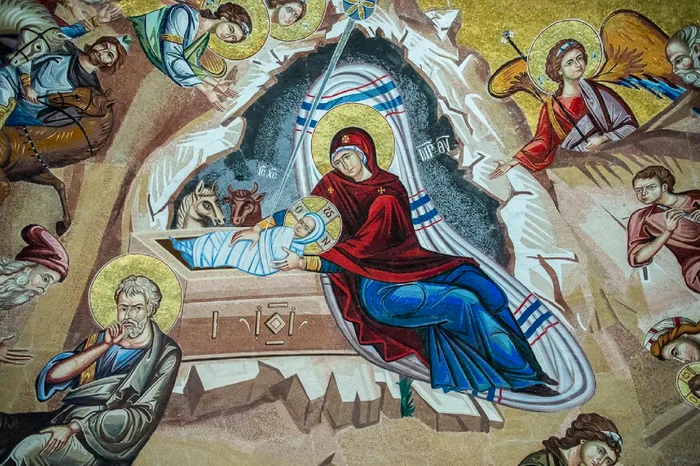
Birth of the Virgin Mary, or Saint Mary Little, marked by ancient traditions and customs DMS
Orthodox and Catholic Christians from all over the country celebrate “Saint Mary Little”the first great feast of the new church year, which marks the beginning of salvation and highlights the importance of the Virgin in the life of the believers. Even in 2025, habits related to this holiday are respected with the same devotion and joy as in ancient times.
In this article, you will discover the traditions respected by the Christians of the Birth of the Virgin, you will find the deep significance of the Feast on September 8 and you will know the superstitions and prohibitions that are respected on this holy day, to keep harmony and blessing in the family.
Virgin Mary: The importance of the Virgin Mary and the origin of the feast of her birth
Also known as the Virgin Mary, the Mother of God is considered the most important woman in the history of Christianity – the mother of Jesus Christ and the most beloved holy in the Orthodox and Catholic tradition. It is seen as a mediator between people and God, a model of humility, faith and cleanliness.
The birth of the Virgin Mary is not mentioned in the Bible, but in old apocryphal writings, of which the best known is the proto -revenge of Jacob (2nd century). According to this report, her parents, Joachim and Ana, were straight people, but without children. After years of prayer, God gave them a baby-Maria-, in response to their faith and patience. Her birth is seen as a divine gift and the beginning of the plane of salvation, because Jesus was to be born.
The first mentions about the feast of the Birth of the Virgin appeared in the Eastern Church around the 5th century, in Jerusalem, where a church was erected on the place considered the house of parents Joachim and Ana. From the East, the feast was taken over by the entire Christian world – both Orthodox and Catholics.
September 8, fixed as a day of celebration in the Byzantine calendar, has remained unchanged until today, and this day continues to be marked by traditions and customs respected with sanctity, keeping the connection between the believers and the Mother of the Lord.
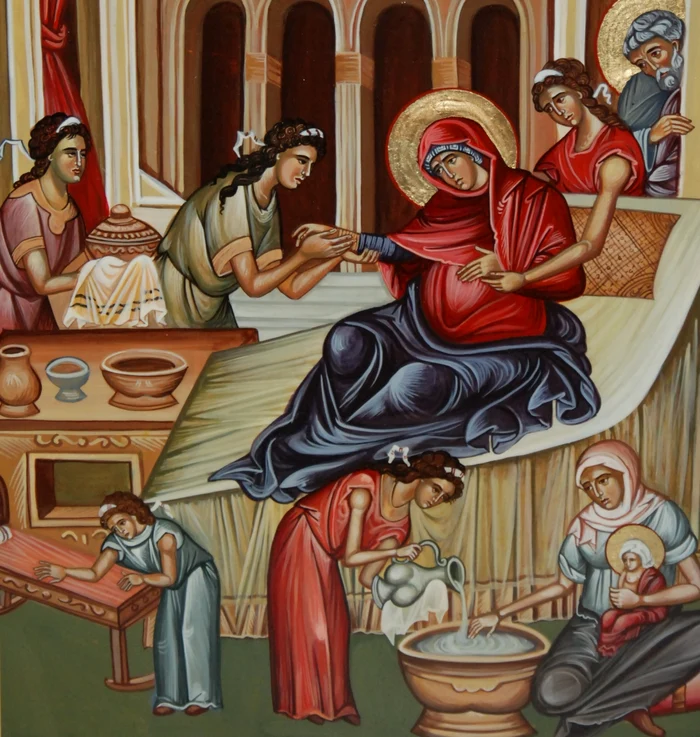
Birth of the Virgin Mary, or Saint Mary Micre, marked by ancient traditions and customs
Saint Mary Little 2025: Traditions and customs of September 8
The day of September 8 brings with it a combination of holidays, prayer and community joy. The churches are adorned with flowers and ornaments, and the believers participate in special services, bring gifts and people, grateful for the protection of the Virgin and for the fruit of the earth.
In rural households, traditions gain color: women prepare collages and pies for the family and neighbors, a symbol of hospitality and well -being. The fruits brought from gardens or orchards are sanctified in churches, a gesture meant to bring health and prosperity to the whole family. The candles and candles lit in front of the icons illuminate the prayers for happiness, well -being and protection, while children receive symbolic gifts, adding joy to the holiday.
Family -related rituals and spiritual inheritance are an integral part of this day: women who cannot have children are praying to unravel the womb, and those pregnant for a slight birth and a healthy child. Grapes and plums are divided not only for the joy of the living, but also for the souls of the departed, as a symbol of mercy and forgiveness of sins.
Thus, September 8 is not only a moment of the liturgies and the feast, but also an opportunity to reconnect with the ancestral values, with the faith and traditions that link the communities to the life and role of the Virgin.
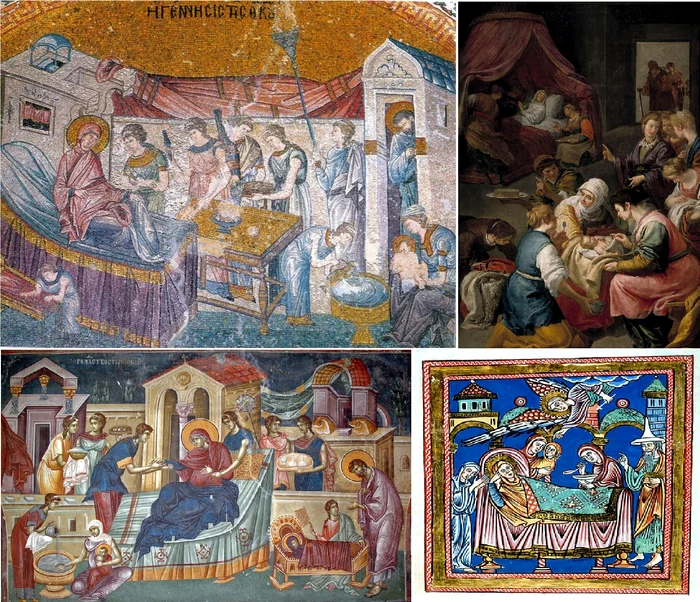
Representations of the Birth of the Virgin Mary known as Saint Mary Little Collage DMS
Holy Mary Mary's Superstitions: What are you not allowed to do on September 8
The birth of the Virgin Mary is not just prayer and holiday; On September 8, popular traditions load the day with mysterious superstitions and customs. In the popular faith, their respect brings protection, health and luck to the whole family.
Among the most widespread prohibitions are the avoidance of important household chores: laundry, general cleaning or household crafts are considered to be for bad luck and misfortunes. Women do not have to sew or wash, and men should not craft, so as not to attract evil on the house.
There are also superstitions related to fire and food: igniting fire in the house around the holiday brings disease, and cooking before or after the day of Saint Mary Little could cause accidents or misfortunes. The medicinal plants collected after September 8 lose, according to tradition, the healing powers, they are no longer good as a cure.
Some of the superstitions follow the signs of nature: the traveling birds begin their migration, the insects are hiding in the ground, and the weather on the day of the holiday prefigures autumn – the rain brings precipitation and cold, and the sun promises rich crops. In Maramureș, people believe that if the trees bloom beautifully, the autumn season will be generous and gentle.
And the famous habit of “The hat”: Starting September 8, the hats are lowered and are replaced by hats, a sign that the cold weather is coming – a popular warning that has remained in the collective consciousness through the saying: “A Santa Maria passed, the hat also fans”.
Thus, Saint Mary Little remains a religious and cultural landmark, linking the present to ancient beliefs and reminding us that, beyond rituals, the day of September 8 is a celebration of the protection, health and sacred connection with the Mother of the Lord.
The religious significance of the Birth of the Virgin for the faithful
In the Orthodox calendar, the name of the Virgin Mary twice a year: on August 15 – the Assumption of the Virgin Mary, and on September 8 – the Birth of the Virgin Mary or Saint Mary. Although close as a date, the two holidays mark the end and the beginning of the church year. This duality symbolizes the continuity of the prayer and protection offered to the believers.
As the first feast of the Orthodox Church year, which begins on September 1, the birth of the Virgin Mary opens the string of great holidays and is regarded as a moment of hope and joy: by its coming into the world, humanity receives the promise of salvation, being considered a moment of blessing. The feast on September 8 marks the birth of the Virgin Mary, the mother of Jesus Christ, and is an opportunity to reflect on the purity, faith and spiritual sacrifice.
For believers, this holiday is not only a historical memory, but a call to prayer, purity and gratitude for the protection of the Virgin Mary, which is considered “The mediator of all”. The special services in the churches are accompanied by songs and prayers that emphasize the essential role of the Virgin in the history of Christianity.
The birth of the Virgin Mary is not just a religious event; It represents the beginning of salvation and the importance of the Virgin Mary as a model of humility and devotion.
Saint Mary Little and the Name Holidays: Maria, Marian and derivatives
In addition to the religious significance, the day of September 8 also brings the joy of those who bear the name Maria, Marian or their derivatives. For many Romanians, Saint Mary Mică becomes an opportunity for a family holiday and between friends, when the wishes of “Happy Birthday!” it sounds everywhere.
Even if some prefer to mark the day of the name on August 15, the tradition placed over time makes more and more choose the beginning of autumn to congratulate their close friends.
And the most lucky ones receive greetings of both holidays, thus being celebrated twice in less than a month.
The chronology of the Birth of the Virgin Mary: History and Evolution of the Holiday
- 1st century -The tradition about the birth of the Virgin Mary is spread through apocryphal writings, especially Jacob's proto-revenge, who tells how Joachim and Ana, Maria's parents, received it as a gift from God.
- The 5th century – In Jerusalem, in the place considered the house of parents Joachim and Ana, a church arises in honor of the Birth of the Virgin. This marks the beginning of the official feast.
- VI century – The holiday is introduced in the Byzantine calendar and fixed on September 8, becoming one of the most important holidays dedicated to the Virgin Mary.
- VIII -BIX century – The feast spreads throughout the Christian world: in Byzantium, in the Orthodox Church and in the Church of Rome.
- Middle ages – In the Romanian space, the holiday is strongly rooted, being related to the beginning of the church year and popular customs passed out from generation to generation.
- Today – The birth of the Virgin Mary is celebrated on September 8 in both the Orthodox and Catholic Church. It is the first great feast of the church year and an occasion for millions of Romanians who bear the name Maria or Marian.
Why the birth of the Virgin Mary remains an important holiday for Romanians
The day of September 8, the feast of the Birth of the Virgin, remains a moment of deep spirituality and tradition in the life of the believers. By respecting the customs and rituals related to the Virgin Mary, each believer reconnects with religious values, family and community. Saint Mary Little marks the beginning of the church year and brings the protection of the Virgin on those who bear her name or retains her living faith. Whether you participate in the jobs, keep the popular traditions or share your joy with your loved ones, September 8 is a day of prayer, gratitude and celebration of the Virgin – Virgin Mary.