The military industry wins, other sectors suffer. Almost one third of the big Russian companies report losses in the first half of 2025


The losses in the corporate sector of Russia reached in the first half of 2025 the highest level since the beginning of the Covid-19 pandemic, in the context of international sanctions, growing military expenses and wider economic pressures, the Russian press reports.
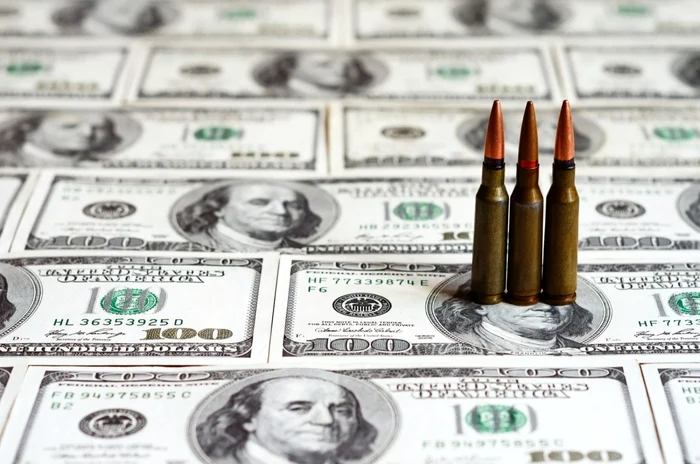
According to the daily Izvestia, close to the Kremlin, which cites data from the National Agency for Rossat statistics, almost 19,000 large companies in Russia have registered cumulative losses of over five trillion rubles (about 62 billion dollars) between January and June 2025.
This situation marks a significant threshold: 30.4% of the largest companies in Russia reported losses, up 2.3 percentage points compared to the same period last year. It is for the first time in 2020, during the pandemic, when this indicator exceeds 30%.
Multiple causes: sanctions, inflation and high interest
Analysts quoted by Izvestia put this evolution on the account of Western sanctions, inflation powered by military expenses and increasing taxation for companies. Also, the high interest imposed by the central bank of Russia were mentioned as an aggravating factor.
The Russian Ministry of Economic Development has placed losses on account of “seasonal factors”, claiming that profits will return in the second half of the year, according to a report from The Moscow Times.
The data published by Rossat do not include small and medium -sized enterprises, financial institutions and state entities.
The military industry wins, other sectors suffer
While the companies in sectors directly related to the war effort, such as the defense industry and military engineering, reported income increases of up to 200%, other areas were strongly affected. Among the most hit are the exploitation of coal, public utilities, transport and scientific research.
The internal economic situation of Russia is increasingly subject to speculation regarding the sustainability of its “war economy” model.
At the beginning of August, the head of the Kiev Presidential Administration, Andriy Yermak, said that Russia's budget deficit has increased by $ 13 billion in July, reaching over $ 54 billion since the beginning of the year.
For his part, the Institute for War Study (ISW) note, in an analysis published on August 28, that the repeated attacks of Ukraine on Russian oil infrastructure caused large streams, which “could increase inflation and accentuate the macroeconomic instability in Russia.”
Modest economic growth and external threats
In June, the central bank of Russia reduced the key interest rate from 21% to 20%, marking the first decrease of October 2024, against the background of an economic slowdown caused by overinvestment in the military sector.
According to a report published last week by Bloomberg, Russia's GDP increased by only 1.1% in the first seven months of the year, barely reaching the most pessimistic forecasts made by the central bank.
Internationally, Moscow pressures could increase. US President Donald Trump has threatened up to 100% fares for American imports from states that continue to buy Russian oil, if the Kremlin does not accept an armistice in Ukraine.
“An economic war will be bad – and it will be bad for Russia. I do not want that”Trump said last week.
On September 1, the American Treasury Secretary, Scott Bessent, said that “all options are on the table” in terms of introducing new sanctions against Russia. However, so far, the Trump administration has not indicated a clear calendar for possible measures.