Video the northern city that moves piece by piece. The moment when a 713 tonne church is carried out five miles further east

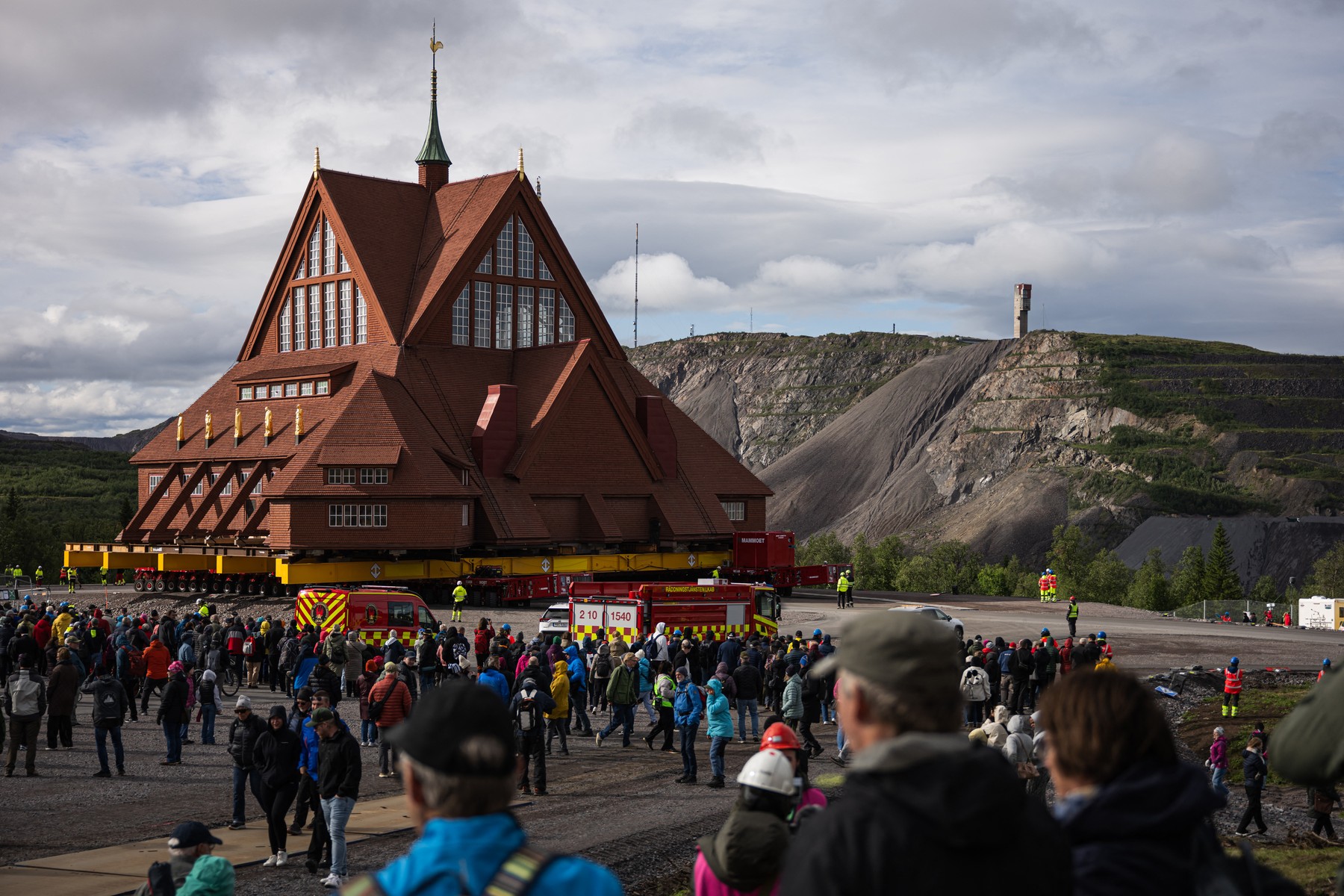
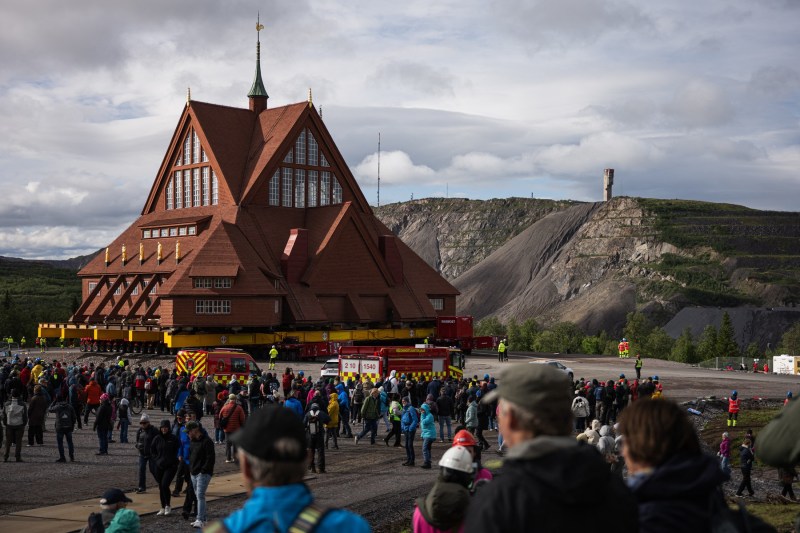
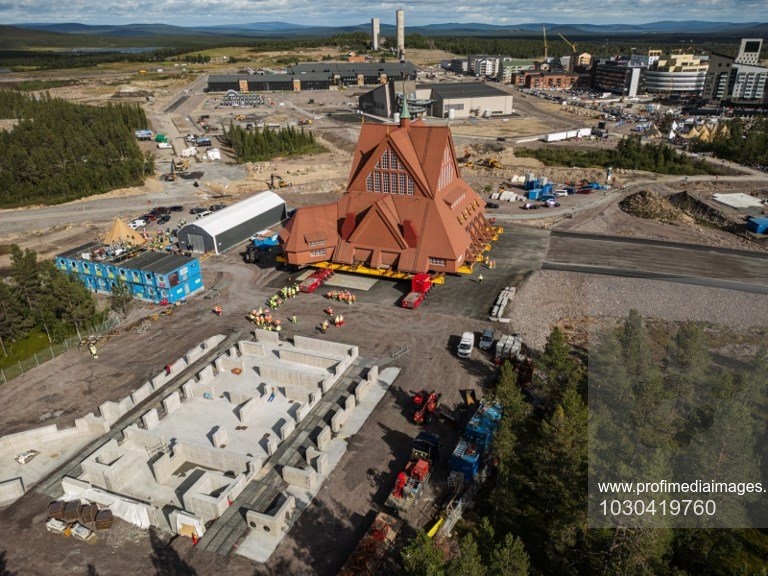
The wooden church in Kiruna, moved to a new place to the east / photo source: Jonathan Nackstrand / AFP / Profimedia
Kiruna, a small mining city in northern Sweden, 145 kilometers north of the Polar Circle, lives a unique process worldwide: its urban center is moved to the east, piece by piece.
The reason for the big moves is the extension of the exploitations of the LKAB state company, which for over a century extracted iron from the largest iron mine on the planet, writes The Guardian.
About Kiruna it was known until recently that it is a high locality on a stable land, but the underground exploits have slowly destabilized the land under the city, which forced the authorities to approve a long -term relocation plan.
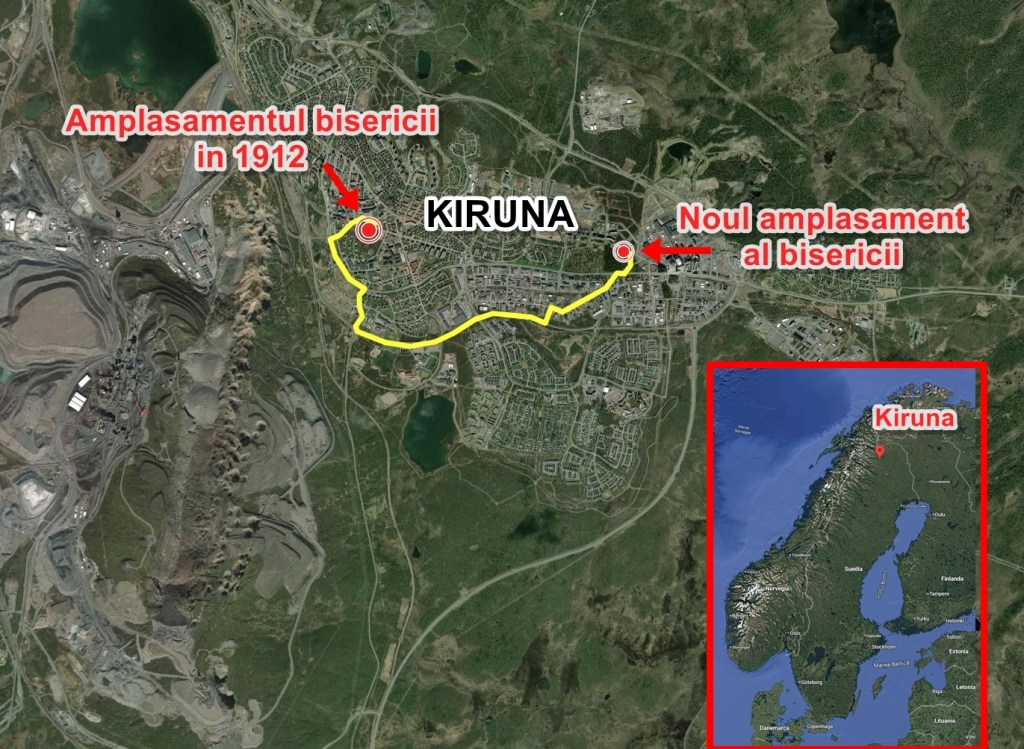
The plan was developed with the White Arkitekter architecture office and involves moving the city center and essential buildings a few kilometers to the east, writes Global Construction Review.
In the last days, however, the center of attention was the church in Kiruna.
Built in 1912 and considered one of the most beautiful wooden structures in Sweden, the church is a cultural heritage monument. Weighing about 713 tons, this is one of the largest wooden buildings in the country.
Technical Operation: How to move 713 tons
Moving the church on 5 kilometers was a large -scale engineering demonstration. The process was prepared for two years, but the actual execution was carried out relatively quickly.
The move, suggestively called “The Great Church Walk”, took place on August 19 and 20, during the day, for visibility and safe.
Lifting the building and transporting
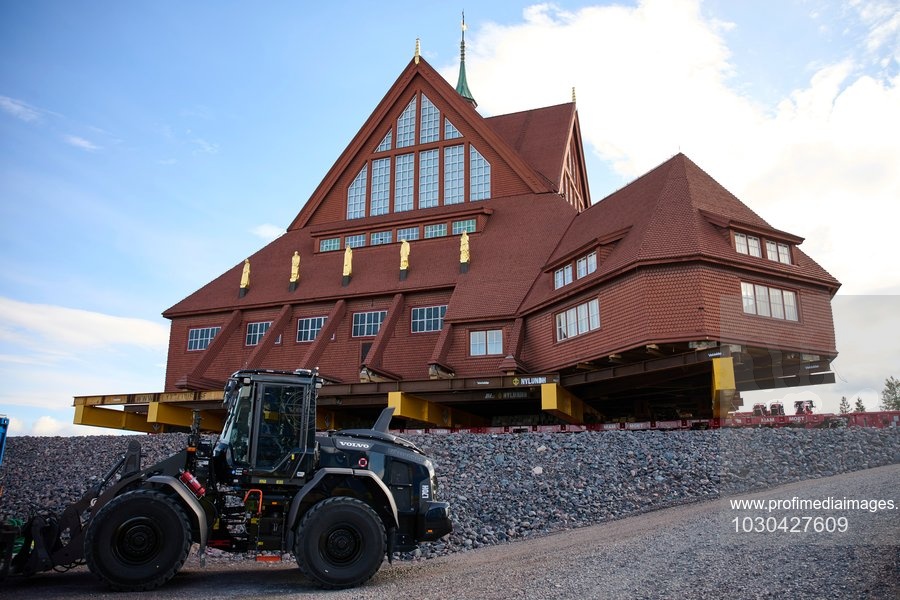
- The structure was raised over 1.3 meters above the ground, through a system of steel beams and hydraulic jacks.
- The total weight of the building was calculated at 713 tonnes, evenly distributed to prevent structural deformations.
- For the actual transport, machines called SPMT (Self-Propeld Modular Transporters) were used-self-propelled modular platforms, each with 28 axes.
- The church was placed on two such trains, electronically synchronized, to move at low speed, of several meters per minute.
- The engineers have limited the maximum lateral inclination to only 75 millimeters – an extremely small tolerance for a wooden building over a century.
The specially adapted route
The roads used were enlarged and consolidated especially for this transport, and in the critical points an additional layer was added and the soil was compacted to support the weight of the church.
Throughout, the building has been monitored in real time with sensors, to detect any tensions or cracks.
Once reached the new location, the church was positioned on a concrete foundation, designed to ensure stability for the coming decades.
The movement of the bell tower follows, through a separate operation, but based on the same technology.
A national show, but also a source of tension and controversy
The event was watched as a national show-the Swedish public television broadcast LIVE, in the “slow TV” style, and thousands of locals gathered on the route to watch the moment. Even the King of Sweden participated, transforming the relocation into an event with a symbolic value for the whole country.
However, not everyone looked at the operation with enthusiasm, writes The Guardian.
The relocation of the church in Kiruna is regarded, on the one hand, as a unique engineering performance in Europe, and, on the other hand, as an example of the dilemmas generated by industrialization.
The move of the city and the church has generated criticisms from the Sami community, the indigenous population in northern Scandinavia, which sees its territories and migration routes of remes fragmented by mining exploitation and forced urbanization.
Representatives of the Sami community denounced the relocation as a “political and media show” meant to distract from the real impact on the environment and their culture.
They claim that the traditional reindeer transhumanity areas are intersected by roads, yards and the new urban development. Moreover, the Sami communities accuse the authorities of not involving the locals in planning.