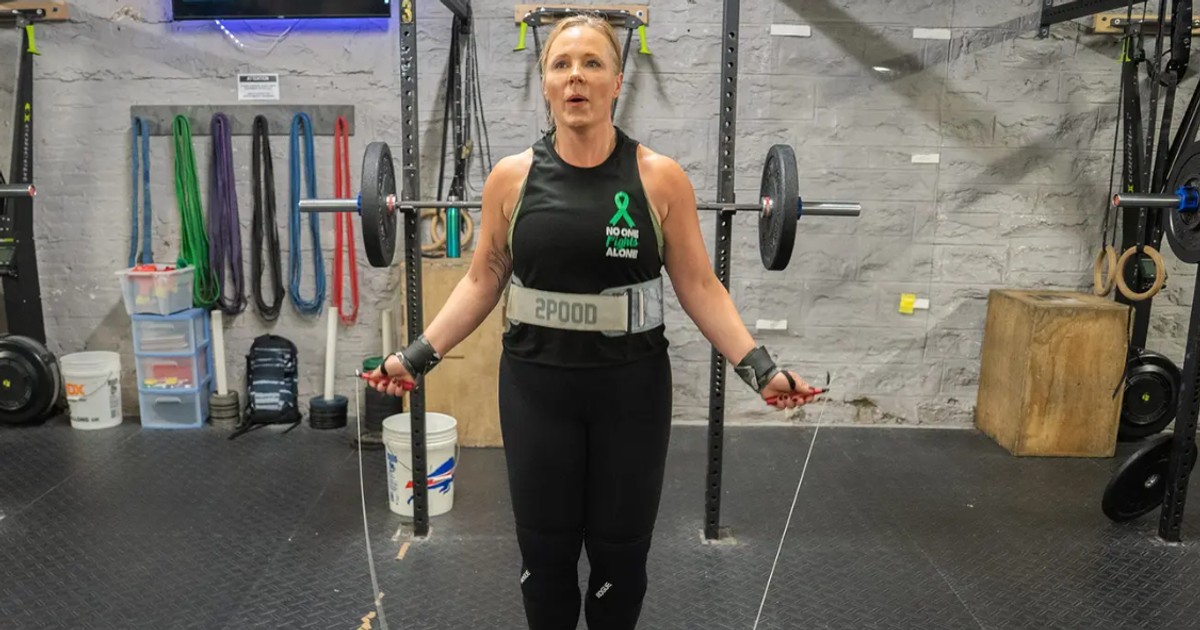

Tyler Sorenson had enough of fruitless job search, so He focused on the old school: he left paper CV on a local technology service.
24-year-old Sorenson felt a typical frustration of people looking for employment-he saw “We are looking for employees” and heard about staff shortages, but his online applications remained unanswered. The shop where he finally got a job did not have advertisements on the website, but when he visited him personally, it seemed that they needed more employees.
Read also: What should the CV look like on the labor market?
Paper CVs are coming back to favor
I literally had to enter the store and give them a physical CV so that they would notice me at all
– he said.
There was a regional manager there. “A week later they called for formal application of the application.”
Although the paper CV may seem like a relic of the past in a sea of candidates, a bit of creativity is becoming more and more necessary in timeswhen companies employ at an almost slowest pace for a decade, and on both sides of the recruitment process there is a fatigue and influence of AI.
In recent months, Business Insider has received hundreds of messages from frustrated candidates who sent thousands of unsuccessful applications.
On the other hand, recruiters are flooded with applications – many of them optimized by AI to look perfectly matched. In response, some companies return to traditional methods: paper CV, personal visits of candidates, and even inviting them to make sure they are real.
Business Insider hears from employees with growing paranoia, anxiety and fears related to the labor market.
Ai turns recruitment into a technological arms race
Devon Pastorius, hiring a new person to his advertising agency, asked the candidates to answer in the motivational letter to two questions:
- what they think about AI in the creative industry and
- What are their favorite ads or social media accounts.
He expected an answer generated by AI, but did not foresee that he would receive 20 almost identical answers – probably from chatbots. Irony of fate, and it replied that he was a tool, not a replacement for the creators. Favorite advertising campaigns? Always Nike and Coca-Cola, often also a Duolingo account on Tiktoku-A The candidates' answers were almost identical.
This is in line with the operation of large language models – AI searches the Internet in search of answers, and the mentioned brands have “phenomenal PR teams”, so their campaigns are widely described.
Hatim Rahman, a management professor at Northwestern University, said that AI has recruited “playing a kitty and a mouse” between candidates and employers, because both sides use technology to x -ray each other.
On the one hand, we have mass applications sent by bots, on the other – employers use AI for selection of candidates and even conducting preliminary interviews.
This makes it more difficult to assess the quality of candidates, and to the candidates – understand what the company is. That is why Rahman notices the growing need for “more human signals” in the process of searching and applying.
Candidates must stand out
Cindy Meis, director of career at the University of Iowa, says that employers expect many contact points: they want to see candidates who appear in person, present themselves, look for commands or have information talks.
“You have to go to the work fair, you have to appear at events to stand out and remember recruiters about yourself” – says Meis.
Once a cover letter was enough
Pastorius, during the interviews, asked supplementary questions about the candidates' answers. In the second round he asked them to complete a task on a computer disconnected from the Internet – to exclude the influence of AI.
He is not an opponent of AI – he noticed that CV formatting has improved, they are more legible, and information about experience and skills is easier to find.
AI can make it easier to look for a job, but it can also make it difficult
– says Pastorius. “And the distinction between one and the other is a separate skill.”
Companies invite candidates to the place and value personal visits
Victoria Thomas, Business Director at Kellymoss (Porsche and racing personalization), after Pandemia introduced a new practice – instead of phone calls or video, she invites candidates to the office in Wisconsin.
The company uses AI to create position descriptions and evaluation of candidates, but also noticed the opposite problem – The CV created by AI can make candidates look better than they really are. That is why he organizes rehearsals on the spot – he employs for positions requiring physical work, so it is important how the candidate cooperates with the team.
“We also rely on orders,” says Thomas.
If someone is ready to recommend a friend, the chances of success are greater
Although such methods are still in the minority, more and more companies can implement them to deal with the lagoon of application. It is easier to implement them in smaller companies, and the twilight of large corporations may mean that smaller enterprises will be the future for employees.
Nastashia Wali, the director of the reception at the legendary Chelsea Hotel, says that The candidate's personal visit shows “commitment and additional effort”.
Online applications mean more CV than ever, so you need more patience to review them. Wali likes to receive a paper CV – they allow candidates to make the first impression on her reception team, which shares her insights with her.
“When the team gives me a CV, the first thing I ask, what distinguished the candidate and what behavior he had,” he says. “If the band notices something, I usually also – if someone was strange, friendly and talkative, or made another clear impression.”
The above text is a translation with American Business Insider edition