Most liquidation of companies took place in trade, construction and processing industry – industries particularly sensitive to costs increased and a decrease in consumer demand. In many regions of Russia, there is also a wave of bankruptcies among developers.
Car dealers were also in a difficult situation: unstable deliveries, a limited assortment, a decrease in demand and an increase in import costs threatened to survive this sector. According to expert estimates, every fifth car showroom can be closed in Russia by the end of the year. And this is just the beginning of a long bankruptcy list in subsequent branches of the economy.
As for the construction sector, for example, in Ekaterinburg, the former contractor of the PIK Stroiprojekt Group group was on the verge of bankruptcy, and the bankruptcy of SK Donstroj was declared over the Don. One of the largest dealers on the automotive market, Kliczavto, has almost three times reduced the number of its facilities.
The companies that have stopped operating were Russian fashion brands Me and Am Studio. Foreign companies also began liquidation, which in 2022 announced the withdrawal from the Russian market – including H&M and Microsoft.
Continued article under video material
On the microfinan market, small companies give way under the pressure of competition and regulation. Only in June 2025, 11 enterprises completed operations, including RD Online and Evraz. Russian business has not had such problems from at least 2022.
Freedom Finance Global analyst (company providing financial intermediation services) Vladimir Czerniow noted that against the background of a general decrease in economic activity in Russia, it is noticeable to increase the registration of new companies in industries related to the extraction of raw materials, IT, consultancy, logistics, national tourism and electronic trade.
Jekaterina Awdiejew from the State Organization of Diełowaja Rassija, which brings together Russian enterprises, added that at the same time in such areas as telecommunications, transport, construction, chemistry, agriculture and services, the minimum number of new legal entities is recorded. The reasons mentioned by Awdiejew are high competition, Difficult market access, tax increase and the need for significant investments.
Expert: Mass liquidation of companies means a decrease in economic activity in Russia
As explained by Vladimir Czerniow, the increase in “mortality of enterprises” is largely caused by high percentage rates (in June the base rate was 21 percent), a decrease in turnover, tightening of fiscal control and tightening the requirements for labeling, transport and personal data.
In addition, income tax in Russia increased from 20 to 25 percent, and the Russian Federal Tax Service intensified activities aimed at eliminating inactive and fictitious legal persons.
Jekaterina Awdiejewa believes that cleansing the market of fictitious companies is a positive process: it increases transparency, improves tax discipline and eliminates unfair competition. He admits, however, that many Russian companies suffer from delays in payments and cannot cope with debt.
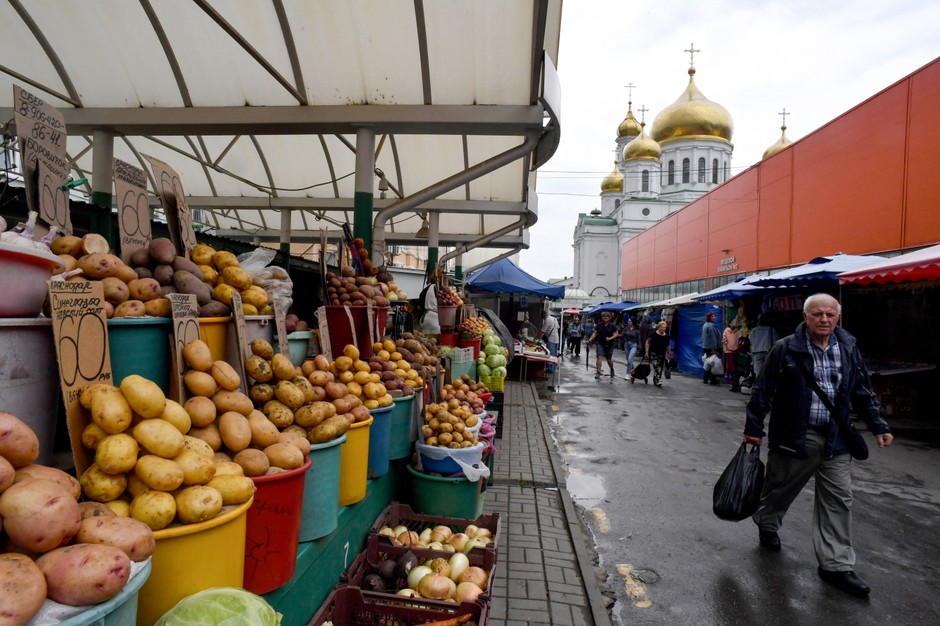
Targ in Rostów nad Don (illustrative photos)OLGA MALTSEVA AFP / AFP
According to black, mass liquidation may cause a decrease in economic activity, a decrease in tax revenues, an increase in unemployment and deterioration of the investment climate. Reducing competition will also lead to a further decrease in innovation.
Danił Gonenko, an assistant professor of the Russian Academy of National Economy and Public Administration at the President of the Russian Federation, claims that in order to improve the prospects of Russian business, it is necessary to reduce interest rates, alleviate the regulatory requirements and develop acceleration programs. In addition, access to alternative sources of financing is important – including through crowdfunding.
I’m Ashley Davis as an editor, I’m committed to upholding the highest standards of integrity and accuracy in every piece we publish. My work is driven by curiosity, a passion for truth, and a belief that journalism plays a crucial role in shaping public discourse. I strive to tell stories that not only inform but also inspire action and conversation.