
The automation of Amazon.com deposits is approaching a new threshold: soon there will be as many people as people, writes Wall Street Journal.
The giant of electronic trade, which spent years automatically automatically performed by people in its units, now operates over one million robots in these jobs. This is the largest number of robots that a company has ever had and close to the number of human workers in its units.
The deposits of the companies buzzing metal arms that take items from shelves and drivers with wheels that move through floors, transporting goods for packaging. In other corners, automatic systems help sort articles, and other robots help pack for shipment.
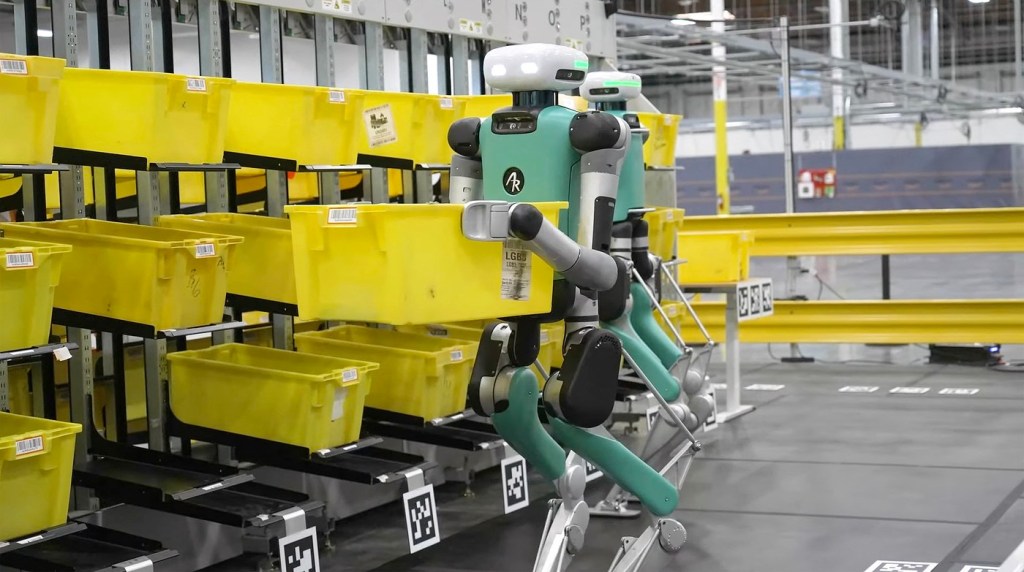
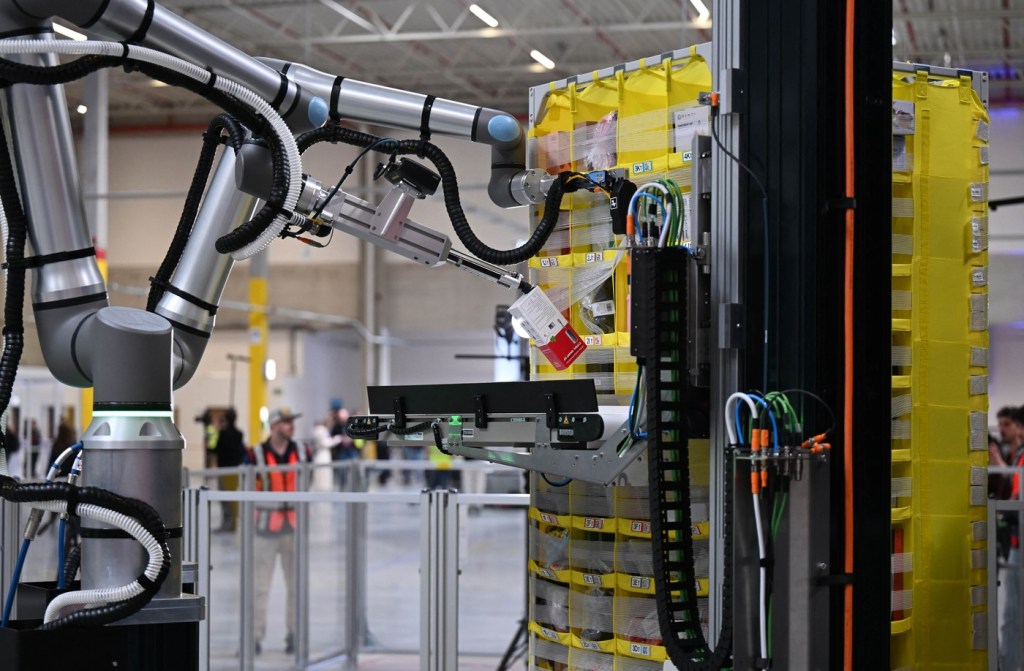
One of the newer robots of Amazon, called Vulcan, has a tactile sense that allows him to choose articles from numerous shelves. Amazon has taken recent measures to connect its robots to its order honoring processes so that cars can work in tandem with people.
“I am one step closer to the complete integration of robotics,” said Rueben Scriven, research manager at Interact Analysis, a robotic consulting firm.
Currently, about 75% of the global deliveries of Amazon are assisted by robots, the company said. Increasing automation helped Amazon improve its productivity, while reducing the pressure on the company to solve problems such as the massive staff fluctuation in its order distribution centers.
For some Amazon employees, increasing automation meant replacing repetitive lifting and sorting work with more sophisticated car management tasks.
“I thought I would lift great difficulties, I thought I would run like crazy,” said Neisha Cruz, who spent five years choosing articles from a Amazon warehouse in Windsor, Connecticut, before being trained to supervise robotic systems.
Today, she stands in front of a computer screen in a temperate, Arizona office, ensuring that mobile robots inside the US Amazon factories work properly. Earn about 2.5 times more than win when he started at Amazon.
Robots also replace some employees, helping the company slow down the rhythm. Amazon has about 1.56 million employees in total, most of them working in warehouses.
The average number of employees of Amazon per production unit last year, about 670, was the smallest registered in the last 16 years, according to a Wall Street Journal analysis, which compared the company's reported labor force with the estimates of the number of production units.
The number of packages that Amazon sends per employee each year has also constantly increased from 2015, at least from about 175 to about 3,870, according to analysis, which indicates the increase of company productivity.
Some of the newer facilities of Amazon, such as those built for delivery the same day, have “a lower fingerprint and help us deliver at a higher speed,” said a company spokesman.
Also, the executive director Andy Jassy recently said that Amazon applies artificial intelligence in his deposits, “to improve the placement of stocks, the demand forecast and the efficiency of our robots.” Amazon said he would reduce his total number of employees over the coming years.
The second largest private employer in the US, Amazon is an indicator for a number of companies that automate work throughout the country. The large -scale implementation of robots shows how technological advances accelerate, transforming factories and influencing labor markets.
The company started to introduce advanced robotics in its warehouses after paying $ 775 million in 2012 to buy Kiva Systems, which manufactured robots carrying shelves full of products.
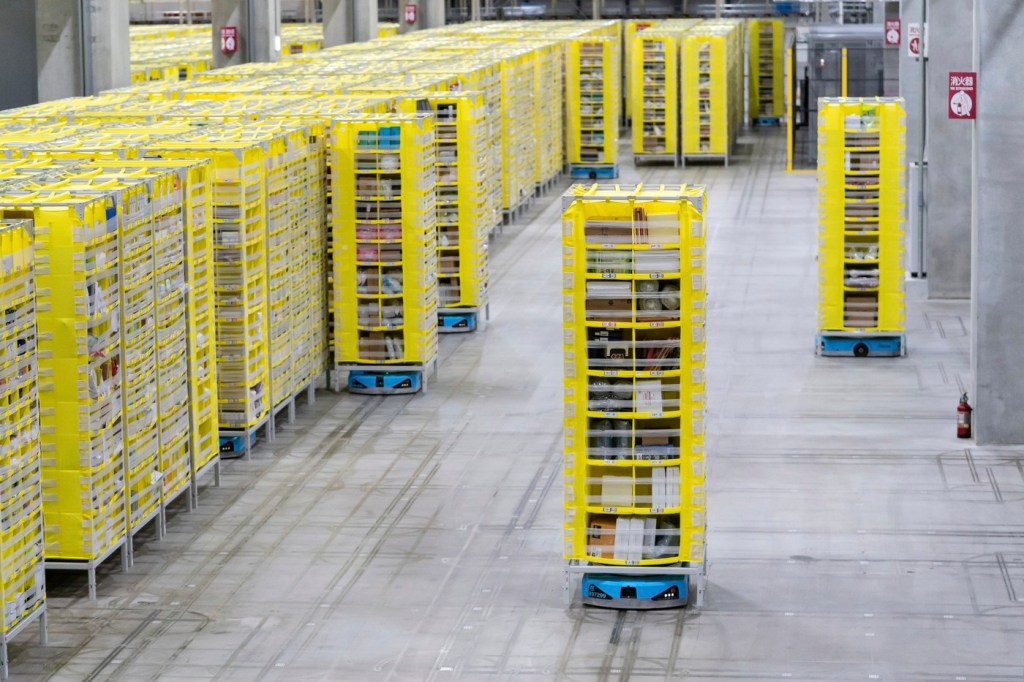
In the beginning, robots moved large amounts of unpacked objects, a difficult physical task for a man. Over time, cars have started to take on even more difficult tasks, such as packing, sorting of products and lifting heavy objects.
Robots perform several tasks working with people. The robotic system that helps sort the inventory move the products to an employee, who then chooses the articles that complete an order. Another extends according to the articles that are difficult to grab from the inside of the rafts, under the supervision of a human worker.
The company has announced that Amazon has trained over 700,000 workers worldwide for better paid jobs, which include working with robots.
“Fully new jobs are created”, such as robotic technicians, “yesh Dattatreya, senior researcher at Amazon Robotics. Warehouse workers are trained in apprentices in mechatronics and robotics.
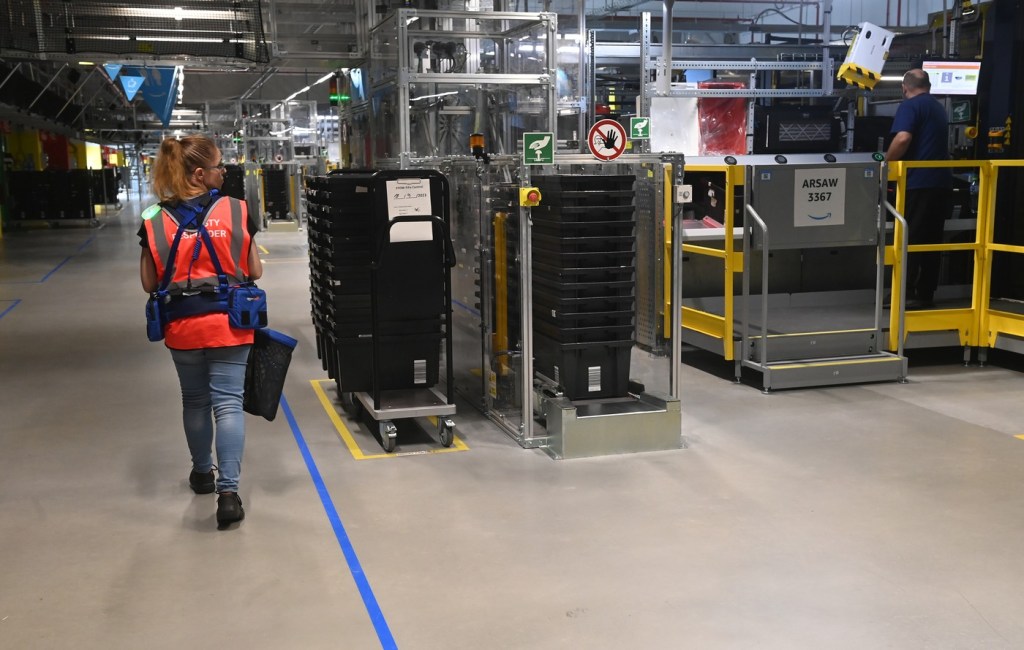
Dattatreya leads a newly created Amazon team from the Bay Area's innovation laboratory, to integrate more advanced artificial intelligence systems in its robotics.
The purpose, he said, is to transform the future robots from the warehouse into assistants who can respond to verbal commands, such as downloading a trailer.
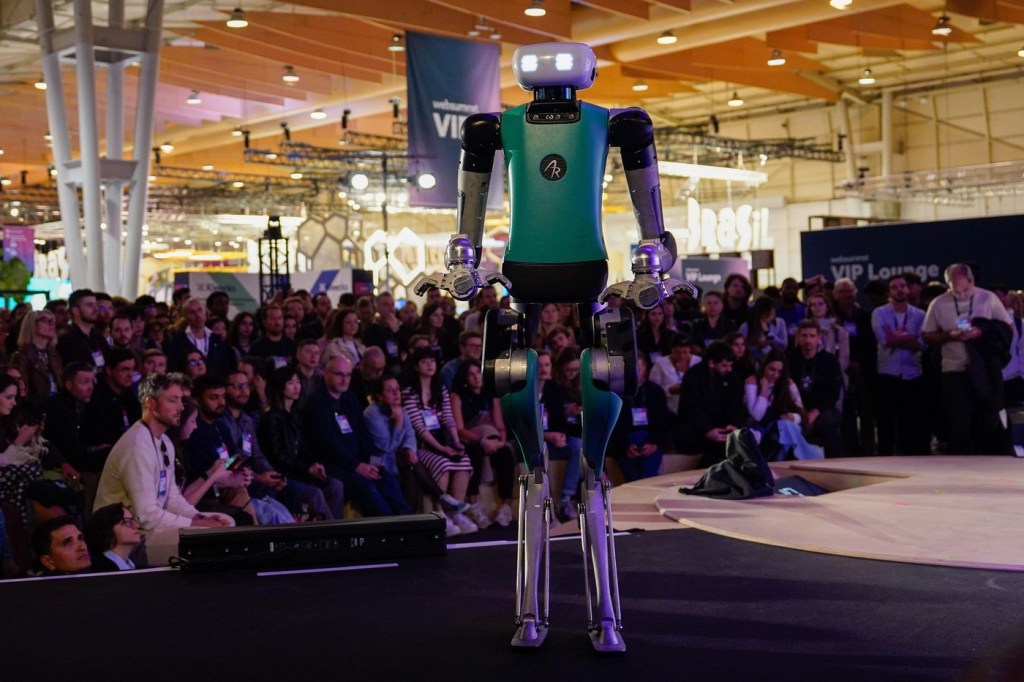
Amazon tests a humanoid robot, his manufacturer said, Agility Robotics. Robots, who have legs, arms and head and have been tested with tasks such as recycling of containers at Amazon, are still in research and development, said Amazon.
Tye Brady, the head of the Amazon Robotics technology department, said in an interview that the company will continue to need many workers and that the new robots are meant to make their work easier, not to replace them.
Sheheryar Kaoosji, executive director at the Resource Center for Warehouse Workers, a non-profit organization that pleads on behalf of employees in warehouses, said that robotica has not changed jobs as much in smaller Amazon centers.
However, Kaoosji has expressed concern about the long-term impact on employment.