Tip from the pediatrician: “The first gesture after any insect sting is the washing of the area with soap and water.” How to intervene correctly after sting of mosquitoes, ticks, bees


Most stinging are benign, but there are situations when serious complications can occur – infections, allergic reactions, sometimes diseases transmitted by stinging. It is crucial to intervene correctly, to follow the alarm signs and to dismantle dangerous myths. This article, based on solid pediatric recommendations and detailed responses of dr. Raluca Bidiga, pediatric doctor with competence in pediatric endocrinology and emergencies, It offers parents a trusted tool to act promptly and responsibly in the face of these common events.
Insects – mosquitoes, bees, wasp and ticks – are an endless presence in the lives of children, especially in summer. Although most stinging are benign, complicated situations may occur: infections, allergic reactions or the transmission of serious diseases such as lyme or encephalitis. According to current pediatric standards, the rapid intervention, careful evaluation and clear knowledge of the signs of severity is essential.
“The first essential gesture after an insect sting: wash the area with soap and water, apply a cold compress and notice if systemic reactions appear,” warns the pediatrician. This simple quick measure makes the difference in preventing complications.
How we intervene correctly after insect stings
In the case of bee or wasp stings, the correct and fast intervention is essential. If the needle is visible, it should be carefully removed by scraping, using the nail or a plastic card, without using the tweezers or tightening the affected area, to avoid injecting an additional amount of venom. “It is important to know that only the bees leave the needle in the skin, not the wasps. After removing and washing the place with soap and water, followed by the application of a cold compress, the child should be monitored for at least 30-60 minutes, to identify any systemic reactions,” says the doctor.
Reactions may vary depending on the responsible insect. “The mosquito stings usually cause itching and slight local swelling. In contrast, bee or wasp stings can trigger serious allergic reactions. Spider bites, although rarely dangerous in Europe, can generate local inflammation,” explains Dr. Raluca Bidiga. In the case of children with pre -existing conditions – such as allergies, respiratory, endocrine or hematological diseases – the body can react exaggeratedly, which is why additional attention is required.
It is contraindicated to rub the sting area, to apply cortisone creams without medical recommendation or to administer medicines before clinical evaluation. If severe reactions appear, such as generalized hives, facial edema or respiratory difficulties, immediate adrenaline administration is required, as these symptoms indicate an anaphylactic reaction – a major medical emergency.
How we treat the stings and what do we apply on a sting
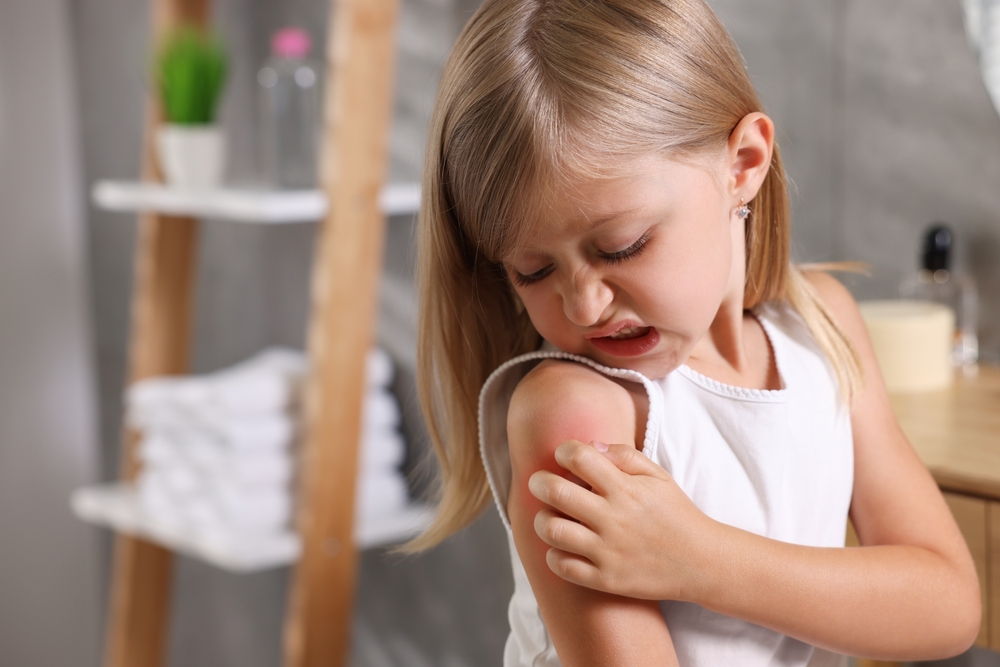
Rapid and correct application of validated treatments can turn a disturbing sting into a minor event. The pediatrician recommends:
- Cold compress and Washing with soap water and water – Essential for all types of sting.
- Oral antihistamines (loratadine, citizens): Useful for light to moderate reactions: “An oral antihistamine can be given. It is safe in the pediatric dose, but it is recommended to consult the doctor. Do not administer more antihistamines simultaneously or in a double dose” preventive “”, warns the doctor.
- Creams with hydrocortisone 1% or calamine for itching, only at the doctor's recommendation.
Secondary infections: When stinging becomes dangerous
The child bitten by an insect should then be monitored for 24-72 hours. Alarm signs include the appearance of a rapid edema (> 10 cm), extended redness, local heat, pus, fever, lymph nodes. They may indicate:
- Bacterial infection (cellulite, impetigo)
- systemic reactions
If inflammation exceeds 10 cm, extended redness, pus, fever, lymph nodes, signs of allergy (generalized hives, facial edema, respiratory difficulties) – the doctor's visit becomes urgent.
“A trivial sting becomes worrying when a rapid increase in the inflammation area (over 10 cm), pronounced local heat and extended redness, possibly the appearance of pus – a sign of a secondary bacterial infection -, fever, lethargy or inflamed gangliones, as well as in the neighboring area Breathing – cases that represent an absolute medical emergency, ”says the pediatrician. In such cases, the doctor may prescribe oral or topical antibiotics.
Anaphylactic allergies and shock: when adrenaline is needed
In bees and wasps, reactions can climb quickly. Children with well -known allergies should have not only handy medication, but also a clear action plan, communicated to all those who take care of them – parents, teachers, coaches or grandparents. Adrenaline (epinephrine) is required in anaphylactic reactions. This is a vital emergency.
“The signs that indicate the immediate need for adrenaline administration are generalized urticaria, facial edema, respiratory difficulties or confusion. The usual dose is 0.15 mg for children weighing below 25 kilograms and 0.3 mg for those over this threshold. Epipen must be permanently accessible and administered without hesitation. If appropriate.
What do we do in case of tick sting
In the case of tick bites, time is essential. According to Dr. Raluca Bidiga, “it is ideal for the tick to take place within the first 6-12 hours after attaching.” After this interval, the risk of bacteria transmission Borrelia Burgdorferiresponsible for Lyme disease, increases significantly. And in some cases, it transmitted to other pathogens, such as the tick encephalitis virus, may occur even earlier.
If, during the extraction, part of the body of the tick – usually the head or oral apparatus – remains in the skin, not tools or improvised methods, such as needles or inappropriate pens, should not be used. Dr. Bidiga warns that “the risk of local infection is increased when intervening with inadequate objects.” In these cases, parents can either wait for the spontaneous elimination of the fragment, or to address a pediatric surgery service, where the removal is done in sterile conditions.
After a bite, the first step should be the consultation with the family or pediatrician, especially if the extraction was complete and done quickly. However, if more than 24 hours have passed until the extraction, the tick was large or the child develops systemic symptoms, a specialized consultation is recommended, preferably in infectious diseases or pediatrics. “Prophylactic antibiotic is recommended only in cases well established by guides,” says Dr. Bidiga, stressing that the decision is based on the age, weight and medical history of the child.
What we are pursuing in the monitoring of the child who was bitten by a tick
Monitoring the child after the bite is as important as the initial intervention. For four weeks, parents should pay attention to symptoms such as typical circular rash (migratory erythema) with a diameter of over 5 cm, fever, joint pain, marked fatigue or any neurological sign. These may indicate the presence of Lyme disease or other infections transmitted by ticks.
Do we give or not antibiotic to the child bitten by the tick?
After a tick bite, the question related to the administration of a prophylactic antibiotic frequently occurs among parents. Dr. Raluca Bidiga emphasizes that “prophylactic antibiotic is recommended only in cases well established by guides”. Specifically, not all children who have been bitten by a tick require immediately antibiotic treatment.
However, there are clearly defined situations in which a single dose of antibiotic can be administered: If it is a tick of the species Ixodeswhich was attached for more than 36 hours, if the extraction took place within 72 hours from the time of detection and if the area is considered with a high prevalence by Borrelia (over 20%). Under these conditions, a single dose of doxycycline can be administered, in a dose of 4.4 mg/kg, according to international recommendations.
In all other cases, children are only clinically monitored for four weeks. As Dr. Bidiga says, the treatment or follow -up decision is made according to several factors – the age of the child, his weight, the general health and the exact moment of extraction. The self -medication or the initiation of treatment in the pressure of parents, without medical consultation, is not recommended and can even complicate the later diagnosis.
The most dangerous myths related to insect stings. What we don't have to do
A particular chapter is the gestures that, although frequent, are deeply wrong. As for the tick: “Do not apply oil, petrol, grease or other substances – they do not kill the tick, but make it secrete more saliva and possibly infectious agents,” warns the doctor.
Equally useless and even harmful is the idea of taking the tick to a veterinary office for testing: “These tests are expensive, the result comes after many days and, in addition, the fact that the insect is bearing Borrelia it does not necessarily mean that they transmit them. ” The decision on treatment or prophylaxis should belong exclusively to the doctor, based on local guides and a clinical evaluation.
An apparently trivial, but extremely important gesture in the case of bee sting, is the way the needle left in the skin is removed. Dr. Raluca Bidiga warns that “the needle should not be tightened with the fingers or tweezers, because an even larger amount of venom can be squeezed.” Instead, the correct extraction is done by light scraping, using the nail or a plastic card, gently sliding on the skin in the needle direction. This simple gesture can prevent an accentuated local reaction or even an allergic complication.
Summer medical kit. What do we take with ourselves on vacation for insect stings

In order for the outdoor outputs to be safe and devoid of major incidents, each family should have a well thought out medical kit, especially in the hot season. According to Dr. Raluca Bidiga, this kit should contain the essential elements that allow rapid intervention in case of insect stings, minor wounds or allergic reactions.
“A well -trained kit must include a disinfectant – such as betadine or chlorhexidine -, sterile compresses and patches, ice spray, oral antihistamines and, if necessary, a corticoid cream, but only at the doctor's recommendation,” explains Dr. Bidiga.
It is also important to have a thin -tip, useful tip in the correct extraction of ticks, and an adrenaline (Epipen) self -entertainment in children with known allergies. This minimum endowment does not replace the medical intervention, but gives parents the opportunity to control the first critical moments until specialized help.