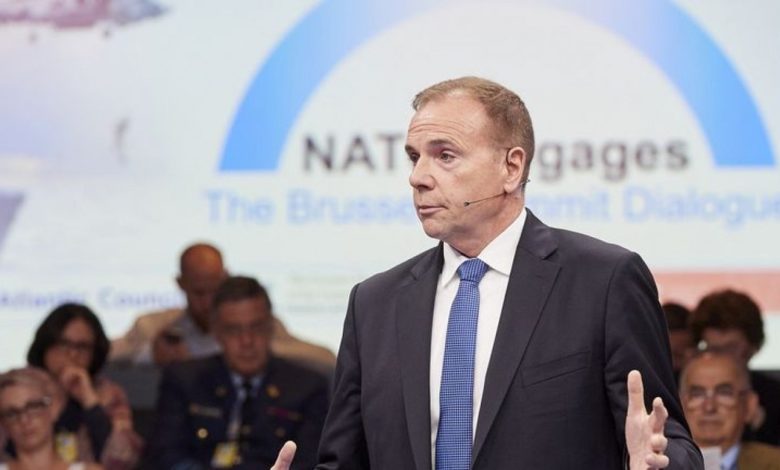
In a landscape in which it is often assumed that Ukraine must reach “NATO standards”, a former commander of the American army in Europe completely returns this idea. General Lieutenant in reserve Ben Hodges states that, in terms of efficiency in battle, many of the armies of the North Atlantic Alliance do not rise to the level imposed by the real experience of the Ukrainian army.
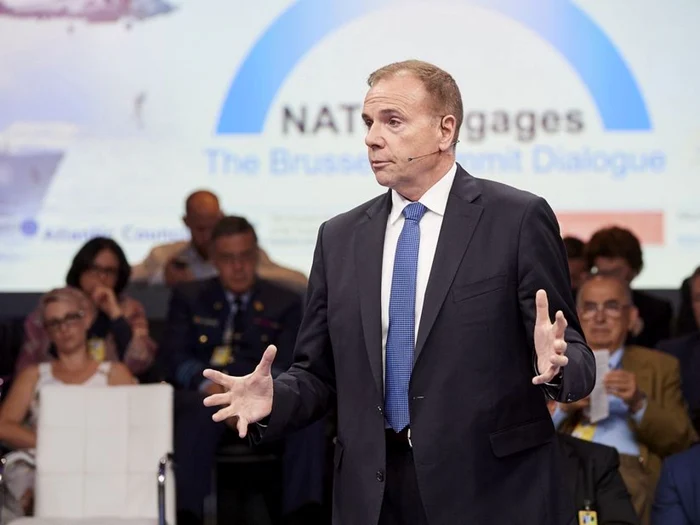
Ben Hodges, the former ordered of American forces in Europe/ Photo: EPA/ EFE
“It is not about how Ukraine can reach Western standards. The reality is that most NATO armies are not up to the Ukrainians, if we talk about real efficiency on the battlefield,” Hodges said in a video interview for Kyiv Post, published on Tuesday.
The former commander, who led the American forces in Europe between 2014 and 2017, underlines the significant gaps within NATO, as well as the interoperability between the units of the Member States. “We cannot still communicate safely with British or German units,” says Hodges. In this context, it is natural, he says, that some Ukrainian officers will skeptically look at the “training” initiatives coming from the West. “Rather, we should ask them to teach us how to do the war under the current conditions.”
Moreover, even in the NATO training missions – which have so far included about 192,000 Ukrainian soldiers – significant differences have been reported between the taught methods and the hard reality on the front. The widespread use of commercial drones as lethal weapons, for example, was an Ukrainian adaptation to which Western instructors did not have adequate answers.
Another example offered by Hodges is the Ukrainian Naval Campaign in the Black Sea – a type of operation that, in his opinion, should become a case study in Western military academies. “They have shown that a conventional fleet can be overcome in a closed space, without having its own large battle vessels. We have a lot to learn from here,” says the American general, mentioning that similar tactics could be relevant in the Baltic Sea or Mediterranean.
Lesson for Romania
Romania and Bulgaria, adds Hodges, would have much to gain from the development of autonomous naval capacities – according to the Ukrainian model – especially in the context of regional vulnerabilities in the Black Sea basin.
Another area in which Ukraine has made notable progress is integrated anti -aircraft defense. The own systems developed by Kyiv allow the simultaneous detection of multiple threats – be they planes, missiles or drones. Hodges emphasizes the importance that this common operational image will be shared between Ukraine and Allied countries in the region, such as Poland, Romania, Baltic States, Germany or Turkey. “You cannot waste a patriot to break a drone,” he draws this attention.
In parallel, NATO set up in February a common analysis and training center with Ukraine, in Poland. The stated purpose: to extract lessons from the ongoing conflict to improve the discouragement position.
However, the American general warns that Ukraine also has its own reforms to do. Although his army has demonstrated extraordinary capabilities in battle, Soviet organizational inheritance continues to affect decision -making coherence and feed unnecessary bureaucracy. “The government must win the confidence of the citizens, so that they believe that their sons and daughters will not be sent to the fight until when they are trained, equipped and integrated into a competent unit,” concluded Hodges.