White nights in the north of the Capital because of the planes. CNAB: “Băneasa Airport has a 24-hour schedule”

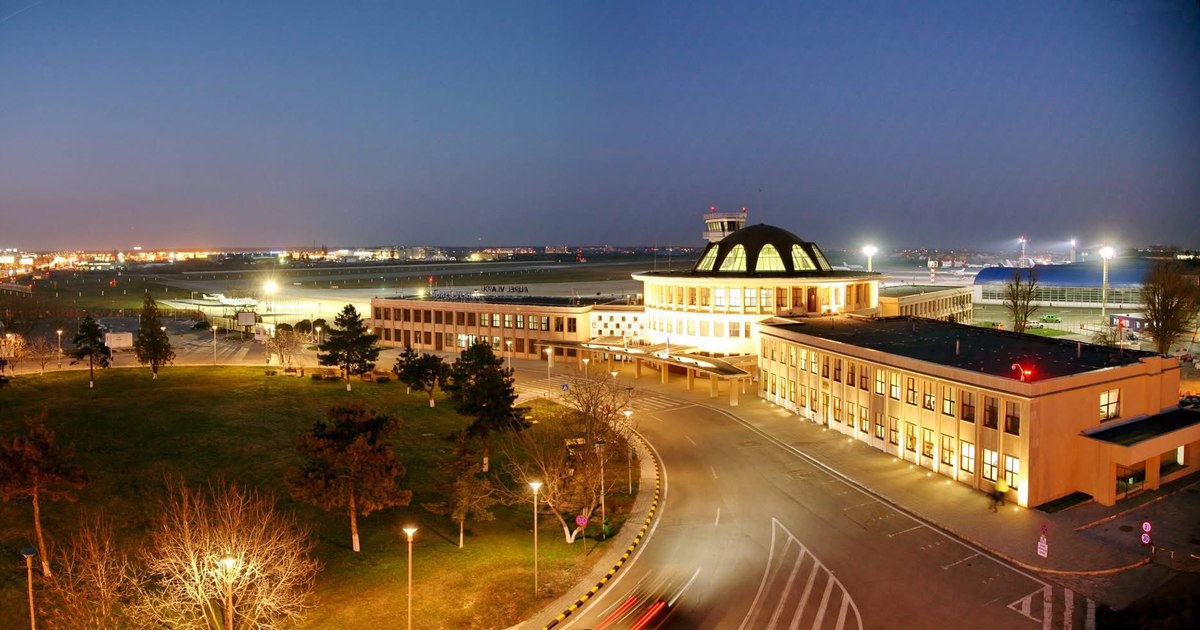
Baneasa Airport boasts that it has doubled the fares for night flights and introduced a series of operational restrictions to reduce the noise that keeps residents in the north of the Capital awake. However, complaints persist: people say aircraft are frequently heard until after midnight, sometimes as late as 2 a.m., and air activity resumes as early as 5 a.m.
Residents of the north of the capital complain about night flights from Baneasa Airport. CNAB photo
Residents in the north of the capital claim that the problem persists and that the noise produced by aircraft remains a constant presence during the night.
A local measured the impact firsthand: “On the right is the airport. There are passenger trains here at one in the morning, at two in the morning, at five in the morning. The noise at my window level (…) can reach 90-95 decibels.“
The demand of the residents is simple: quiet at night. “At night it would be really wonderful to have peace, to be able to sleep (…) for there to be no flights at night, except let's say emergency ones, not regular flights, for us it would be good” says another neighbor. The same resident points out that the problem is not limited to commercial flights — old helicopters doing training flights around the airport add an extra layer of discomfort: “There are a few helicopters, I think of my age, who think they are doing training flights because for a long time, I think over half an hour, they walk around the airport and make an infernal noise.“
Bucharest National Airport Company (CNAB) shows that “according to the Aeronautical Information Publication – Romania, the operating hours at Bucharest Băneasa Aurel Vlaicu International Airport are 24 hours”.
In other words, the airport is not closed at night and there is no general suspension of air operations at night.
The institution also explains that there is frequent confusion between the size of the aircraft and the level of noise produced.
“There is no direct correlation between the maximum take-off weight (MTOW) of an aircraft and the level of noise emitted. The maximum take-off weight is a technical parameter of the performance and safety of the aircraft, without being an indicator of the noise produced. The noise produced by aircraft is determined by the type of engines used by the aircraft”the company says.
What measures does CNAB say it has taken to reduce noise
CNAB claims that it has introduced a series of measures aimed at limiting the noise impact during the night.
“We can confirm that several preventive measures have already been taken, as well as restrictions regarding the limitation of noise impact during the night, at Baneasa Airport”CNAB representatives stated for “Adevărul”.
According to them, the first measure concerns the costs incurred by air operators.
“Thus, between 22.00 and 06.00 the landing, beaconing and passenger service charges have been doubled, which diminishes and discourages air traffic in this period“, the institution says.
Baneasa Airport, ranked 3rd in Europe for the most dynamic development of air traffic
In addition to this economic measure, operational restrictions applicable during the night have also been introduced. According to CNAB, “between 10:00 p.m. and 06:00 a.m., jet reversers are used only for safety reasons, pilots avoid the use of auxiliary engines and auxiliary power units, technical and training flights are not permitted, and engine ground testing is prohibited at speeds higher than idle”.
Also, the auxiliary power units can only operate for limited periods, and aircraft commanders are encouraged to avoid using the jet reversers after landing, especially at night.
All these measures, the company claims, were introduced to reduce the discomfort felt by residents in the vicinity of the airport.
The company did not specify how many times a week there are night flights, nor how many flights it operates, on average, after 10:00 p.m. or before 6:00 a.m.
Promises to operate flights only at night
At the end of November last year, the CNAB spokesperson stated that Băneasa Airport – the third oldest in the world – could be transformed into a city airport, from which flights would be operated only during the day.
“We have a lot of complaints and requests because of the noise, and I can tell you maybe for the first time that the strategy of the Baneasa airport aims to be a city airport, so that no more planes fly at night. Indeed, the airport was the first, but we also have to think about the community there”said the spokesperson of the Bucharest National Airport Company, Theodor Postelnicu
He explained that the airport belonged to Prince George Valentin Bibescu, and in his will the prince specified that, in the event that aviation operations are no longer carried out, the airport will return to his successors.
“Băneasa Airport cannot be closed due to noise and moved elsewhere because, by will, Prince Bibescu left the land for airport activities. If it were to be closed, the land will go to his heirs, their successors”stated Postelnicu.
The Strategic Program envisages tripling the processing capacity
The strategic program for the development of the airport infrastructure at “Bucharest Băneasa – Aurel Vlaicu International Airport” 2025 – 2035 provides for the tripling of the current processing capacity:
– increasing the operational capacity of the airport by reorganizing the current passenger terminal (ensuring a processing capacity of at least 800 passengers/peak hour, compared to 600 passengers/hour);
– the development of a new passenger processing terminal, with the necessary facilities, with a capacity of at least 800 more passengers/peak hour (in addition to the capacity of the current terminal) and the development of the adjacent land, in the proximity of the existing terminal to the east of it, which will have access to the platform; to the track, platforms and taxiway system; – modernization of the AIBB-AV movement surface.