Iran threatens for the first time since the outbreak of war with Israel will close the Ormuz Strait, the world's oil artery

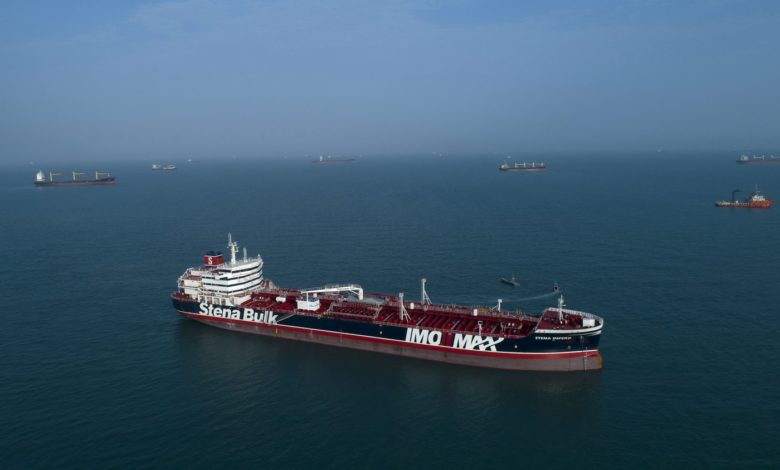
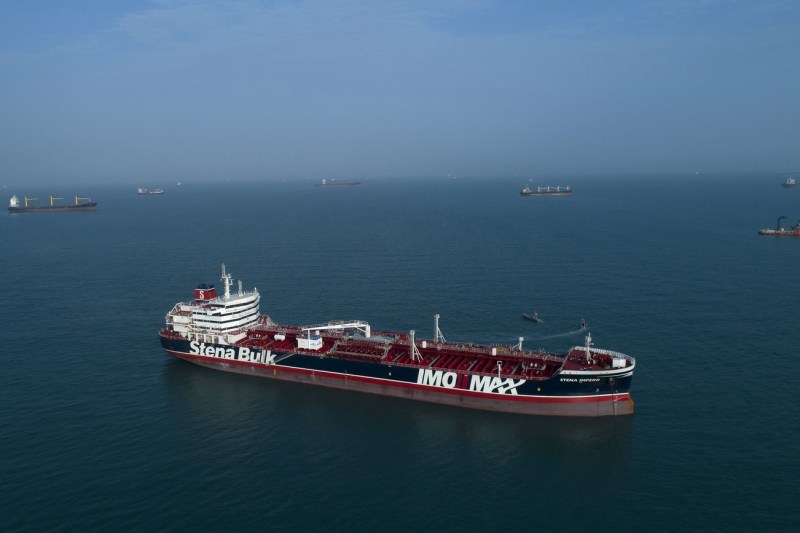
Petroleum ships in the Ormuz Strait that connects the Persian Gulf to the Arabian Sea, Photo: Ay-Collection / Sipa Press / Profimedia
Iran could close the Strait Hormuz as a way to respond against its enemies, a parliamentarian said on Thursday in Tehran, although a second member of the Iranian Parliament has later tried to temper his comments, reports Reuters.
Iran has threatened in the past that it will close the hormuz strait for maritime traffic as reprisals at Western pressure, and sources in the field of maritime transport said on Wednesday that commercial vessels avoid the Iranian waters around the strait.
“Iran has many options to respond to its enemies and uses them according to the situation,” said Behnam Saeedi, member of the Presidency of the National Security Commission, quoted by the Semi-Offective Agency.
“Closing the hormuz straits is one of the possible options for Iran,” he stressed.
Subsequently, the Mehr agency quoted on another parliamentarian, Ali Yazdikhah, who said Iran will continue to allow the free movement of ships through straits and golf, as long as his vital national interests are not threatened.
“If the United States is officially and operating in the war in support of Zionists (Israel), Iran has legitimate rights, in order to exercise pressure on the US and Western countries, to disturb their oil transit,” said Yazdikhah.
Will the US enter the war on the side of Israel?
President Donald Trump maintains the global uncertainty about a possible involvement of the United States in Israel bombardments on Iranian nuclear installations, but the Washington press writes on Thursday that a decision has already been made and that the appeal has been approved.
The Tehran has so far abstained to close the strait because all the states in the region and many other countries benefit from it, said Iranian legislator Yazdikhah.
“It is better for no country to support Israel in confrontation with Iran. Iran's enemies know very well that we have dozens of ways to make the hormuz strait, and this option is feasible for us,” said the parliamentarian.
The Hormuz Strait is between Oman and Iran and represents the main export route for golf producers such as Saudi Arabia, the United Arab Emirates, Iraq and Kuwait.
About 20% of daily oil consumption worldwide – around 18 million barrels – passes through the Hormuz Strait, which is only about 33 km wide at its narrowest point.
Analysts are skeptical that Iran can close the Ormuz Strait
An analysis published last Friday by the CNBC financial television, following the consultation with a number of specialists from the energy sector, that such a move is unlikely.
Most analysts believe that Tehran will refrain from such a move as it would strongly affect China. The second largest economy in the world is not only the largest Iranian oil buyer, but also the main commercial partner of Tehran.
“China does not want the oil flow in the Persian Gulf to be interrupted in any way and does not want the price of oil to increase. So it will use all its economic power to press on Iran,” said CNBC, co -founder of the Washington Ivy Advisors consulting firm.
“Their friends will have more to suffer than their enemies … So it is very difficult to imagine that it will happen.
However, they made the comments before the prospect of the US entered the war on the side of Israel appeared.
“[Închiderea strâmtorii] It is an extreme scenario, although we are in an extreme situation, “said the Bakr, the head of the Department of Analysis for the Middle East and OPEC+ at the KPER analysis company.” That's why I do not complete this option. We must take it into account, “she urged.
Another uncertainty is related to the actual capacity of the Iranian armed forces to impose a blockade on a waterways that, even at its narrowest point, has a width of over 30 kilometers.