Constructed at alert rhythm in the first years of communism, around strategic mining factories and exploitations, whose economy was then under the control of the Soviets, several former cities remained almost unchanged, preserving the appearance of the 1950s.
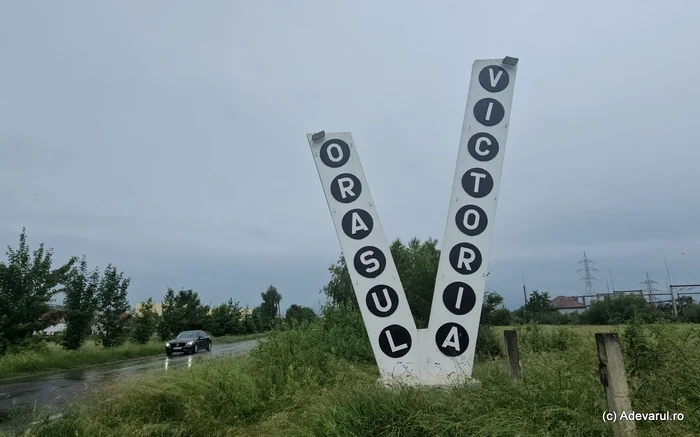
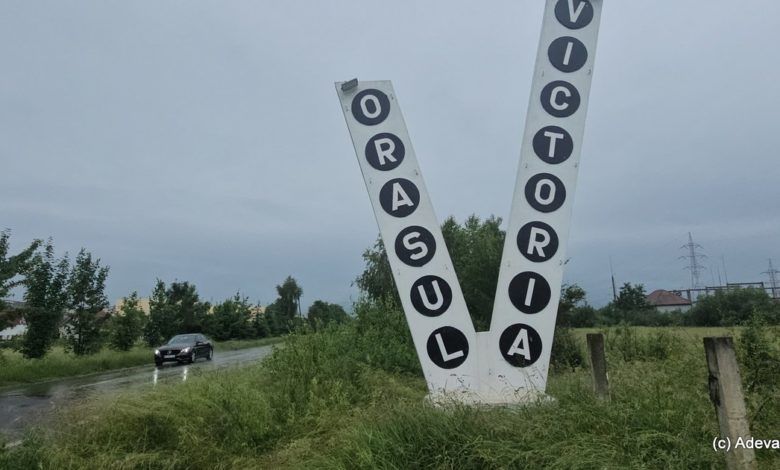
Victoria. Photo: Daniel Guță. TRUTH
The first decade of communism brought to Romania extremely harmful partnerships with the Soviet Union, in a hurry to recover their war damages as soon as possible.
After 1945, with the support of the governments controlled by the Soviets, the Sovromes, joint Romanian-Soviet companies, which aimed at the exploitation of natural resources and the Romanian economy, were set up. The Soviets thus took control of the main riches of the country and took full advantage of them, poverty Romania with billions of dollars, according to some studies.
In areas rich in natural resources, with industrial and economic potential that could be exploited in alert rhythm, they were set up from zero small cities, with architecture inspired by that of Soviet cities, which were soon populated with thousands of people, brought from all corners of Romania, but also used to host the Soviet officials.
Victoria city, designed by the Soviets
The city of Victoria in Brasov county has developed around an explosive powder plant, opened in its vicinity, in Ucea during World War II.
“The Ucea factories (as they were called then) were raised with the help of prisoners of war and a detachment of Jews. Thus the colony of Ucea was born, as a result of the large number of workers brought from different areas of the country”, It shows the City Hall of Victoria.
After the Second World War, a chemical combination developed in the same area, and a completely new city was erected, with neighborhoods that copied the model of the Soviet mono-industrial cities, with buildings with spacious rooms, tall ceilings and only two levels. An architect from Georgia also contributed to the realization of the city, the local authorities showed.
“In Transylvania, around the chemical combination” IV Stalin “, one of the new cities of the country, the city of Victoria is being built. The new city appeared on the country map and began to develop only 6 years ago. On the place where in the past there was only a plain now rises for the people of work a socialist city, worthy of the time we live. On November 6, 1949 the first shovel was thrown. It was given the signal of the start of the battle for building the city. Victoria's city is unique in its own way. It is for the first time that the project of a completely new city is finalized and its construction begins on several fronts ”informed the publication “Defense of the Fatherland”, in 1956.
Then, the city had reached 2,700 inhabitants, and the communist authorities praised its ascension, calling it the first working city appeared on the country map.
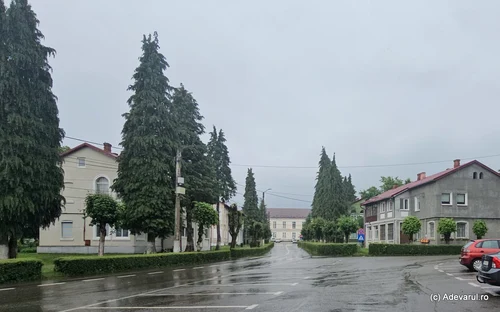
Image 1/16:
City of Victoria Photo Daniel Guță Adevărul (31) JPG
“Everything that happens here, in the settlement at the foot of Făgărașilor, is directly related to the existence of the chemical combination. There is no house or apartment where a worker, an engineer or a chemistry technician. informed the newspaper Scânteia in 1956.
Victoria was regarded as a city with great prospects for young people who were making a future at the foot of the Făgăraș Mountains. In the following decades, the city's population has increased to over 10,000 inhabitants, most of them workers employed in the chemical combination. After 1990, the chemical industry entered decline, and from the old combined Viromet survived only a small part. Currently, less than 6,500 people live here, and the industry no longer represents the main pillar of the community, as it was in the past.
The city of Victoria has kept almost intact the working neighborhoods of the 1950s and the Civic Center. The only notable architectural transformations after 1990 were the churches erected during this period. Victoria remained a tourist landmark, being the departure place for hiking to the highest mountain peaks in Romania – Negoiu and Moldoveanu – from the Făgăraș Mountains.
The city erected from zero to Apuseni
In the early 1950s, over 80 hectares of land on the outskirts of Stetei in Bihor, inhabited by about 400 people, were expropriated to make room for a completely new city, intended for Soviet engineers and military involved in the secret mining project in Băița, a locality about 20 kilometers from the future city.
Designed in Moscow, the city of Stete in Bihor had a specific aspect of the workers' cities in the USSR: strategically arranged blocks, so that it could be used, if necessary, as army shelters, large boulevards and monumental buildings decorated with elements of socialist architecture.
The Soviets would stay here for almost a decade, but the city was at the same time intended for thousands of workers who came to work at the Uranium mine in Băița, managed by the Sovrom Uranium (Sovrom quvvarit). In the mid -1950s, the city at the foot of the Bihor Mountains in Apuseni reached a population of over 10,000 inhabitants, most of them to work in uranium and molybdenum operations.
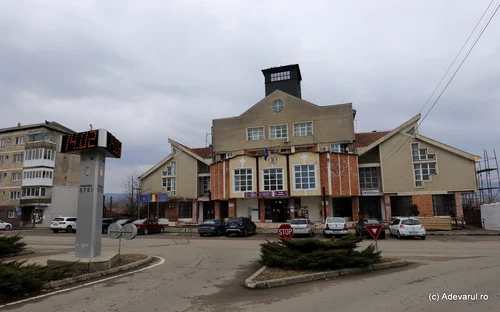
Image 1/18:
City of Ștei photo Daniel Guță Adevărul (16) JPG
In its vicinity, the small villages Nucet and Vascău also became mining cities, with an almost as big population. The miners in the area were well paid, but they worked in dangerous conditions: they were exposed to radiation, used rudimentary tools and often worked without adequate protective equipment. The mines in the area were closed after 1990, and the population of the city of Ștei has reduced to just over 5,000 inhabitants.
However, the locality has become a tourist resort of local interest. A thermal pool, old from the 1950s was modernized and transformed into a tourist objective. Also here, the travelers find the urban center that kept the architecture of the city designed by the Soviets.
Ciudanovița, Urani's town
In the Banat Mountains, the town of Ciudanovița (Caraș-Severin county) was built by zero in the first decade of communism, after the discovery of important uranium deposits in Ciudanovița and Lișava.
The uranium mines were opened in 1953 by Sovrom – Kvarit (Sovrom Uranium), under the Soviet authority, and worked intensely until 1960, when they passed in the administration of the Romanian state. In a short time, in the Jitin Valley, the first blocks of the site – as the Ciudanovița colony, were designed, designed according to the Soviet model, found in numerous working center in Romania at that time.
The blocks in the Ciudanovița colony were intended for “free” Romanian workers, but first of all the administrative, Soviet personnel, of the new uranium mines. After the Soviets left, here the workers transferred from other mines in Romania, miners, attracted by the huge income they could get in the depths and even villagers from Ciudanovița and Jitin, were to be moved from the mid -50s.
“Many came, as I came. I told myself to stay for a year at Ciudanovița. But when you give money, because the miners were very well paid.Daniel reported, a former probe at the Ciudanovița uranium mine.
In the 1960s – 1970s, the town of Ciudanovița had reached 10,000 inhabitants, many locals being crammed into the working blocks raised in the Soviets.
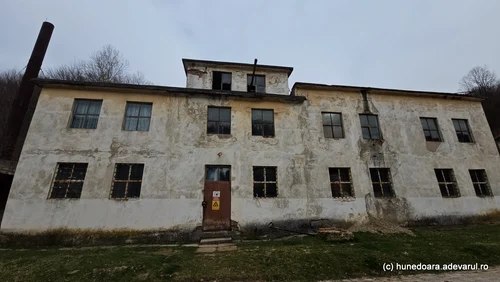
Image 1/16:
Ciudanovița village of Caras Severin Photo Daniel Guță Adevărul (170) JPG
After 1990, the mines entered a deep decline, despite the ambitious plans announced immediately after the 1989 revolution by the heads of the mining company Em Banat Oravița on the exploitation of the operation.
Uranium mines worked for several years, during which most of the galleries and wells were gradually closed. Those left in Ciudanovița were able to live almost for free in the high blocks in the Soviets, paying the modest rents to the mining company. In Ciudanovița and Jitin, there are still about 400 people.
Sovromes, companies that have dried Romania's resources
The story of Sovroms started immediately after World War II. As a result of the Romanian-Soviet agreement of May 8, 1945, they were established: Sovromtransport, Sovromcuar, Sovromfilm, Sovromilc, Sovromlemn, Sovrommetal, Sovromgaz, Sovromconstruction, Sovromaticav, Sovrom Sovromcăbune, Sovromasigura, Sovromtractor, Sovromutilajpetrolier, Tars (Romanian-Soviet air transport), and in the early 1950s, with the establishment of the Romanian-Soviet society “Sovrom Kvartit”, Romania is employed to exploit its uranium deposits for the first time, in Apuseni and in the Banat.
The secret grades of the Central Intelligence Agency of the United States (CIA), from the 1950s, revealed how, under the pretext of the aid offered by the Soviet Union, these companies practically took over the resources and richness of the country, impoverishing the Romanian economy. Although, officially, the control of the sovromes was divided equally between Romanians and Soviets, in reality the Soviets made all the important decisions. The Romanians had the facade roles in the management of these companies, and the real power was at the Soviet directors, who received direct instructions from Moscow.
“Romanian officials have only an advisory role in the economic management of sovroms”, The CIA report from 1953, kept in the digitalized archives of the institution, showed.
Sovromes covered key fields such as oil, transport, wood and steel exploitation and exploiting the resources of precious metals, gases and uranium. The Romanian state supports the costs of exploration and development, but the raw materials and profits reached almost exclusively the Soviets, who had provided an almost total monopoly on the Romanian economy.