“Why do you tell me mules, when you can tell me by name?” / Academics and ordinary people talk about women's courage

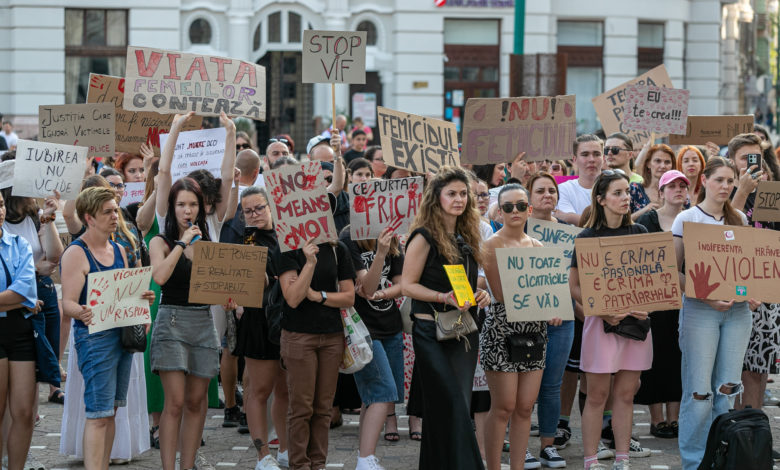
Two academic voices, professors of the University of Bucharest-Ionela Băluță, specialized in gender studies, and historian Alin Ciupală-analyzes, in a dialogue with Hotnews.ro, the way in which female courage was ignored, marginalized or distorted, in history, but also in the current public discourse.
- A few weeks ago, President Gold, George Simion, said “I am a fighter, not a mule, neither treacherous”, in the context of challenging the presidential elections. The politician was harshly criticized by the civil society for the use of the term “muiere”.
- Hotnews asked Professor Ionela Băluță and the historian Alin Ciupală how women are perceived, defined and positioned in language, history and current political discourse.
- “We could write a true encyclopedia of the courage of women from the past of our society,” says Alin Ciupală, who admits that historians have leaned too little about this subject.
The use of the word “mules” by political leaders is not a linguistic accident, but a deliberate choice, with deep cultural and social implications, believes Ionela Băluță professor.
“The term Muiere is a popular term, but which from the 20th century has a pejorative connotation. This word places the woman in a sphere reduced to biology and reproduction, and by contrast, strengthens the position of superiority of the man.”
How did Adolf Hitler talk about women
Ionela Băluță makes a historical comparison with the language used by the Nazi regime. According to her, Adolf Hitler, in “Mein Kampf”, resorted to a depreciative term to refer to women: “The Nazi regime used the Word in German” Weib “, which is the translation of the word Muiere, instead of” Frau “, which means woman or lady.”
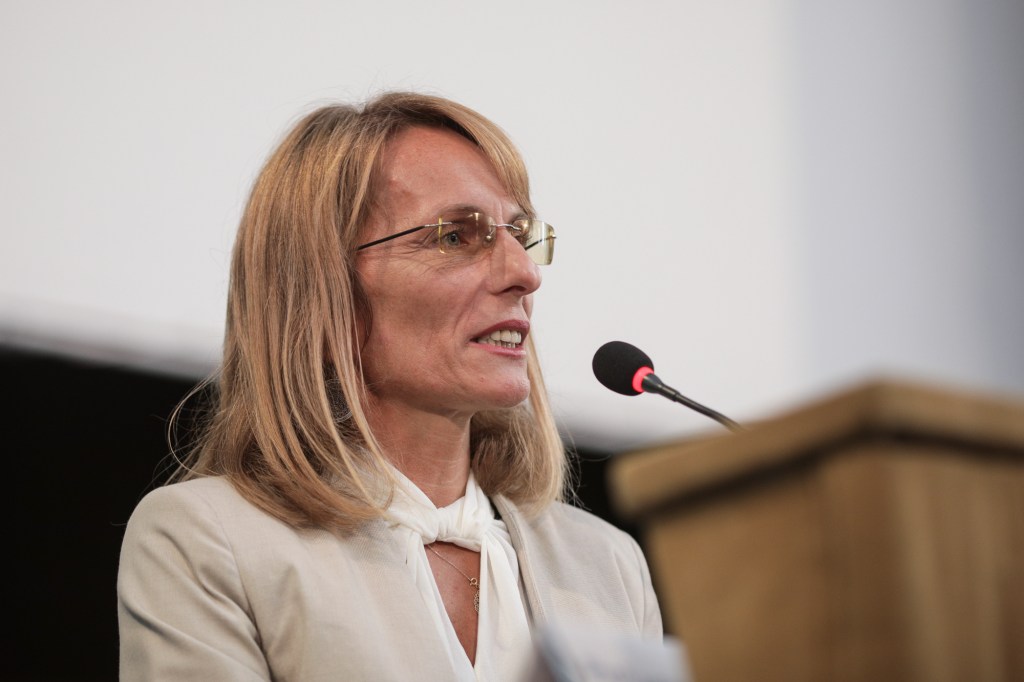
Băluță explains that, as in Romanian, the term Weib already had, at the beginning of the 20th century, a pejorative connotation, reducing the woman to her biological and animizing dimension.
The teacher notes, at the same time, an increasing phenomenon: the radicalization of young boys to extremely straight ideologies, in which there are misogynistic narratives. In her opinion, it is more serious that such ideas are also propagated by public persons.
“These speeches that are spoken by a high visibility leader – gold is currently the second parliamentary party, Simion was in the second round of the presidential elections – its symbolic position is very important and this attracts greater responsibility.”
“Let's not let go unnoticed”
The teacher points out that in the case of these skids the reaction cannot be missing: “We need to criticize, not to let the statements go unnoticed and unannounced, no matter who makes them.”
Regarding education, he emphasizes that it is a long -term process, which needs political will: “Education requires time, requires patience and demands political commitment.” And he emphasizes that “gender equality has been of democracy all the time, but it is more than ever an element of consolidation of democracy.”
Female courage
The university professor Alin Ciupală, author of some books on the condition of the woman throughout history, speaks, in a dialogue with Hotnews, about the invisible forms of female courage.

“We could probably write a true encyclopedia of the courage of women in the past of our society. The fact that historians have stopped less or almost at all on this phenomenon does not mean that it did not exist,” says Ciupala.
The female courage was not only expressed in major events, but also in everyday life, through gestures that, although apparently modest, have had a deep impact, continues the historian: “The types of female courage are diverse, from moments related to daily life, to the direct and involved participation of women during special events.”
Professor Ciupală says we live in a traditional society. “Despite the freedom and development after the Revolution of December 1989, we have a lot to do. The mentalities change the hardest and we have a long way in this regard.”
“Definite courage is not a feature reserved for a certain genre,” he says.
What do the ordinary people say
Hotnews reporters also spoke with a few people from Bucharest, on the street, about how the word “mules” perceive and what it means to them when he is spoken by a public politician or person.
“It is an archaism. Today it uses very rarely. Nobody accepts to tell her mules. It only means woman. It is no longer used in that sense, although some have tried to divide it in meaning. It can become offensive, depending on the context in which she is spoken,” Tudor believes, a man over 50 years.
Viviana believes that “the image of the woman in society decreases, especially since we know where and in what context it was used. It is an insult. Why is there no such time for men and there is for women? Practically it has been invented to bring a level below a woman and her rights.”
For Gabi, the term reaches an aspect of authority: “Take from the Women's Authority. It's a little offensive, it depends on the context, but why do you tell me when you can tell me by name?!”.
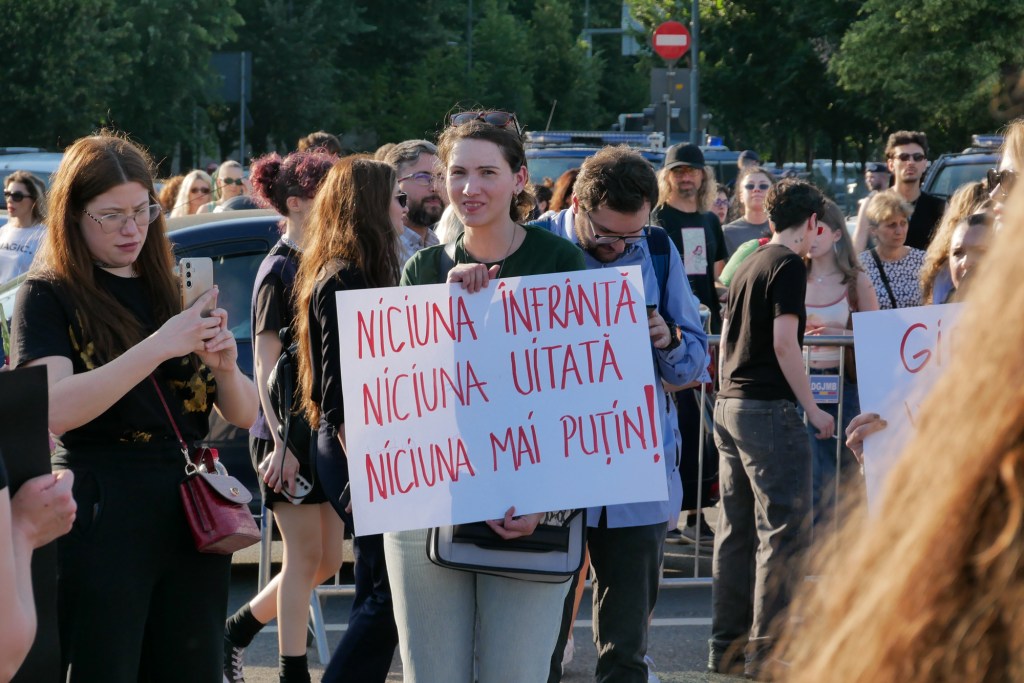
In the political discourse, the word becomes insult
In the opinion of Aida, a woman over 40 years old, the word is unacceptable in the political space: “Given the context, I perceive that it was used pejoratively. In all that political situation, there have been numerous references to women and their status. More politicians in that area have had behaviors that cannot be called.
Sara, 21 years old: “Maybe there are people who still use it normally, just refer to female, but how many times I heard it, it was not a positive connotation.”
“The use of it in the context of” I am not a mule “attacks me and offends me. It addressed someone like that and I felt very offended,” she continued.
Offense and regionalism
Lucas, 22 years old, observes the differences between the averages: “because I grew up in the urban environment, I think it can be used as an offense. However, from my grandparents experience, in the country, I know that it can be used with the meaning of ordinary woman, not with an offensive tint. In a political discourse it does not seem appropriate to me.”
Marinela also says that, in some regions of the country, the word does not have a negative load: “If we speak of the Oltenia region, then Muiere is a word commonly used, with the meaning of woman, wife, wife – so it is not an offense, but a regionalism. But strictly in that context.”
How the meanings of the words “woman” and “mules” in the Romanian dictionaries have changed
In an article published on the contributors.ro platform and signed by Sociolaga Cosima Rughiniș, the semantic transformations of the words “woman” and “muiere” are analyzed in the dictionaries of the Romanian language, from 1929 to the present.
The author starts from the observation that, in older dictionaries, “woman” was defined primarily by reference to a man – as “wife” or “married person”.
Etymologically, the word “woman” comes from the Latin family, who in the old Romanian designated the household – wife and children. His meaning gradually restricted from “family” to “wife” and then to “adult female”, a process that the author identifies following the succession of definitions in the main dictionaries.
In parallel, the article also follows the status of the word “mules”, which, in older dictionaries, appeared as synonym for “woman” or “wife”, but was often marked as popular and sometimes pejorative. Scriban (1939) The note that “mules” could be used ironically about a wicked woman, and Șăineanu (1929) indicated a difference of regional perception: the word had an optimistic shade in Muntenia and a pejorative one in Moldova.
In the Dictionary of the Romanian Literary Language (1955–1957), the term is labeled as “popular, sometimes pejorative”, and in the new explanatory dictionary (2002) there is also the depreciating meaning: “a woman with ugly appeals; In DEX 2009, these negative connotations are no longer mentioned. “Muiere” is passed as synonym of the word “woman”.
“This re-defining of the word” woman “, narrowing from the” wife and children of man “to” wife “and then to” adult female “, occurred in parallel with marginalization in the literary language of the word” mules “, who has gained pejorative connotations,” writes Cosima Rughiniș in the article.