2025-06-13 17:06
publication
2025-06-13 17:06
On Friday, the heads of the Ministry of the Interior of the Ministry of the Interior supported the prolongation of the temporary protection of Ukrainians in the Union until March 2027. At the same time, they began to prepare the gradual retreat of Member States from this mechanism. It is about the transition of Ukrainians to other legal statuses or a return to Ukraine.
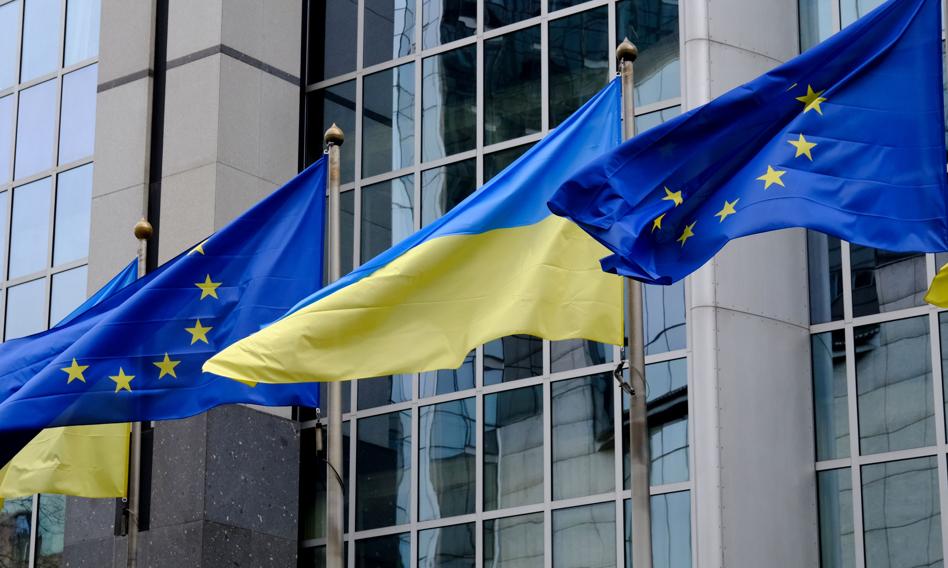
Temporary protection launched after the Russian invasion of Ukraine in February 2022 causes that Ukrainians can count on the EU to the right to stay and work, and also have access to public services such as education and health service.
As we read in a message from a meeting of interior ministers, meeting on Friday in Luxembourg, a recommendation on the preparation of a coordinated output of temporary protection is discussed at the same time.
“The recommendation will apply to such issues as switching to other legal statuses (residency), paving the way to a gradual return to Ukraine and increasing the provision of information on available options” – emphasized.
The minister of the Interior and Administration, the leader in Luxembourg, Tomasz Siemoniak, quoted in a message issued by the EU Council, emphasized that the decision means that Ukrainians will be able to benefit from protection for the next year.
“The Polish Presidency also initiated a discussion on the strategy of gradual withdrawal of temporary protection after reaching a fair peace. In the near future we will work on joint, general public solutions in this field, including in the context of returns to Ukraine” – noted Siemoniak.
Protection will be extended by one year – by Friday's agreement of ministers; Instead of exploring March 4, 2026, it will end on March 4, 2027.
If the circumstances in Ukraine change, enabling the return and reintegration of Ukrainians, the European Commission may apply to the Member States for suspension of temporary protection earlier than expected at the date of its completion.
The European Commission, which came out with a proposal to prolong temporary protection at the beginning of June this year, also considered that Ukrainians would have to help in voluntary returns that the state would regain its people after the war.
The EC proposes to create information points in member states, where Ukrainians will be able to find out how to safely return to the country, find employment or start a business. Ukrainians are also to be able to “explore” to their country to assess the living conditions or the degree of destruction of their homes, which will help them make a well -justified decision on a possible return.
According to the EC proposal, information points are to be partially financed from EU funds, and their activities are to be supervised by a new envoy for Ukrainians in the EU. The EU is to coordinate return programs in close cooperation with Ukrainian authorities, which will be able to assess the number of people needed on the labor market or the possibility of accepting them (e.g. issues of access to public services, including health protection).
The creation of such special centers in European capitals for Ukrainians was supported on Friday in Luxembourg, Oleksij Czernyszow, deputy prime minister and minister of national unity of Ukraine. He confirmed that Ukraine is involved in their creation. He emphasized that they will provide professional services for both Ukrainians who are considering voluntary return to the country after reaching peace, as well as for those who decide to integrate in EU countries. “They should know the language, they should have a job, they should be professionals. They should be an advantage,” he said.
In the summer, the first such “hub of unity” is to be created in Berlin. There are the most in Germany – 1.2 million Ukrainians, in Poland – 997.1 thousand, and in the Czech Republic – 365.1 thousand. In total, 4.25 million Ukrainian citizens benefit from temporary protection in the EU countries.
The EU Directive on temporary protection was adopted in 2001 as a result of mass resettlements caused by armed conflict in Western Balkans. It was launched for the first time in response to Russia's invasion of Ukraine.
From Luxembourg Magdalena Cedro (PAP)
MCE/ MWS/ MMS/ AMAC/ MHR/