The only scenario in which the US and Iran could lay down their arms in 2026 – Analysis of a Romanian expert in the Middle East

The United States and Iran are apparently locked in a conflict of attrition, but even so there would be the possibility of a compromise. Ioana Constantin-Bercean, an expert in the Middle East, explains, in an analysis for “Adevărul”, what is still missing for an agreement and how long the war could last.
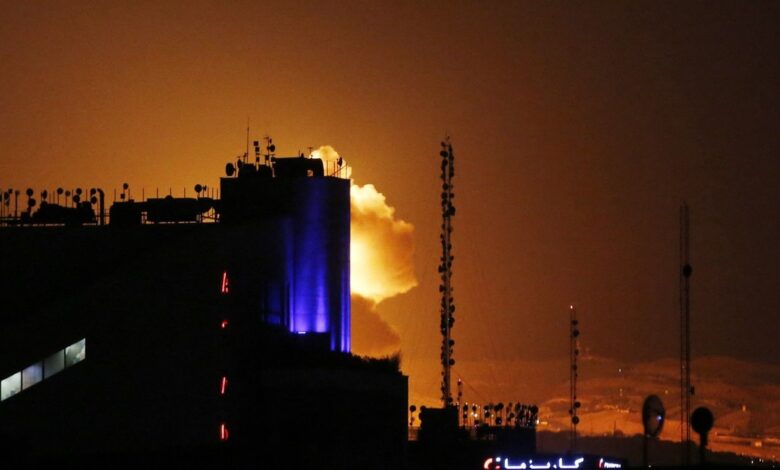
Explosions in Tehran, Iran. PHOTO: Profimedia
The United States of America and Iran are engaged in a brutal armed conflict, in which the two belligerents, to which is added the US ally, Israel, seek to cause as much damage as possible. Dr. Ioana Constantin-Bercean believes that it is difficult to reach an agreement, but not impossible.
Even if the chances of a deal materializing in the coming days or weeks are very slim, in the medium to long term there are some windows of opportunity for a deal, provided US negotiators abandon their zero-sum game approach and understand the new Iranian doctrine as well as recent miscalculations.
Where did it start?
A possible starting point would be the 15 points discussed in the Geneva negotiations between the United States of America and Iran, when it seemed that an agreement would even be reached. Although the 15 points are, according to Ioana Constantin-Bercean, much less comprehensive than the old agreement signed with Barack Obama in July 2015, they could have represented a foundation for an agreement that could become reality in the coming months, although the negotiations were rather poorly managed. She points out that the Iranians were, at one point, open to American proposals, but Washington's lack of consistency led to the termination of the negotiation process.
“If he went on the road with the goal of 'regime change' and the annihilation of the nuclear program, three days later US Defense Secretary Pete Hegseth declared that the Americans did not want to change the regime, nor to democratize Iran, but to destroy the naval and air capabilities – which they did. If the objectives were met, why do we still have a war? As for the 15 points, paradoxically, whoever analyzed them more closely, noticed that they are only a small part of what was stipulated in the previous agreement, the JCPOA (Joint Comprehensive Plan of Action). This 15-point plan does not even cover a quarter of the previous nuclear deal. This may mean that Donald Trump, by withdrawing from the agreement in May 2018, only wanted to cancel the JCPOA simply because it was negotiated and signed by his predecessor, former President Barack Obama. And even though he promised “a better deal”, the current proposal is a much weaker plan in terms of verification and control. says Ioana Constantin-Bercean.
Everyone prepared for war
Just as Iran prepared long in advance for this war, the Americans would have been preparing the military operation for a long time. Ioana Constantin-Bercean advances the hypothesis that the talks in Geneva were just a pretext for the Americans to prepare military action in detail.
“This war against Iran appears to have been contemplated for some time. It is quite possible that the negotiations were merely a period for America and Israel to buy time to evaluate their military options. Plans for war with Iran have been on the Pentagon table for at least 30 years, but American generals have advised previous presidents against direct conflict because the chances of a decisive victory are small.” says the expert.
Ioana Constantin-Bercean agrees with political and military analysts everywhere, including the United States, who have drawn attention to the fact that the Americans have entered an unnecessary war, which can only bring great problems and serious losses.
“We see what is happening now: despite statements about the destruction of missile stocks, Iran continues to retaliate, launch missiles and destroy targets on the territory of the Gulf states that host American bases. We have serious damage to the energy infrastructure, especially in Qatar, where it is estimated that it will take at least 5 years to restore the «Ras Laffan» plant”, she adds.
At the same time, Iran has been preparing for this war for the past three decades, during which time it has had the opportunity to work out all the details, including securing a large stockpile of weapons and ammunition, which is proving vital today.
“Iran has been preparing for this war for over 30 years. It has built its now known mosaic doctrine, built and financed a regional network of loyal proxy groups, from Hezbollah in Lebanon to Shiite militias in Iraq or the Liwa Fatemiyoun Brigades in Afghanistan. Although Hezbollah was said to have been annihilated last year, we now see Israel executing a ground invasion in Lebanon to dismantle this structure.” says the expert.
Who would be the necessary pawn for the “revival of confidence”
Among the necessary conditions for reaching a deal would be that the US negotiating team be changed. Ioana Constantin-Bercean identifies the vice president of the United States, JD Vance, as the figure capable of breaking the ice. As Tehran also conveyed, JD Vance could be accepted as an interlocutor due to his less bellicose stance.
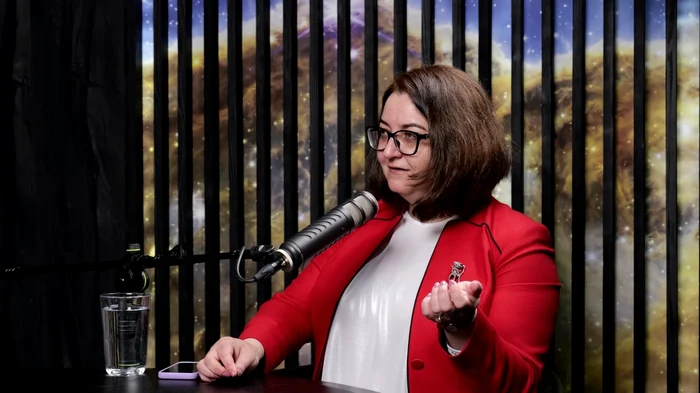
Ioana Constantin-Bercean. PHOTO: Facebook
Head of the Romanian Naval Forces: “There are reasons that keep me up at night.” The truth about the danger of sea mines and the Russian threat
“Iran has hinted that Vice President JD Vance could be one of the talking points. His lordship has been pulled out of all this very warmongering talk, and here he is re-emerging when there is talk of negotiations, of agreements, of a possible peace. That means that the American vice president would meet those qualities or those requirements that the Republican and even the Democratic electorate would have.”believes Ioana Bercean-Constantin.
But even so there is no guarantee that an agreement will be reached very soon. The expert warns that Vance's success depends on understanding that trust in the Middle East is very hard to win and very quickly lost. But the Iranians' trust in American intentions was lost as a result of the “bombing” of nuclear diplomacy twice: in June 2025 and in February 2026.
The nuclear concession: The signal ignored by the Americans
A key point for a future agreement is how the stockpile of enriched uranium is managed. Ioana Constantin-Bercean claims that Iran has already offered an opening that was misinterpreted by previous negotiators.
“Many nuclear negotiators are actually saying that the Iranians would have let them know that they had that 60% enriched uranium with the idea of either being stored elsewhere — sure enough, Russia offered — or to let the Americans know that this is the stockpile they have and they're willing to negotiate the future management of it.”
She criticizes the superficial approach of the Witkoff-Kushner team, which, moreover, has led to the failure of the negotiations so far.
“Steve Witkoff's interpretation of the fact that the Iranians admitted to possessing the approximately 450 kg of enriched uranium was completely wrong. Mr. Witkoff believed that the Iranians were bragging about that stockpile, not that they had put it on the list of negotiable targets. Moreover, several American analysts, including former Biden administration security adviser Jake Sullivan, believed that Steve Witkoff's interpretation did not was consistent with reality”is the opinion of Ioana Bercean-Constantin.
Why is it so hard to reach an agreement?
In his opinion, it will be very complicated for the two camps to reach an agreement, and President Donald Trump may resort to a trick to “sell” any kind of deal with Tehran to the American public as best as possible.
“An eventual agreement will be very complicated. The Trump administration will have to 'sell' this war as a clear victory and explain why in the beginning, as long as the regime in Tehran has not been changed. It is true that the previously known leaders were killed from the first day of the war, but those who replaced them are the emanation of the same military-style regime with some religious aspects. Iran, for its part, has a double problem. In the first in turn it is about the internal one, since the new leadership of the Islamic Republic, with the exception of President Masoud Pezeshkian and former President Hassan Rouhani, who seems to be becoming a figure again in the decision-making-diplomatic forum, is made up of people from the IRGC (Islamic Revolutionary Guard Corps), young people raised in a very aggressive rhetoric, with a strictly military mindset, much more difficult to manage than the old religious leadership which, at crucial moments for Iran has demonstrated a certain kind of pragmatic flexibility. At the end of the war, the economic problem must also be managed: the Iranian population could hold the regime to account for the deep corruption of the regime and the channeling of the revenues obtained from oil exports to the regional network of groups loyal to Tehran of government, around 15-20% of Iranians are loyal to the idea of the Islamic Republic, and the rest may be indifferent to the form of government, but the entire population is concerned with economic survival”, explains Ioana Constantin-Bercean.
This also means that, when an agreement is reached, the compromise will not be one of “friendship”, but one dictated by exhaustion, she also says. This is all the more so as normally, despite the harsh rhetoric, both sides have urgent economic and political reasons to stop the conflict.
The advice that his Romanian adviser from the first term would give to Trump. “This is really unfair for Romania”
The problem Israel might face
The expert also brings up another aspect, which is apparently unclear. It is about the situation of Israel after the war. Ioana Constantin-Bercean believes that there is a risk that the Jewish state will suffer in the next period.
“Another aspect ignored in the daily analyzes is that of Israel's security in the post factum scenario. If the Americans suddenly withdraw, Israel remains vulnerable to an Iran that has proven stronger than expected. The Gulf states will not suddenly become Israel's 'best friends'; in the regional collective mind, this war was initiated by the US and Israel, so the latter is seen as guilty of destroying the Gulf economic ecosystem. In addition, the war has sent a powerful shadow cone what was left of the Abraham Accords, and if until a month ago there was still hope in Washington that Saudi Arabia would sign those agreements, which could be another step towards a security architecture and the societal securitization of the region, now that moment has been postponed, because of the war, of course. Israel, without constant American military support, would remain vulnerable in a region that has been hostile to it since its creation in 1948“, says Ioana Constantin-Bercean.