Romania and violence against women. What measures have been taken and what is the situation in other European countries

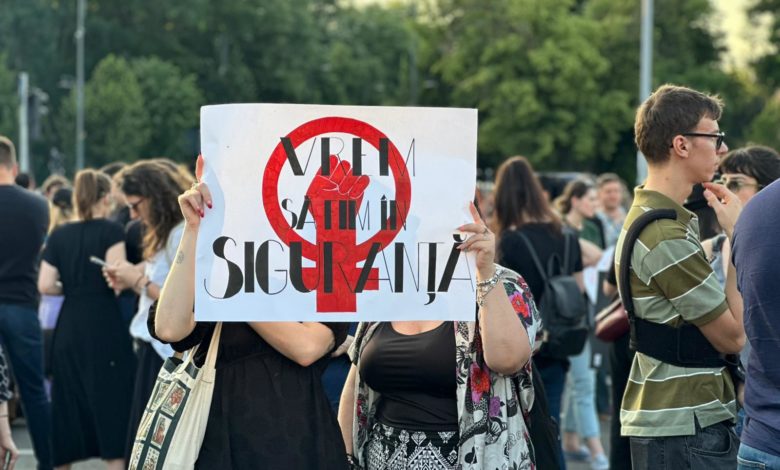
“Every woman killed is the proof of a system that failed. And this failure is a criminal,” several organizations said, after a 23 -year -old woman, pregnant in six months, was killed. The case, the 25th considered Femicide from the beginning of 2025, brought to the fore the urgency of concrete measures to protect women from violence. Gender violence and femicide are phenomena that not only Romania, but also other European countries, are faced. What is the situation and what measures have been taken to combat them?
- The article is part of the PULSE project, an international journalistic consortium in which Hotnews is a part and providing the public documented and diverse perspectives, with information from several countries, about issues of great public interest. The article was written by Adelina Mărăcine (Hotnews), along with Ana Somaville (El Confidential, Spain), Francesca Barca (Voxeurop, France), Justė Ancevičiūtė (Delphi, Lithuania) and Anna Absolonová (Deník Referendum, Czech)
In Romania, the authorities adopted the National Strategy on promoting the equal opportunities and combating domestic violence for the period 2022-2027, by the Government Decision no. 1.547/2022.
According to the National Agency for Equal Opportunities between Women and Men (Anes), the document establishes general lines of action, but does not have a budget dedicated exclusively to implement measures.
Civic organizations, including the network for preventing and combating violence against women (the VIF network), point out that the lack of a clear budget and constant funding drastically reduces the efficiency of the interventions. Without appropriate human and financial resources, the state cannot guarantee women's safety.
A report quoted by Freedom and carried out by the European Institute for Gender Equality (Eige) estimates that, in 2019, gender violence cost Romania over 15 billion euros: 12.6 billion euros for violence against women and about 3 billion for men.
Estimates include expenses for medical services, police interventions, judicial processes, social support and counseling. At the European Union level, the cost of gender violence was 366 billion euros in the same year.
Double impact campaigns: information and legislation
Elena Samoilă, a gender equality expert at the Filia center, explains in an interview for Hotnews what are the current directions of civic campaigns, what results have had so far and where the Romanian state interventions are missing.
“The campaigns we carry out, together with our colleagues in the VIF network (the network for preventing and combating violence against women), includes both types of directions: on the one hand we want to contribute to increasing the awareness, and on the other hand, we want and improve the legislation,” the legislation said.
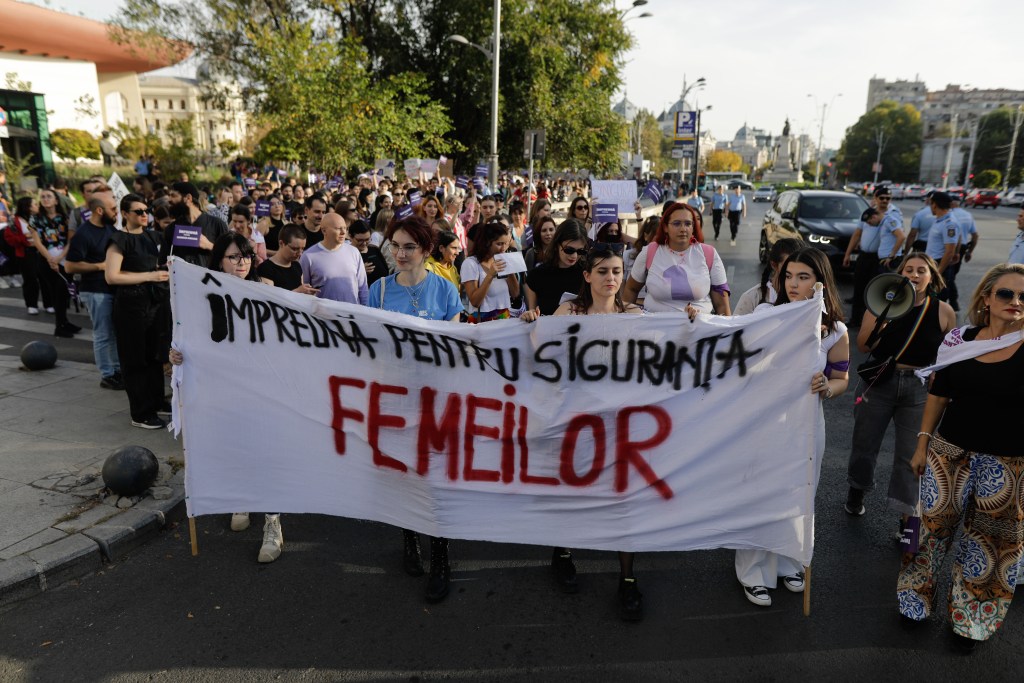
An example is the annual march “together for women's safety”, organized in October, who aims to bring together people from different environments and draw attention to the state's responsibility in protecting the victims.
Currently, the organizations in the VIF network work on the implementation of the European Directive 1385/2024, which provides for the redefinition of rape in the Romanian legislation based on the lack of consent, according to the Exxper.
Laws changed by public pressure
Changing the minimum age of consent to 16 years in relations with adults is one of the recent legislative changes following a campaign carried out by the VIF network, with the support of the Allied parliamentarians and parliamentarians.
“The law entered into force in January 2024, and this year there were 3,999 rape offenses on a minor. Although it was a successful campaign, it was a long road. Next, we have to fight people to understand that the minors under 16 are children,” said Elena Samoilă.
Another large campaign was the elimination of virginity tests on request – a legal practice in Romania by 2022. The “Test” campaign, carried out with the support of the DDB Romania Agency, managed to gather over 44,000 signatures to eliminate this form of gynecological violence. “People were surprised to find out that such a practice was still being done in us in 2022,” says the gender expert at the Branch center.
Statistics and perceptions
Domestic violence remains an extended phenomenon in Romania, powered by gender inequalities and traditional social norms.
According to the data provided by the Filia Center, 1 in 4 Romanians consider it acceptable that a man to ban the partner access to their own financial resources or to a circle of friends-behaviors that constitute forms of economic and social violence.
In 2024, the police intervened in over 130,000 cases of domestic violence, and 12,985 victims benefited from specialized services, of which 2,486 were women, 10,316 children and 183 men. In the first five months of this year, 25 women were killed by the partner or former partner, according to the same data.
However, the Center of the Branch emphasizes that these figures only reflect the tip of the iceberg.
“Many cases of domestic violence are not reported by fear – especially by the aggressor, the lack of information, the blaming of the victim, including from the authorities, but also because of the precarious financing of the support services,” warns Elena Samoilă, an expert in gender.
Where the Romanian state fails
One of the main problems identified by NGOs in the field is the lack of accessible information for the general public. “The campaigns should contain information about the provisional protection order, the protection order obtained in the court, as well as about the monitoring of the aggressors through the electronic bracelets. The latter is a new measure introduced in the legislation, but which can save lives,” explained Samoilă.
Access to services for victims is still limited. Shelters, psychological counseling and legal support remain underfunded. At the same time, the lack of adequate training of specialists (police, prosecutors, judges, doctors or social workers) leads to cases where the victims are not believed or discouraged to file a complaint.
“There is also a need for a continuous training of the specialists who work with the cases of domestic violence (of the police, prosecutors, judges, professionals from physical and mental health and social workers), to better understand the power dynamics in the respective relationships,” explains Samoilă.
In the long term, the sustainable solution is education, says the expert: “Children should learn what gender equality means, how inequalities lead to violence, what is consent and how a healthy relationship looks.”
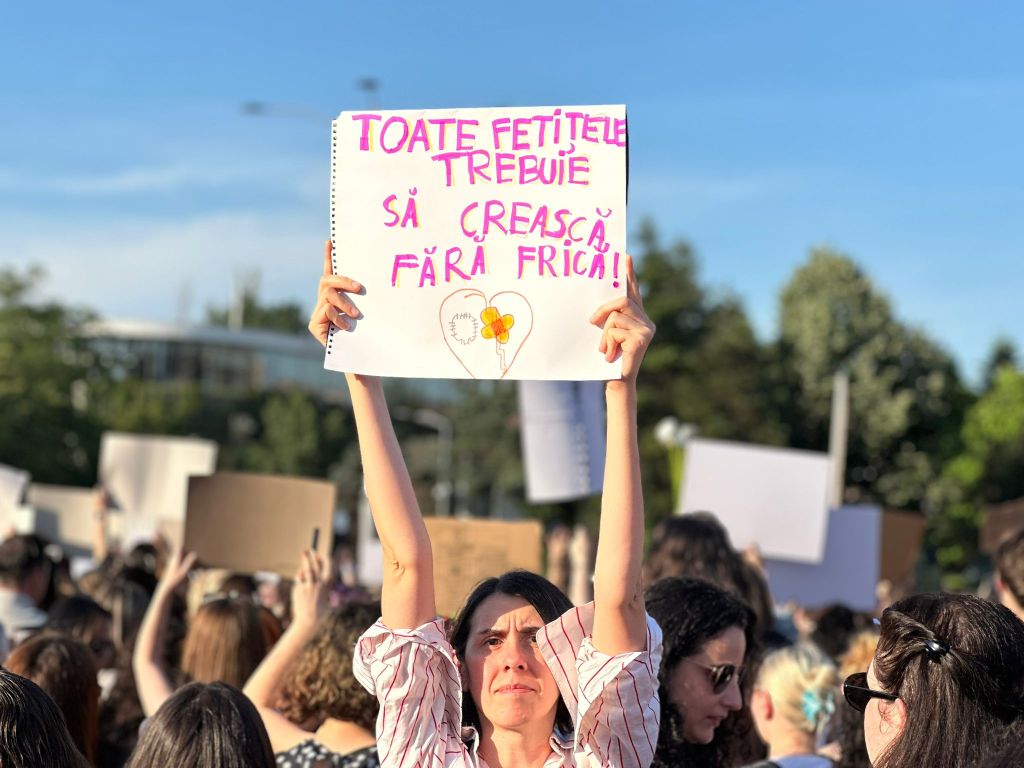
Gender violence is a problem encountered in other European countries. What measures did they take to stop the phenomenon?
Spain: government strategies and critics from NGOs
In Spain, official data show that the number of women victims of gender violence increased by 12.1% in 2023, reaching over 36,000 cases.
The government has allocated 177 million euros to combat all forms of gender violence within a national strategy for the period 2022-2025.
In addition, the Ministry of Equality received permission to invest 2.4 million euros in awareness campaigns by 2025.
However, representatives of youth organizations criticize the fact that many of these campaigns do not sufficiently involve affected communities or public education.
France: Major budget but insufficient for real needs
In France, the budget for combating violence against women exceeded 184 million in 2023.
Even so, the France's Foundation says that the amount needed to meet the real needs would be about 2.6 billion euros annually – that is 0.5% of the national budget.
The number of complaints for domestic violence increased by 83% between 2018 and 2022, and cases of sexual violence doubled within the same interval.
Lithuania: Protection orders and investments from European funds
In Lithuania, in July 2023 a protection order against domestic violence was introduced, which allows the police to force the aggressor to leave the victim's home temporarily. In just three months, the police issued over 26,000 such orders.
The state has invested about 2 million euros from European funds for the training of professionals involved and for informing the public. Support centers were created for national information victims and platforms.
Czech Republic: campaigns supported by NGOs and external funds
In the Czech Republic, prevention campaigns are mainly carried out by NGOs and are funded from external funds. campaign Stopnasili.czsupported by Norwegian funds, offers educational materials, podcasts and public actions to draw attention to forms of gender violence, including online violence.
The Czech government has announced a campaign for 2025 focused on women's safety in the digital environment. Official data show that almost one third of Czech women were victims of domestic violence, but only 5-10% of rape cases are reported to the authorities.

The PULSE project is a European initiative to promote cross-border journalistic partnerships, co-financed by the European Commission (DG Connect) within Multimedia actions by Grant Agreement LC-0272862. HotNews.ro collaborates in the project with other prestigious publications in Europe: Delfi (Lithuania), Deník Referndum (Czech Republic), the largest Austrian newspaper Der Standard (Austria), some of the largest publications in Greece – Efsyn, El Confidential, Spain, the largest Polish newspaper Gazeta Wyborcza, the oldest analytical and information site. MediaPool, one of the largest HUVG HUVG and Italian newspaper with economic profile for 24 hours, one of the oldest and most powerful publications in the peninsula.
Three renowned transnational media organizations-OBCT (Italy), N-OST (Germany) and Voxerop (France) will coordinate the project activities.