1: 0 for Trump and Technogigants from the USA. Europe admits to failure

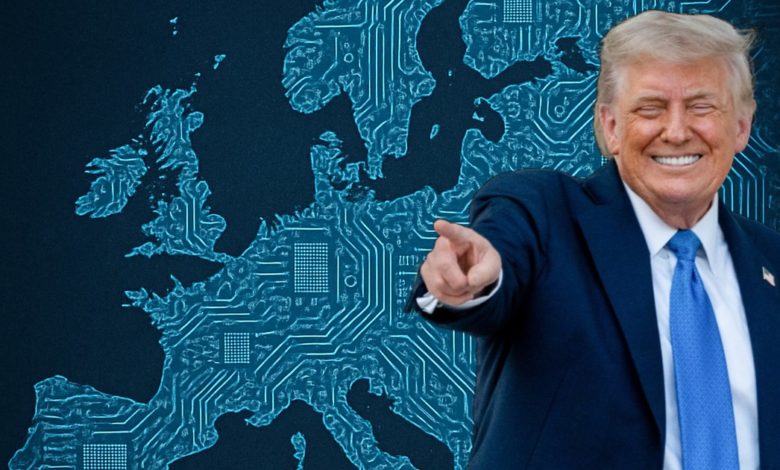
The EU intends to convey a sobering message to the growing movement in Europe, which calls to reduce the dependence of the continent on American technologies in key areas, such as cloud services, artificial intelligence and micro -presents, and instead choose European alternatives. What is this message? That, despite how Trump and his secretaries treat Europe, it will not happen.
The European Commission is preparing on Thursday for public confirmation of the bitter truth, which many talked about privately: Europe is not even close to becoming independent of American technological giants.
According to the draft document, which was reached by Politico, In the new international EU digital strategy, it will promote cooperation with the United States, as well as with other technological players, including China, Japan, India and South Korea. “Disconnecting is unreal and cooperation will remain significant in the entire technological value chain,” we read in the project.
This is a return to reality after a year in which votes have gained in importance for the technological sovereignty of Europe. In December, the commission appointed Finka Henna Virkkunen the first in history commissioner for technological sovereignty. A few months after taking up the position, MEPs began work on the draft action plan for technological sovereignty.
The rapid development of the so -called The Eurostack movement, which is in favor of building European technological infrastructure and gathered influential people, including the economist for competition Cristina Caffarra and Kaia Zenner, a key assistant to European legislator Axel Voss.
There is a common consent as to the problem: American giants of computing clouds control over two -thirds of the European market, the United States is ahead of the EU in supporting enterprises dealing with artificial intelligence, and Europe's share in the global microchip market has dropped to about 10 percent. In Thursday's strategy, “United States's advantage in the field of innovation” and “Europe's failure in the use of a digital revolution”.
There is a lack of real solutions to a complex problem, which is a treading of deeply rooted dependencies.
Growing potatoes at home. You can, but why
The EU began activities aimed at catching up in the AI infrastructure, allocating billions of euros to supercomputers optimized for artificial intelligence to counteract US plans implemented by OpenAI and other entities. However, even favorable technologies of legislators express doubts as to the success of these activities.
Europe should “sobered” in the pursuit of technological sovereignty and accept the fact that “some trains have already drove away,” said conservative Bulgarian politician Eva Maydell during the Politico AI AI and Tech Summit conference last month.
“We need a very bright plan, which first of all assess where our strengths lie, where we have some dependencies and where we have to cooperate,” said Maydell.
It is expected that the Thursday strategy will do this – they contain a long list of possibilities of cooperation in areas such as chips, quantum technology, artificial intelligence and safe connectivity.
“[Ta strategia] It is more pragmatic than political absolutism [i puste stwierdzenie, że] Ok, [sami] We will do everything in Europe, “said Dan Nechita, former head of the European Cabinet of the Laws of Dragoș Tudorache, and currently the EU director for the transatlantic political network.
He compared it to the cultivation of tomatoes or potatoes at home: “It's not like it can't be done, but sometimes it doesn't make sense,” he said.
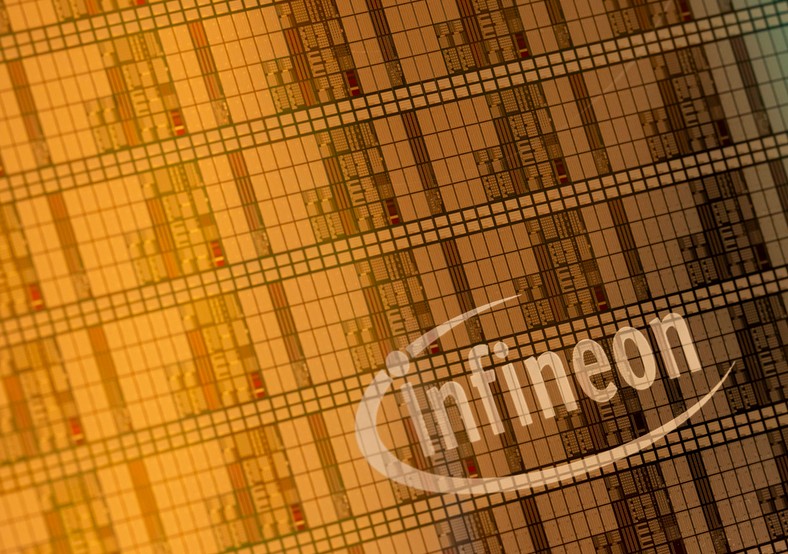
A semiconductor model with the logo of the German company Infineon dealing with the production of electronic components, Neubiberg, Germany, November 12, 2024.
Fears and pressure
Because even some of the most pro -Atlantic and free market environments in Europe are beginning to fear their addiction to the United States, several countries and cities are taking their own political actions to become independent.
Domestic legislators in The Hague exert pressure on the Dutch government to become independent of American suppliers – but their efforts were destroyed by the decision of Geert Wilders to leave the government coalition.
On Tuesday, the Danish cities of Copenhagen and Aarhus decided to look for alternative solutions that will allow them to give up Microsoft's office products and cloud services, because Denmark is preparing to take over the main role in Brussels in conducting meetings of EU ministers from July 1 this year.
However, the Thursday strategy takes into account skepticism as to whether the EU really has alternative solutions that political leaders could resist, and whether it is sensible to spend billions of euros on their implementation.
In the first months of her term of office, the head of EU technology in the first months of her term of office to maintain the alliance's openness, traveling to India, Japan and the United States, and consistently emphasizing the importance of dialogue and close cooperation.
It has the support of some of the most influential lobbying groups in the technology industry – even in terms of the need to continue cooperation with the United States.
-We need a transatlantic technological alliance to jointly develop and protect technologies that constitute the basis of our common security and economic prosperity, such as artificial intelligence, quantum and semiconductors-said Cecilia Bonefeld-Dahl, general director of Digitaleurope, before Thursday's presentation.