Extended arming plan of Great Britain. The London government also changes strategic defense thinking: “Drones kill more people than artillery”


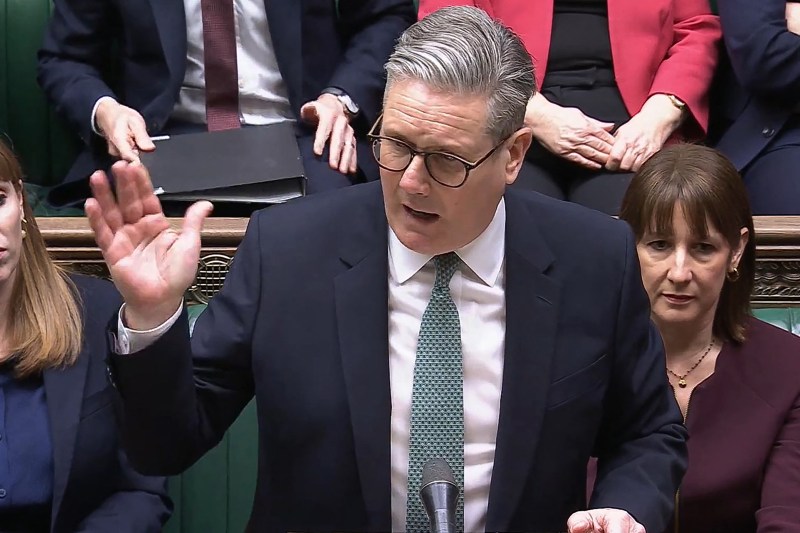
British Prime Minister Keir Starmer speaks before holding a defense and security speech. Photo: AFP / Profimedia
The UK has announced that it will radically change the defense strategy in response to Russia's threats, nuclear risks and cyber attacks through drone investments and digital war to the detriment of a larger army, writes Reuters.
Responding to the insistence of US President Donald Trump for Europe to take on greater responsibilities, Prime Minister Keir Starmer promised the greatest increase in defense budget since the end of the Cold War.
“Drones kill more people than artillery”
But with limited finances, the plan of the British government foreshadows to make the army more lethal, not greater, learning from the Russian-Ukrainian war, in which drones and technology have transformed the battlefield.
Defense Secretary John Heasley said the opponents of the United Kingdom allies, and the technology changes how the war is worn. “Drones kill more people than the traditional artillery does in the Ukraine war and who puts the technology in the hands of armed forces will win,” Heasley said.
Starmer ordered an assessment of strategic defense shortly after becoming a prime minister in July, assigning experts for the next 10 years.
Despite the defense budget discounts in recent years, the UK still remains with France one of the first-rate military powers, with an army that contributes to the defense of the Eastern Flank and a fleet that remains in the Indo-Pacific area. But the army, with only 70,860 trained soldiers, is the smallest from the era of Napoleonean warriors, and the government says it must be reformed due to growing strategic threats.
James Cartlidge, the coordinator of conservative security policies, in opposition, says that the Government has not proved that it can finance the recommendations made from the evaluation, which means that it “avoided the big decisions”. “An evaluation of the strategic defense without funding is just a list of desires,” Cartlidge told the members of the Commune Chamber, many of them unhappy that they had learned from the press.
But the largest British Bae Systems has greeted the evaluation, which he described “a clear request signal” for the defense sector to invest and develop technologies.
Investments in nuclear armament
According to the plan accepted by the Government, the United Kingdom will increase its phase of attack submarines, which are nuclear energy, but have conventional armament, and will spend 15 billion pounds by 2029 to replace the existing nuclear focos. At least six ammunition factories will be built, 7,000 long -range weapons will be produced and new communications equipment will be introduced for troops.
A cyber and electromagnetic command will coordinate Cyber capabilities, in the context of British military networks have been cybernetically attacked 90,000 times in the last two years. The total number of military is scheduled to reach 76,000 after 2029.
“The time has come to change the way we defend ourselves,” Starmer told the workers from the Govan shipyard in Scotland. “When we are directly threatened by states with advanced military forces, the most effective way to discourage them is to be prepared,” said British Prime Minister.
Starmer has already announced that the defense budget will increase from 2.3% to 2.5% of GDP in 2027, but the political opponents asked the Government to advance once for the moment when the percentage will reach 3% of the GDP, given that the general secretary of NATO Mark Rutte has asked the Member States to reach 3.5% of the GDP, to the SECTOR, to which 1.5% is added to the Security. Starmer said he is confident that London's expenses for defense will reach 3% after the elections scheduled in 2029.