Are people who believe that “Romanians have become the servants of Europe”? It is the question I received from a Ukrainian, ethnic Romanian, from Cernăuți. There was a discussion about the differences in wages, prices and, in general, how the lack of money is felt in the two countries. His great confusion was why there are so many unhappy Romanians, which made me achieve something.
“During this period, my wife and I just try to survive. We have no other aspirations,” admits, with a sad smile, the man in front of me.
We are in a bar in the old center of Bucharest and we do what people used to do in the old days, before we “get sick” of politics and social media: we talk about everyday life, about salaries and family.
For today, we could say that we do something even “moved”: now people do not meet to find out from each other as they carry it, but to impose their own opinions about Trump, Geopolitics, War or Presidential Election in Romania. When they have no more to say, each one is in their own phone.
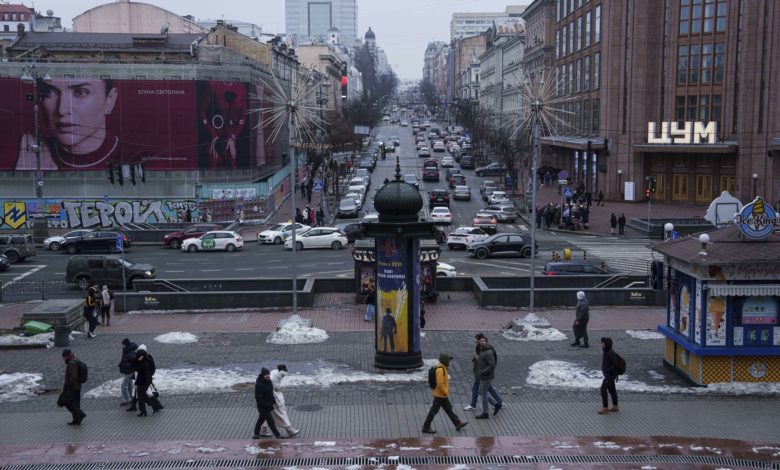
Fortunately, the man in front of me is not from Romania: he is a Ukrainian, ethnic Romanian from the Cernăuți region. I do not have his agreement to use his name and that is why I will tell him, simply, Iulian.
We met more than a year ago, after returning from the East Front and had resumed his civil servant at the town hall near the border with Romania. Now he has come to Bucharest to solve a personal problem.
“Let's talk about concrete amounts“
Because I am a journalist, my friend wants to clarify some things about Romania. For example, he would like to know why some Romanians complain about the European Union. Are people who believe that “Romanians have become the servants of Europe”? Or does he invent his press? I answer that it exists. My colleagues talked to them at the gold or Călin Georgescu meetings
“How can you complain about the European Union when you have such high salaries?” Iulian asks, visibly opposite.
“They are not so big,” I answer. Romanians win less than in the West and anyway the prices in Romania are almost like there. “Let's talk about concrete amounts, that I do not understand,” he replied immediately.
Iulian tells me that his wife, who is a teacher, with teaching degree and 20 years of experience, reaches the equivalent of 270 euros per month. He, a official in a commune town hall, earns around 250 euros. With this money they must live and the two children.
Indeed, the official statistical data show that the net minimum wage in Ukraine is the equivalent in 182 euros, and the average (gross) 560 euros. In addition to taxes, the Ukrainians must pay the state and a war tax, which has increased three times. At the average salary on the economy, the tax reaches 28 euros.
“Okay, but the prices are much lower in Ukraine,” I respond, trying to sweeten the guest. Iulian does not agree with my statement.
He tells me he goes frequently to Suceava and often shopping from a hypermarket there. It is true that alcohol and cigarettes are cheaper in Ukraine, but food prices have been very close.
Wages comparisons, Romania versus Ukraine, goes even further. The computer on Julian's phone turns compulsively hryvns into euros.
“Look, for example, a mayor of Ukraine earns between 500 euros and 700 euros (with all the bonuses),” Iulian shows. The mayor of a city of Cernăuțiului dimension (260,000 inhabitants) has a salary of under 1000 euros.
“In Suceava, in Romania, I learned about the commune mayors who have 4000 euros salary. Well, they do their job, those communes look impeccable,” says the Ukrainian.
“On European, normal funds,” I tell him. “Yes, that's right,” he admits. Regarding public investments, Iulian tells me about Ukraine that because of the war, there is no money now for nothing. Not to increase salaries, because no one is expected. At least to receive in time the ones that exist, as small as they are. Because there are delays with the months.
In Ukraine, however, there is no money to repair roads, buildings. The roofs from schools and mayors fall shrugging, because they have no funds, Iulian explains.
I remember that, last year when I was in Cernăuți, I asked a mayor of Suceveni commune, with 8300 inhabitants of whom 80 % Romanian ethnicities, which is the biggest problem. He told me that the destroyed roads, which he cannot repair, because he has no money.
I stayed with the Ukrainian friend about two to three hours in the bar in the old center of Bucharest. I do not remember that, during this period, the name of Trump or Zelenski was pronounced. What would I have been about my friend's help if I had told him about the US president or Kiev?
But I learned a lot of interesting things. For example, I have realized how much the revenues have increased in Romania since our country is in the EU.
What would it be like to go to work today, 8 hours a day, five days a week, and at the end of the month we receive 250 euros?
Maybe we're not as unhappy as we thought
Most of us no longer have such questions. From the height of a decent life in Romania, many people have complex existential problems: “I know”, for example, that Europe has become “a dictatorship”, that “we will be forced to eat cockroaches” or that “Green Deal” is a pig. People now meet to share to each other the conspiracies they have seen on Tiktok or political opinions: no one wants to discuss “banalities”.
Really, what would we choose if we discuss the trivial topics from time to time? Maybe we realized that we are not as unhappy as I thought. It's a possibility.
It remained in my mind that Julian did not complain about the life he was leading. He said that war is, in fact, the big problem of his country. All other dissatisfaction represents nothing in addition to the danger of Ukraine being occupied by the Russians.
What he could not explain was why there are so many unhappy Romanians. I don't know if I could clarify it.