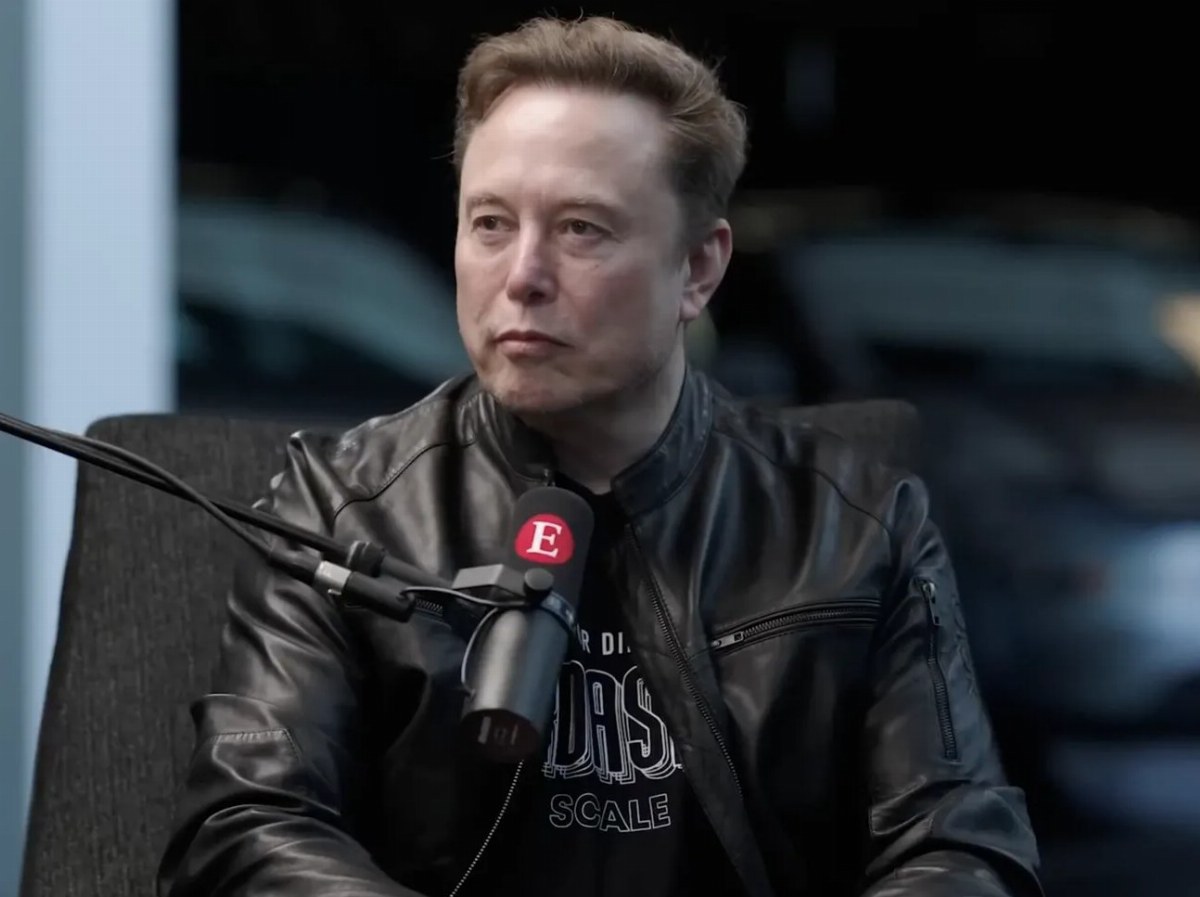
Elon Musk’s relationship with Ukraine has shifted from initial support to outright hostility, raising significant concerns regarding the reliance on his Starlink service. Reports indicate that interruptions began on October 14, when Starlink terminals lost connection at high speeds, severely impacting military operations and rendering drones inoperable. The Ukrainian military was even reported to have lost sea drones in the Black Sea due to these outages. After extended negotiations with the U.S., the Ukrainian Ministry of Defense announced on October 24 that the limitations had been lifted, restoring stable communications at speeds exceeding 400 km/h.
According to The Atlantic, just days before the restrictions, Ukrainian forces received a warning letter from the volunteer initiative “People’s Starlink,” urging military personnel to prepare for potential disaster. The initiative’s founder, Volodymyr Stepanyets, cautioned that a complete disconnection could lead to catastrophic consequences, potentially favoring Russia in the conflict.
Last week, Musk made a series of posts regarding Starlink, suggesting that his views might be influencing the service’s operation. He claimed that SpaceX had done more for Ukraine’s defense than any other private company, while expressing sympathy for “unfortunate Russian conscripts” forced to fight and die as a result of drone strikes. On October 24, Musk stated, “I feel nothing but utter contempt for vicious warmongers who flaunt their morality and call for endless slaughter without offering any realistic solution to the conflict. Burn in hell,” adding that without Starlink, the Ukrainian front would have collapsed.
One high-ranking U.S. military official told The Atlantic that “without Starlink, the war would have stopped.”
What Happened?
Since the onset of the full-scale war, Musk’s position has dramatically changed from genuine support to overt hostility. Initially, he provided thousands of Starlink terminals to hospitals, power plants, government ministries, and various humanitarian organizations to aid Ukraine’s defense. This service granted Ukraine a crucial advantage, as Russian forces lacked access to Starlink and could not jam its signals, allowing Ukrainian drones to navigate the battlefield unimpeded.
However, the release of footage showing drone strikes on Russian positions raised concerns within SpaceX. Sources revealed that employees felt increasingly uncomfortable with the military aspect of Starlink, which was originally intended to provide internet access in areas lacking broadband connectivity, such as remote tourist sites and ships at sea, not for warfare.
Musk echoed this sentiment in 2022 when he told his biographer, Walter Isaacson, that Starlink was “not meant for war” and was created for leisure activities like streaming Netflix, education, and humanitarian work, not for offensive drone strikes. On October 24, he stated that Ukrainian forces had violated Starlink’s terms of service by using it for offensive drone strikes, leading to the closure of that loophole.
The Atlantic reported that in 2022, SpaceX launched the Starshield service designed specifically for military use, which costs significantly more than Starlink. The U.S. government partially funded this service for Ukraine, resulting in substantial profits for Musk’s company, estimated in the hundreds of millions of dollars.
Currently, there are over 250,000 Starlink terminals operating in Ukraine, with costs per terminal reported at $4,500 in 2022. The basic home rate for Starlink is $30 per month, while the most expensive plan costs $100 per month. In contrast, Starshield reaches $25,000 per month per terminal. The military terminals comprise less than 1% of those in use; the majority are standard Starlink units purchased through retail and wholesale channels, including contributions from Germany and Poland as assistance to Ukraine.
Despite the user agreement prohibiting military use, SpaceX appears to have ignored this restriction, maintaining the appearance that Starlink would be employed solely for peaceful purposes. This tacit agreement has placed Ukraine in a precarious position.
Why Hasn’t Musk Fully Abandoned Ukraine?
Details on how Ukraine managed to negotiate the lifting of restrictions remain unclear. Ukrainian Defense Minister Yevheniy Khmara stated that this was a result of direct dialogue and the persistent stance of Ukraine’s president at the highest levels, but the specific arguments that proved effective are unknown. U.S. officials revealed that when military leaders contacted SpaceX about the communication issues, they were advised to switch to an updated contract to restore Starlink access in Ukraine. Ukrainian soldiers reported to media that drones utilizing Starlink are still operational, suggesting that the loophole Musk mentioned may still exist.
Reports indicated that earlier this year, when American kamikaze drones using Starlink communications succeeded in Iran, SpaceX raised service prices from $5,000 to $25,000, with the Pentagon agreeing to cover the costs. Musk may be attempting a similar sales strategy in Ukraine by imposing a ban on military use of Starlink, potentially compelling the Ukrainian armed forces and their international allies to pay significantly more for Starshield.
SpaceX’s market capitalization has reached $1.8 trillion after going public, with revenues from Starlink delighting investors and funding Musk’s other projects, including his ambitions for Mars colonization. The risk that he may cut off Ukraine from Starlink has already prompted Europe and Ukraine to seek alternatives, although these projects are not expected to be ready until next year.
Stepanyets warned in a cautionary letter that a complete disconnection from Starlink could backfire on Musk due to the potential consequences—power outages and humanitarian disasters—creating a profoundly negative image that would not benefit SpaceX’s profits or stock price. Ultimately, the choice remains with Musk; until alternative communication methods are deployed, the wealthiest person in the world retains significant control over Ukraine’s fate.
Lessons from This Situation
This situation illustrates the enormous influence Musk’s decisions have on geopolitics and military affairs, as noted by Michael Horowitz, director of defense and national security programs at the U.S. Council on Foreign Relations. He commented that it is troubling for a corporate leader to effectively dictate foreign policy decisions regarding access to communication in conflict zones without a clear alternative. This incident starkly demonstrates the critical role of Starlink and Starshield in providing unique capabilities that no other company or country can replicate.
Andrew Grotto, director of the Stanford University program on geopolitics, technology, and management, emphasized that Starlink’s distributed architecture enhances its resilience compared to traditional military communication systems. However, he asserted that no un-elected civilian industrial magnate should have the power to intervene in a war as SpaceX has done. This situation highlights the vulnerabilities faced not only by Ukraine but also by the U.S. as well.
Thus, it is crucial never to concentrate resources at a single point of failure, Grotto concluded.