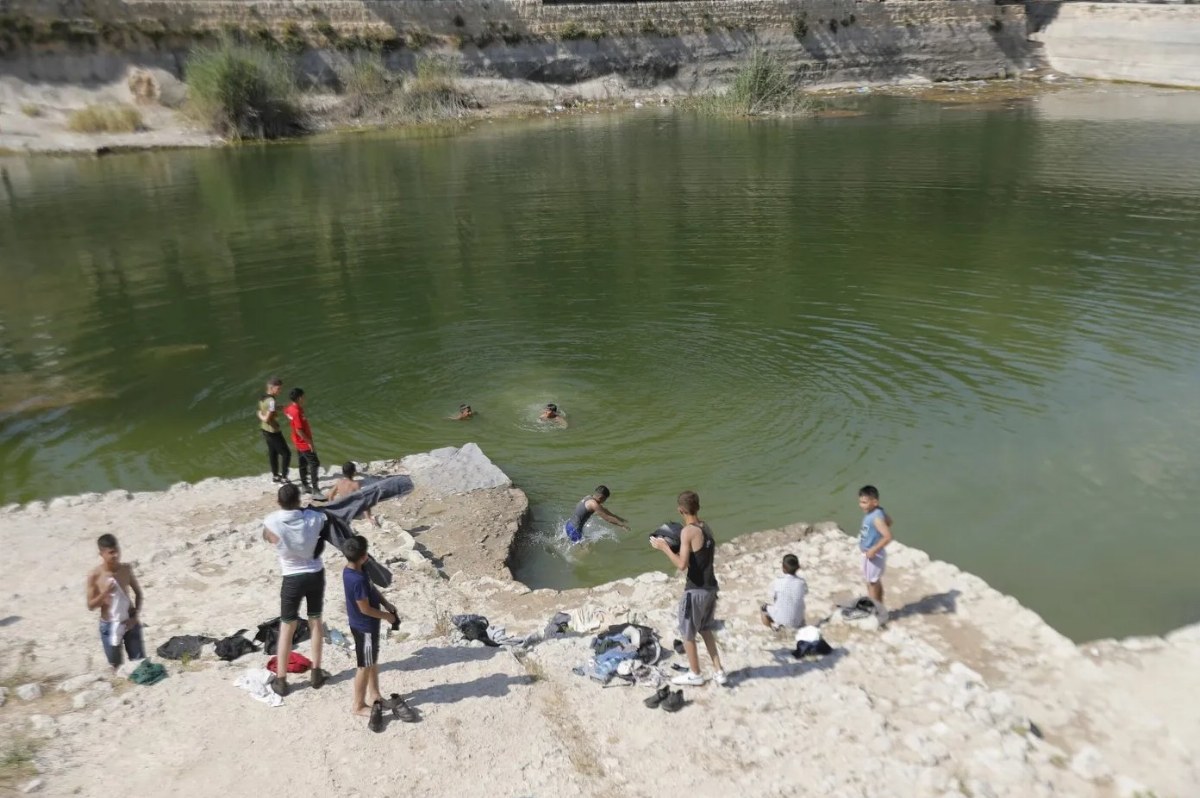
Israel is weighing the possibility of assuming control over Solomon’s Pools, a historic water reservoir complex located near Bethlehem. This move could signify an escalation in the ongoing conflict surrounding territorial control in the West Bank and the region’s historical heritage, according to reports from The Guardian.
Tensions flared after Israeli Finance Minister Bezalel Smotrich remarked in May that the agreements established over 30 years ago, which affirm Palestinian administration of the site, constitute a “mistake” that needs to be reversed.
Since then, Israeli settlers and military personnel have increased their presence in the area. On July 10, Israeli soldiers entered the reservoir vicinity and deployed tear gas while children were swimming in one of the pools, as reported by The Guardian.
A Recreational Spot for Bethlehem Residents
Dating back to the 2nd century BC, Solomon’s Pools were further developed during the Roman era as part of an extensive water supply system for Jerusalem, located approximately 13 kilometers away. During the Ottoman period, a third pool and a fort were built to protect the facilities, and the system was modernized during the British mandate.
Currently, the reservoirs no longer supply water to Jerusalem but serve as a key recreational area for residents of Bethlehem and surrounding villages, including Artas and Al-Khader.
As stipulated in the 1995 Oslo II Accord, the site is classified within Area A of the West Bank, which is under the civil and security control of the Palestinian Authority.
Palestinian organizations and several Israeli archaeologists caution that any takeover of the site could set a precedent allowing Israel to extend its control over other areas managed by the Palestinian Authority.
A Dangerous Precedent
Israeli archaeologist Alon Arad, director of the organization Emek Shaveh, expressed that archaeological sites should not be utilized as political tools and emphasized that only a small fraction of the approximately 6,000 archaeological sites in the West Bank are directly linked to Jewish heritage.
Palestinian authorities had plans to develop the area for tourism, but these projects have been stalled due to lack of funding after the Israeli government suspended the transfer of certain tax revenues to the Palestinian Authority.
Supporters of the Israeli takeover argue that the site holds historical significance for the Jewish people and accuse the Palestinian Authority of failing to maintain it properly.
Conversely, heritage specialists point out that the name “Solomon’s Pools” is traditional and does not accurately reflect the complex’s true origin. Most historians believe that if King Solomon existed, he would have lived around eight centuries before the reservoirs were constructed. Some local sources suggest that the name may actually derive from the Ottoman Sultan Suleiman the Magnificent, who restored Jerusalem’s water supply system in the 16th century.
The Palestinian authorities warn against using archaeological heritage in political disputes, asserting that historical sites reflect the contributions of multiple civilizations that have shaped the region over millennia.