As autumn settles in and temperatures decrease, the need for heating in Polish homes becomes increasingly urgent. Concurrently, Poland is witnessing a transition from coal-based energy to significant investments in offshore wind farms and nuclear energy. However, these alternative energy sources do not provide heating, as both produce electricity but not the thermal energy needed for residential heating.
Data from Eurostat indicates that nuclear energy contributes a mere 0.2% of heating in the European Union. Tomasz Zadroga, an investment director at Respect Energy, noted that long-distance heat transport is economically unfeasible, especially since large reactors are typically situated far from urban centers or industrial users. This problem also extends to small modular reactors (SMRs), which are being considered for industrial heating but not for household use, primarily due to seasonal demand variations.
Currently, natural gas, which is exceedingly expensive at nearly €90 per MWh, provides 36% of heating in the EU, with solid biofuels, including wood and pellets, supplying 27%. Coal accounts for 12%, municipal waste contributes 7%, while heat pumps and solar energy yield a modest 1.2% and 0.1%, respectively. Electricity generates only 0.7% of heating, proving less viable without the support of heat pumps. In contrast, geothermal energy, which has a theoretical potential in Poland, generated 0.8% of heating, but remains underrepresented in Eurostat’s latest statistics for 2024.
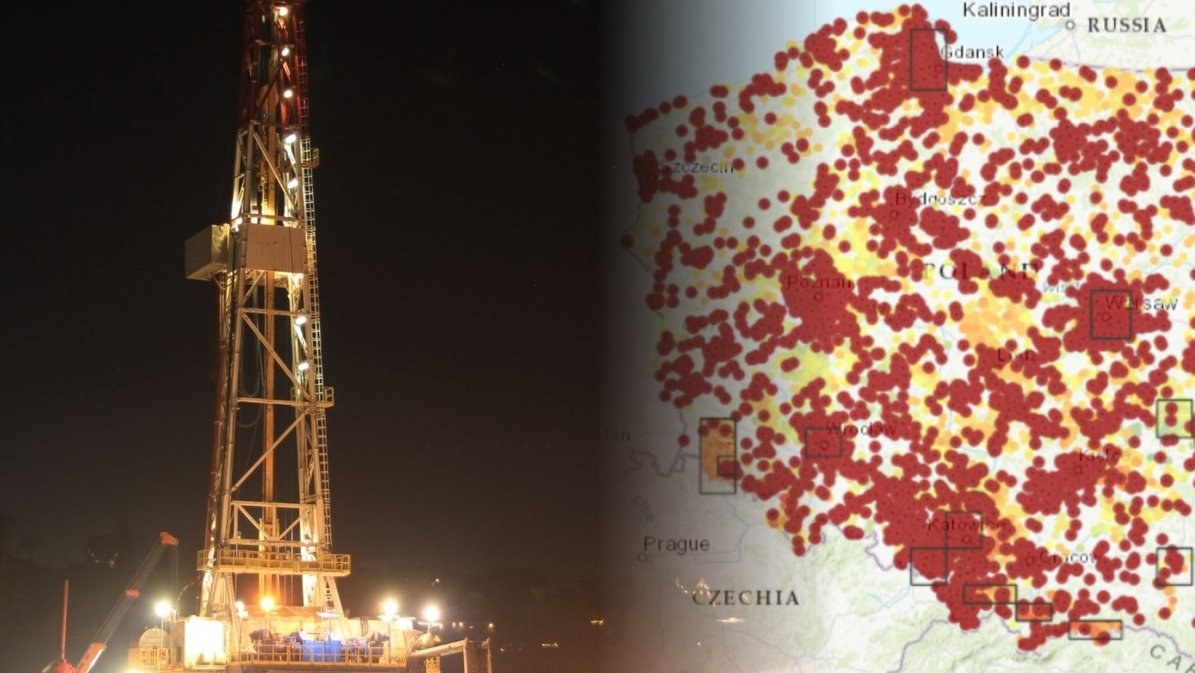
In Poland, coal is the main source of heating, providing 65%, while natural gas offers 18%. Solid biofuels contribute over 8% and produced gas adds 4%. Municipal waste accounts for 1.3%. Geothermal energy is gaining attention as it is not burdened by carbon emission costs, a significant factor as free emissions allowances under the EU Emission Trading System gradually decrease, likely leading to higher heating costs for consumers. The Polish government is focusing on geothermal energy as a viable source, with funding programs for geothermal drilling starting in 2019. To date, total funding has reached 1.3 billion PLN, averaging about 160 million PLN annually, with 958 million PLN allocated as non-repayable grants.
The government plans to allocate an additional 708 million PLN for geothermal projects under the “Access to Thermal Waters in Poland” program. The last application round concluded in September, resulting in 42 agreements with municipalities for funding. Previous rounds resulted in 14 agreements, 11 of which successfully completed drilling.
Companies involved in geothermal activities, particularly for heating purposes, are experiencing significant profit growth. One notable beneficiary of geothermal funding is Geotermia Toruń, associated with Father Tadeusz Rydzyk’s foundation, which received a grant of 19.5 million PLN. In 2025, Geotermia Toruń generated revenues of 29 million PLN and achieved a net profit of over 3 million PLN, with an operational profitability increase from 8.7% in 2024 to 16.4% in 2025.
Geotermia Podhalańska stands as the largest geothermal entity by revenue and profit, reporting 50 million PLN in 2025 revenues and a net profit of 12.8 million PLN. This company employs only 46 people while managing to keep operational costs low. It has 1,732 customers and heats 2,067 buildings, with an average sale price of 80.95 PLN per GJ, significantly lower than competing energy sources.
As Poland moves towards a more sustainable heating solution, geothermal energy appears poised for significant growth, driven by government support and rising operational efficiencies in existing geothermal enterprises.