
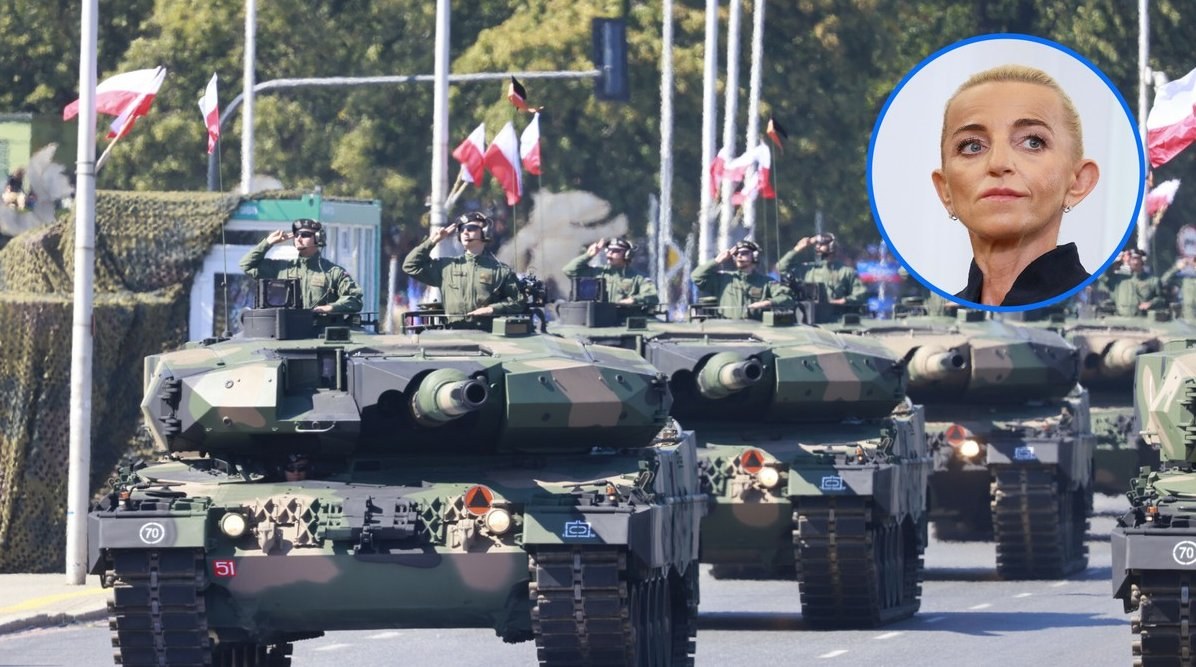
Poland’s development bank has outlined its execution strategy for the Armed Forces Support Fund, detailing timelines for bond issuance to finance defense expenditures and updates on armament contract negotiations. Marta Postuła, vice president of the Bank Gospodarstwa Krajowego (BGK), highlighted that this year is particularly crucial due to the activation of the SAFE instrument, which is intended to streamline funding processes.
While public attention tends to focus on the percentage of plan execution, Postuła emphasized that efficiency, effectiveness, and appropriate financial structuring are equally significant. Discussions regarding the use of SAFE have persisted since the start of the year, with some purchasing decisions contingent on the final legal framework of this funding instrument. The Ministry of National Defense has opted to delay certain contracts until it is clear whether purchases will be funded through the Armed Forces Support Fund, the state budget, or SAFE. Consequently, most agreements linked to SAFE were finalized by the end of May.
Postuła stated that low execution rates of the Fund are primarily due to contract deferrals, as payments are contingent upon specific milestones being met by contractors. A noticeable acceleration in contract execution was observed in June, where half of the year’s progress occurred as contracts initiated earlier began to activate. By July, execution for the Armed Forces development program was expected to exceed 16%, indicating a gradual improvement despite not being spectacular. Execution rates will inevitably rise as contracts are fulfilled, aligning with the natural rhythm of defense procurement processes.
Savings in Defense Financing
When asked about the feasibility of fulfilling the entire FWSZ plan by 2026, Postuła affirmed BGK’s commitment to achieving 100% of the plan. However, she noted that while execution rates may not be nominally complete, this is a positive development resulting from savings in financing costs, as current terms are more favorable than initially anticipated.
The Orka program, scheduled for delivery after 2030, will not utilize SAFE funding. Instead, Poland has secured approximately 18 billion PLN in financing under more favorable conditions than expected. Furthermore, negotiations are advancing regarding a new tranche of the American Foreign Military Financing (FMF) program, which is anticipated to yield beneficial outcomes for FWSZ costs.
Regarding bond issuance, Postuła confirmed that no new bond issues for the Armed Forces Support Fund are planned for 2026, following January’s issuance of 1 billion PLN. Diverse funding sources, including SAFE and export credits, have significantly reduced the need for traditional bond financing.
Investment Peaks Expected by 2028
BGK has contracted the entire pool of the Energy Support Fund from the KPO, yet the investment needs are larger than available funds. Postuła clarified that the fund’s primary focus is on the transformation of energy networks, with projected needs reaching around 150 billion PLN. However, energy companies have begun securing standard market financing successfully, and KPO funds have facilitated faster decisions regarding network modernization.
In the smaller energy project sector, demand has exceeded available funds significantly, with approximately 5.9 billion PLN awarded against requests totaling around 20 billion PLN. Yet, not all requested projects were ready for implementation. BGK prioritized funding for new projects poised for rapid execution, ensuring that public funds stimulate investments effectively.
Looking ahead, BGK aims to activate around 21.7 billion PLN of funding by the end of 2026, with an increase expected to 37.4 billion PLN in 2027, peaking at approximately 53.7 billion PLN in 2028. This influx of investment is projected to extend beyond the energy sector, boosting demand for construction services and specialized labor across the economy. Postuła assured that there is currently no identified risk of delays in utilizing these funds, given the advanced status of offshore projects and the significant energy network investments underway.


