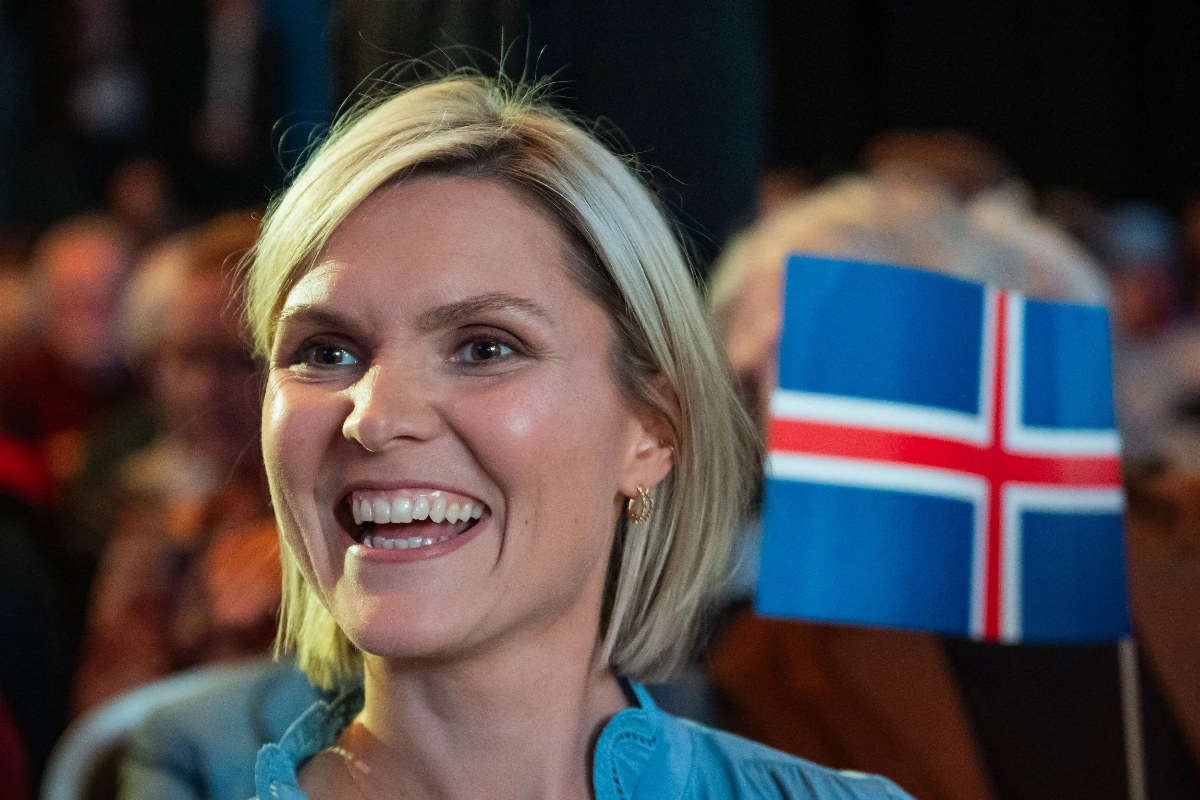
Preliminary results from Iceland’s referendum on EU membership negotiations indicate a narrow lead for the “no” camp, as reported by RUV and cited by Reuters. Out of the initial 152,000 votes counted from a total of approximately 270,000 valid votes, 50.1% opposed the government’s proposal to resume negotiations, while 49.9% were in favor.
This marks a significant shift from earlier counts, where after 87,000 votes were tallied, the “yes” camp led with 51.2% compared to 48.8% for the “no” camp.
No information regarding voter turnout is currently available. A reliable result may not be ready until Sunday afternoon, according to election officials. Voting concluded on Saturday at 22:00 local time (01:00 Sunday in Romania), triggering a complex process to transport ballots from cities and rural voting stations via air, sea, or road.
On Friday, a Gallup poll suggested a slight majority opposed the government’s proposal to reopen negotiations, a shift from earlier surveys that showed supporters of resuming talks with a small lead.
Prime Minister Kristrun: “We’ve Waited Years to Vote”
Supporters of the “Yes” campaign argue that joining the EU could lower high interest rates and provide more security in a world destabilized by the war in Ukraine and threats from U.S. President Donald Trump regarding Greenland.
Conversely, those backing the “No” option contend that EU membership could threaten the island’s sovereignty and fishing rights. Prime Minister Kristrun Frostadottir commented on the referendum’s significance, stating that it has reignited a long-standing debate about Iceland’s position in the world. “This is a big day, we’ve waited years to vote,” she said, adding that her government will continue its work regardless of the outcome.
An Old Question With New Urgency
A favorable vote would pave the way for discussions with Brussels. Iceland would likely need to hold a second referendum in a few years regarding EU membership. The country first applied for EU membership in 2009 amid a financial crisis that severely impacted its vulnerable economy, but a eurosceptic government halted talks in 2013.
Geopolitical turmoil, including conflicts in the Middle East and U.S. import tariffs, have added urgency to the debate that Icelanders have sporadically engaged in for decades.
Iwo Egill Macuga Arnasson, a 19-year-old student who voted in Reykjavik, expressed that his vote would significantly impact his life, regardless of whether Iceland joins the EU.
Interest Rates, Fishing, and Cost of Living
The discussion surrounding Iceland’s EU membership has focused more on interest rates, fishing rights, and the cost of living rather than security issues. Iceland faces high inflation and interest rates that have made mortgages expensive. Proponents of the “Yes” vote assert that EU membership, and potentially adopting the euro, could alleviate these financial pressures. Currently, Iceland’s central bank interest rate stands at 8%, compared to 2.25% at the European Central Bank.
“It wouldn’t solve Iceland’s structural problems, but it could be a catalyst for a healthier economy,” said Vilhjalmur Hilmarsson, chief economist at Viska, one of Iceland’s largest unions.
Meanwhile, opposition leader Gudrun Hafsteinsdottir, who spearheaded the “No” campaign, argued that economic claims are overstated. “These are not issues that Brussels will solve for us. These are issues that Icelandic politicians need to address,” she stated.
Voter Ragnhildur Skarphedinsdottir, 70, expressed her belief that Iceland is doing well independently and would vote “no,” stating, “By remaining independent as we are, we look to the future with optimism.”
Fishing Remains a Major Theme
EU regulations dictate that fishing quotas are based on historical practices. Some officials argue that Iceland could maintain control over its waters since no EU country has fished there for decades. Hafsteinsdottir counters this by asserting that while the EU might make initial promises of flexibility, they would not be permanent.
A note from the Ministry of Foreign Affairs estimates that accession negotiations could begin by late 2026 and may last between 18 to 24 months if Saturday’s vote favors reopening discussions.