Multiple health organizations across the United States have initiated an unusual campaign this month to prepare doctors and hospitals for dealing with measles, a disease that many practitioners have encountered infrequently or not at all, according to reports from the Washington Post, The Hill, and The Guardian.
The number of measles cases reported in the U.S. this year has already surpassed last year’s total, reaching the highest level recorded in three decades, as indicated by data from Johns Hopkins University.
According to the university’s measles surveillance system, 2,295 cases of measles have been documented this year, slightly exceeding the 2,289 cases recorded in 2025, as reported by The Hill.
The Centers for Disease Control and Prevention (CDC) has not updated its measles statistics since July 17, meaning that the agency’s figures do not currently reflect this significant milestone.
Highest Measles Case Count Since 1990
This marks the largest number of reported measles infections in the U.S. since 1990, when 27,808 cases were logged. The incidence of cases declined dramatically following that year due to an aggressive vaccination campaign and the introduction of a two-dose measles vaccination schedule a year prior.
The U.S. officially eliminated measles in 2000, but this conclusion is now being questioned, as measles transmission has persisted for more than a year, which is the criterion for losing that status. Canada lost its elimination status last year.
After achieving the status of measles elimination, the U.S. typically reports a few dozen to several hundred cases annually, with 2019 being an exception that saw around 1,300 cases reported.
According to the latest CDC update, 34 new measles outbreaks have been declared this year, with 44 jurisdictions reporting cases.
“They Skipped That Chapter in Medical School”
The statistics, according to specialists quoted by the Washington Post, highlight that the country has entered a new phase in the fight against measles. The recent surge in new infections is triggering sustained outbreaks across multiple states rather than remaining confined to a few communities with low vaccination coverage.
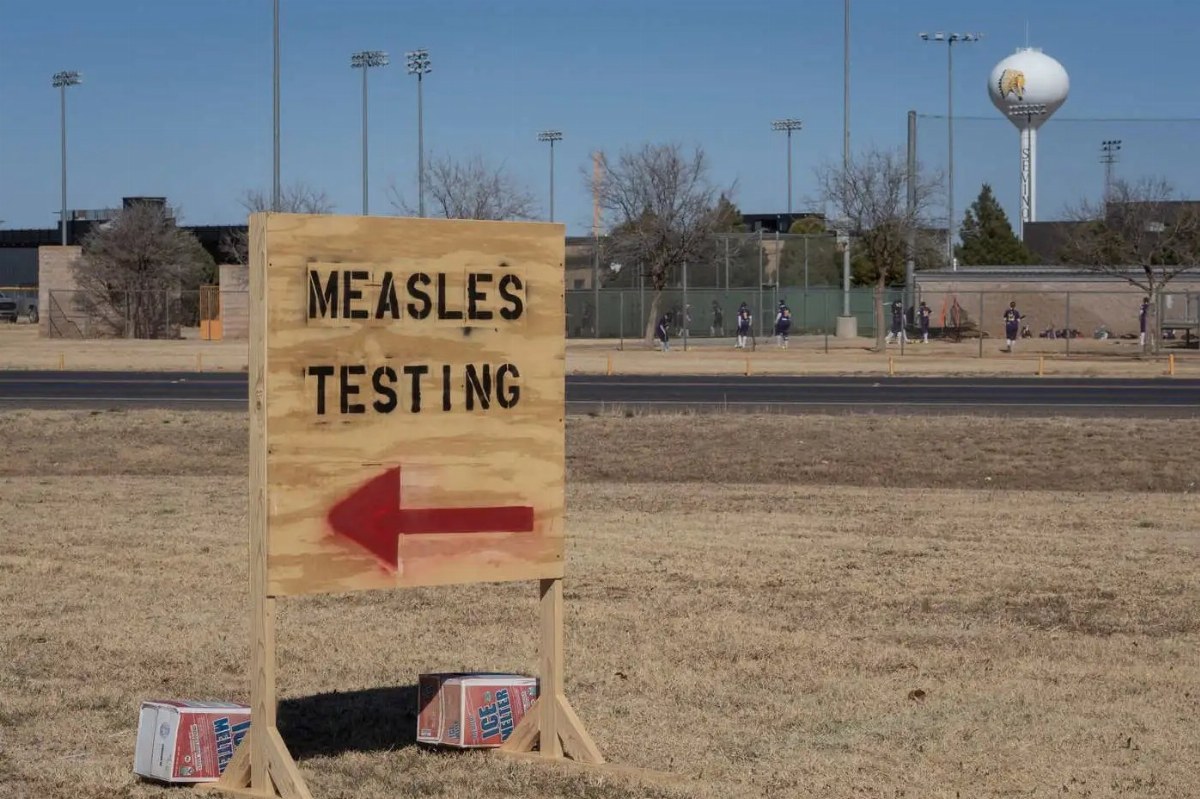
Since an unvaccinated child from West Texas contracted measles early last year, successive outbreaks have sickened thousands and now spread across 39 states, the District of Columbia, and New York City.
As vaccination rates decline and measles spreads more broadly, these outbreaks are becoming increasingly widespread. State health authorities now fear that these outbreaks may not be contained and assert that the actual number of cases is much higher than what is reflected in official statistics.
In light of the seriousness with which doctors perceive this threat, several health organizations have launched an unusual initiative this month to prepare physicians and hospitals for managing a disease that many practitioners have encountered rarely—or not at all—but may now need to handle as part of their daily practice.
“Doctors haven’t really thought about measles,” stated Patsy Stinchfield, executive director of the newly formed Measles Collaborative, as quoted by the Washington Post. “They skipped that chapter in medical school,” she explained, noting that the U.S. eradicated the disease more than a quarter-century ago. “And now they’re in a position where they have to diagnose it,” she added.
Social Media Campaign
The group, established by the National Foundation for Infectious Diseases, is developing an application to aid doctors in diagnosing measles. They are also creating checklists for hospitals and clinical algorithms to guide the complex logistics of safely caring for patients.
Since the virus can remain airborne for up to two hours, hospitals must carefully determine where patients are evaluated, isolated, and treated.
To combat misinformation on social media, the group plans to create posts on TikTok and Instagram aimed at parents, explaining the basics of measles, including how severely children can become ill.
Most children recover after a few days of fever, cough, congestion, and conjunctivitis. However, measles can also lead to pneumonia, encephalitis, hearing loss, intellectual disability, and death.
It can also trigger a rare but invariably fatal brain disease, subacute sclerosing panencephalitis (SSPE), years after the initial infection.
Decline in Vaccination Rates
Vaccination rates have dropped nationwide since the COVID pandemic. Meanwhile, the percentage of children seeking religious or other exemptions from vaccination requirements has reached a record high, according to federal data.
Two doses of the measles, mumps, and rubella (MMR) vaccine for children are 97% effective against infection and have nearly eradicated a virus that once infected millions of children.
However, because the virus spreads so easily in the absence of immunization, 95% of community members must be vaccinated to achieve herd immunity, the threshold necessary to prevent isolated cases from turning into outbreaks.
Nationwide, 92.5% of kindergarten children received the measles vaccine in the 2024-2025 school year, a lower percentage than the previous year.
Before the pandemic, approximately half of U.S. counties reached the 95% threshold among kindergarteners. By the 2024-2025 school year, fewer than 3 in 10 met this threshold, according to a public records analysis conducted by the Washington Post.
In Utah, only 88.6% of kindergarteners received the MMR vaccine in the 2024-2025 school year, according to state health department data, compared to 92.7% before the pandemic.
Nationally, 3.6% of kindergarteners sought vaccine exemptions in 2024-2025.
In Utah, for the 2025-2026 school year, the rate was 12.7%, and in the Southwest health district, where one of the measles outbreaks began, the rates surged dramatically: 27.1% of children had an exemption.
Disruption of the Public Health System
Experts have also pointed to the rapid dismantling of the public health system in the U.S. under Donald Trump’s administration.
A former CDC director highlighted that this has left the country in a worse situation than before the COVID pandemic.
“Unfortunately, we are truly heading in the wrong direction,” Debra Houry, former medical director of the CDC, told The Guardian.
About 80% of leadership positions at the CDC remain unfilled, and between 25% and 30% of the entire CDC staff has departed, she stated.
As the measles virus begins to spread, health authorities rely on contact tracing, an activity that requires significant manpower, as well as case investigation and quarantine measures to prevent the spread of outbreaks.
However, public health officials say recent cuts to federal funding have left many health authorities understaffed to carry out this essential work.
Despite the rapid increase in cases nationwide, the ability of U.S. health authorities to control outbreaks has not been restored or expanded.
Robert F. Kennedy Jr.’s Vaccine Hesitancy
In April of this year, Democratic lawmakers harshly criticized Health Secretary Robert F. Kennedy Jr. for his handling of the worst measles outbreak in decades.
Democrats on the House Finance Committee accused Kennedy of mismanaging the response to this crisis and undermining the safety of vaccines for children.
During a three-hour hearing, Kennedy, a vaccine skeptic, also faced criticism from legislators regarding staff reductions he oversaw at the Department of Health and Human Services (HHS) and in cancer research, as well as changes to vaccination recommendations.
“We promote the MMR vaccine,” Kennedy responded to the senators, referring to the combination vaccine against measles, mumps, and rubella. “We have recommended that all children get vaccinated. That’s what we do,” he stated.
The comment, noted the New York Times, contrasted with Kennedy’s previous advice, prompting senators to question why he hadn’t communicated this publicly.
Since taking office, Kennedy has attempted to reform older U.S. vaccine policies, including drastically reducing the number of vaccines recommended for children and replacing an advisory group of experts with more critics of vaccines.
Following the outbreak of measles in Texas last year, Kennedy initially did not recommend vaccination, asserting that it should be “a personal choice.” When asked at that time whether he would advise parents to vaccinate their newborns, he replied that he was not in a position to offer medical advice. His advice, he stated, was: “Do your own research.”
In a public appeal published in 2005 by Fox News, he seemed to shift his stance, discussing the benefits of the measles, mumps, and rubella vaccine, while still insisting that vaccination remains a personal choice.