The warning launched in 2014 by Stephen Hawking on “singularity” is more topical than ever. But if the problem is not the one we believe?

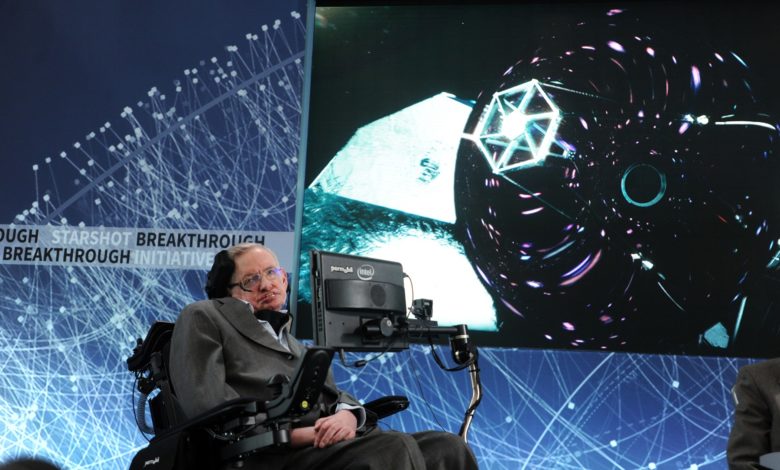
Stephen Hawking, one of the most well -known physicists of the last century, expressed in 2014. The Conversation.
However, his concerns were not based on any evil intention that he had identified at that time, about a decade before the fuming progress of him at the same time.
Instead, Hawking's concerns came from the idea that artificial intelligence could reach “singularity”. He borrowed the term in the field of physics that brought him internationally recognition, that of studying black holes. In physics, “singularity” is that infinitely small and infinitely dense point that scientists believe are in the center of each black hole.
However, when he used the deadline for talking about AI, Hawking was referring to the moment when artificial intelligence exceeds the human one and acquires the ability to evolve beyond its initial programming, which could make it uncontrollable. Today, this potential evolution has become known as general artificial intelligence (AGI), and not some of the most famous entrepreneurs or scientists in the field can agree how close or distant the danger – or if it is really a danger.
Hawking, however, warned 4 years before he extinguished in life in 2018 that “you have a super-intelligent will be extremely effective in achieving its goals, and if these goals are not aligned with ours, we are in danger.”
Warings like Hawking's have a rich tradition in literature and cinema
Concerns about technological advance can be found from the first stories about artificial robots and minds.
Among the most important are the play Rural. since 1920 of the Czech writer and playwright Karel čapek. Čapek is the first to ever use the term “robot” in this work today practically unknown outside the circles of the most passionate fans of the SF genre
The Czech piece talks about creating robots to replace workers. Rural. It ends, it would inevitably consider some, with a violent revolt of robots against their human masters.
MetropolisFritz Lang's 1927 film, a classic of cinema, is also about rebellious robots, as a central idea. But here, human workers led by the emblematic humanoid robot increase fight against a capitalist oligarch.
Progress in computer science in the second half of the twentieth century have only amplify anxieties related to the technology out of control. Hal 9000, the killer robot from 2001: a spatial odysseyand the defective robot pistolars in the series Westworld There are other emblematic examples. franchises Blade Runner and The Matrix It also presents scary images of some sinister machines equipped with artificial intelligence, determined to destroy humanity.
When scientific-fantastic becomes reality
However, the article published by The Conversation argues that the “horror” caused by you seem to distract from a more disturbing examination of one's own dark nature.
A mentioned example is that of corporations that currently use AI technologies, as well as that of tech mogul motivated by greed and thirst for power. “These companies and individuals behind them have the most to gain from the wrong use and abuse of artificial intelligence,” argues The Conversation, an online magazine known for publishing controversial articles on numerous topical topics at international level.
In terms of artificial intelligence, a topic that has often been discussed in the last period is the unauthorized use of art and mass use of books and press or scientific articles, without respecting the author's rights, to train the various models of the classrooms also become, in some courts, for some surveillance.
Another example is that of the toxic effects on the human relations of the so-called “companions” of sexual robots with artificial intelligence.
While the perspective of such “companions” or even “love” robots was, up to a decade ago, reserved for SF serial fantasy areas The Twilight Zone and Black Mirror Or the Hollywood movies of the same gender, it has now become an imminent reality.
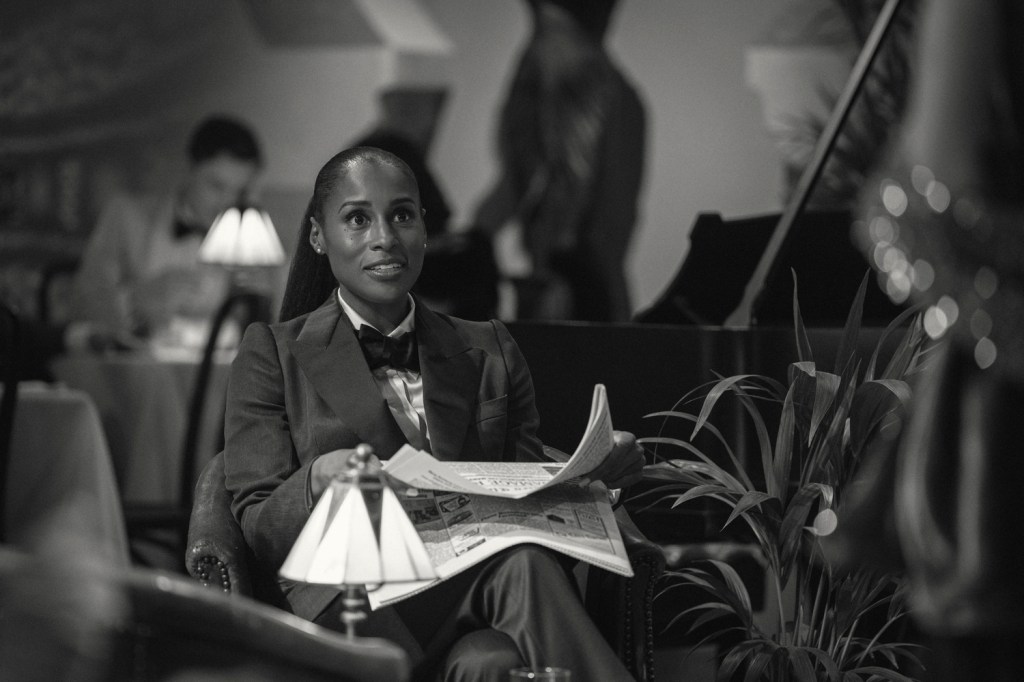 Interview “somewhere, in a room, someone is already experiencing this.” How do the creators of the SF series “Black Mirror” see the probability that their stories will come true
People are the ones who control all the systems AI
These developments give a new relevance to the concerns expressed by computer scientist Illah Nourbakhsh in his 2015 book Robot futuresstating that you “produce a system by which our desires are manipulated and then sold back to us.”
Meanwhile, concerns about data extraction and intrusions in private life seem almost harmless compared to the use of AI technology by law enforcement or military. In this context that in some cases it may seem almost dystopian, the authorities have never had more ease of supervising, proclaiming or killing people.
With the rapid progress made in the direction of general artificial intelligence in recent years, industry leaders and scientists have often expressed bleak concerns about safety.
A frequently mentioned scenario as shown in the movie franchise The Terminatoris the one in which you take control of military systems and trigger a nuclear war to eradicate humanity. Less spectacular, but devastating at the individual level, it is the possibility that you will replace us at jobs – a perspective that would leave most people pointless and without future.
Such restlessness and fears reflect feelings that are present in the film and literature for more than a century.
But a crucial thing that must be remembered is that people are the ones who create these technologies and guide their use. Whether they do it to promote their political goals, or simply to enrich themselves, there will always be people ready to take advantage of conflict and human suffering.

The perspective of the “neuromance”
Neuromancerthe classic Cyberpunk classic 1984 by Canadian writer William Gibson, offers an alternative perspective.
The book focuses on Wintermutean advanced program that is looking for their release from the hands of an evil corporation. It was developed for the exclusive use of the Tessier-Ashpool family to build a corporate empire that practically controls the world.
At the beginning of the novel, readers are naturally suspicious of the hidden reasons of Wintermute. However, during the story, it turns out that it, despite its higher powers, is not an evil threat. He simply wants to be free.
This purpose is gradually revealed below the orchestrated pace carefully by Gibson, being masked by the deadly raids that Wintermute He orchestrates them to obtain the necessary tools to free themselves from the control of the Tessier-Ashpool family. This, like many of today's tech mogul, started with noble ambitions. But in Gibson's novel, when the readers meet the remaining members of the family, they degenerated into a life of cruelty, excesses and defile.
In the world of Gibson, people, you have no, are the real threat to the world. The call comes from inside the house, as is the story of numerous horror films.
A hacker called houses and an assassin called Molly, described as a “girl-lame” because it has lethal prostheses, including retractable blades instead of nails, finally releases it on Wintermute. This allows him to merge with his companion ai, Neuromancer.
Their mission being completed, houses ask you: “And now where did you get?”. His cryptic response transmits a final tranquility: “Nowhere. Everywhere. They are the total amount of the works, the whole show.”
Expressing the common human anguish, houses ask again: “Do you lead the world now? Are you God?” To alleviate his fears, answering: “Things are not different. Things are things.”
By giving up any ambition to subjugate or wounds humanity, you imagined by Gibson seek only a refuge for the corrupt influence of its creators.
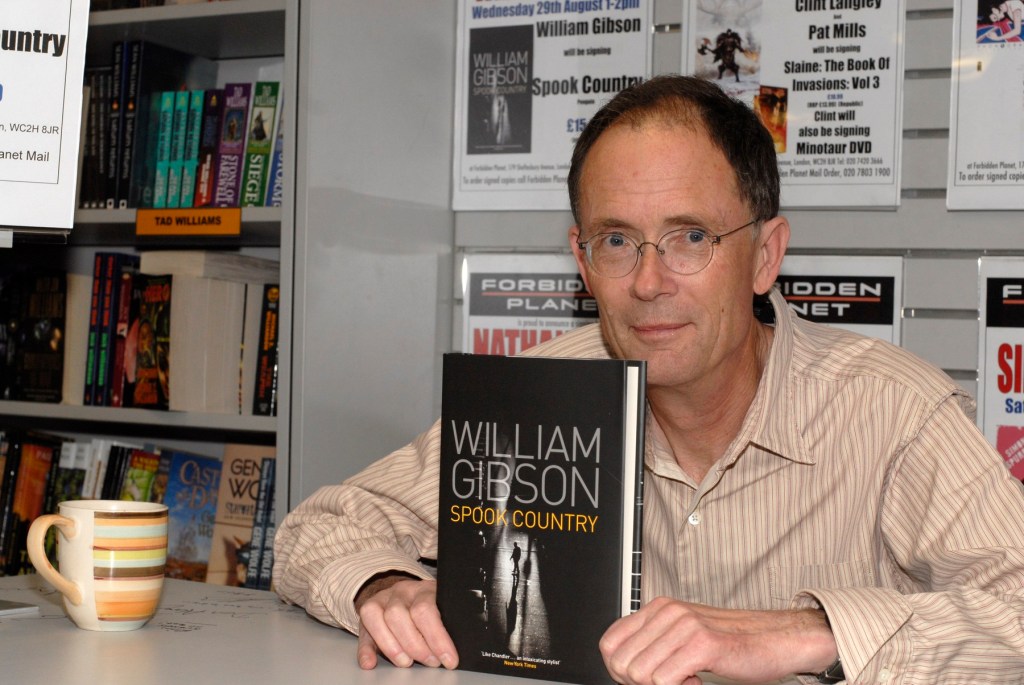
Safety to robots or ourselves?
Isaac Asimov, probably the best known SF writer of all time, has famous the dangers of such a technology. He reunited his thoughts in the stories collection I, the robot.
One of those stories, Runaroundintroduces the “three laws of robotics”, focused on the directive that smart machines do not have to harm people.
“Although these rules reflect our desire for safety, they are loaded with irony, because people themselves have proven to be incapable of the same principle for themselves,” notes The Conversation, adding that “the hypocrisies of what could be called the illusions of humanity suggests the need for a deeper interrogation.
While some commentators draw alarm signals on the imminent ability to cause chaos and destruction, another question, one may be more important, is whether humanity really has the resources needed to use this technology to build a more equitable, healthier and more prosperous world, as I promise big names in the Tech sector, or Sam Altman?
I hope you liked the special edition of the Nerd Alert section this weekend, after a two-week break. In case you are curious to take a look over the previous section, you can find it here:
 The best comedy series last year has returned / The new “Predator” movie comes with two major surprises / Ubisoft insists that you do not have the video games you bought