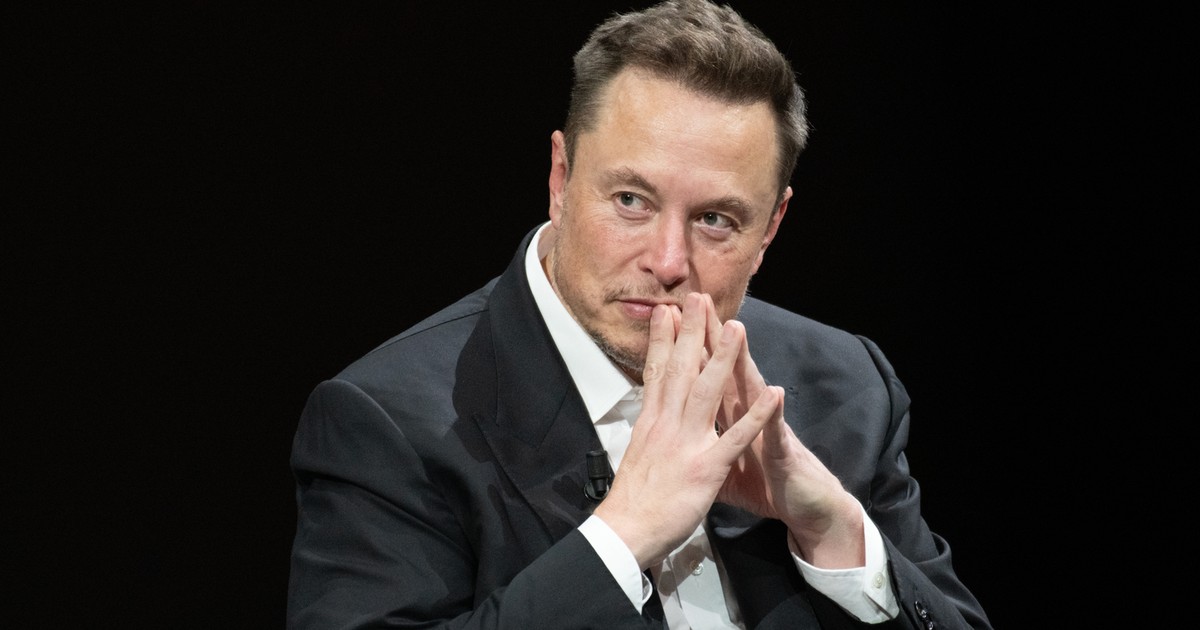
— There would be no (Tesla and SpaceX) if it weren't for the government – said Ross Gerber, president of the investment company Gerber Kawasaki and one of the first investors in Tesla, quoted by CNN.
Read also: Ukraine Recovery Conference is in doubt. A political dispute threatens to cause a scandal
Although Tesla's current market value exceeds $1.5 trillion and SpaceX is one of the most valuable private companies in the world, both companies struggled with serious financial problems in the initial period of their operations. Government grants, loans, contracts and support programs turned out to be crucial.
NASA saved SpaceX
A breakthrough moment for SpaceX was the award by NASA in 2006. grant worth USD 278 million for the development of the Falcon rocket and Dragon capsule. It was the first of a package of grants whose total value exceeded USD 500 million.
— This was about half of the capital they had raised up to that point – said Casey Dreier from the Planetary Society.
The support came at a time when the United States was looking for a successor to the phasing out space shuttle program. Thanks to public funds, SpaceX was able to develop technologies that later made the company a dominant player in the space sector.
Read also: Market surveillance reform in the EU. Berlin required a special exemption
The year 2008 turned out to be even more important. When the company was running out of financial resources, NASA signed a contract with her worth $1.6 billion. Musk himself has repeatedly admitted that without the agency's support, the company might not survive.
— The fact is that without NASA's help, we couldn't have started SpaceX or gotten to this point – said the entrepreneur in 2012.
Tesla grew thanks to loans and incentives
The state played a similar role in Tesla's history. At the beginning of 2010, the company sold less than 2,000. cars. Shortly thereafter, it received a low-interest loan from the U.S. Department of Energy worth $465 million.
The funds allowed to finance the development of the Tesla Model S, which became the brand's first major commercial success. Although the loan was repaid ahead of schedule, it was crucial to the company's survival.
An additional impetus came from federal tax breaks for electric car buyers. Before the program ended in 2019, Tesla customers benefited from discounts worth an estimated total of $3.4 billion. This allowed the company to maintain higher prices for its vehicles and increase revenues.
Read also: Russia's spending on the war with Ukraine. This is how much they amounted to in the first quarter of 2026.
Golden deal on emission credits
The emission credit system was even more important for Tesla's finances. Under American regulations, car manufacturers who did not meet emission standards had to buy special certificates from companies producing low-emission vehicles.
Because Tesla only sells electric cars, it has become a major supplier of such loans to competitors. In the years 2008-2019, the sale of certificates brought the company over USD 2 billion. Since 2019, revenues from this source have increased by another $12.3 billion.
The importance of these measures was enormous. Musk himself admitted in 2020 that Tesla was close to bankruptcy a year earlier. Moreover, only in 2021 did the company show a profit for the first time without taking into account revenues from emission credits.
Should the state share in the success?
The current value of Musk's fortune is primarily due to investors' faith in Tesla's future, based on projects of autonomous taxis and humanoid robots. However, experts emphasize that without early public support, neither Tesla nor SpaceX would likely have reached their current position.
Ross Gerber does not question the legitimacy of state aid for Musk's companies, but he believes that taxpayers have not fully benefited from it.
— It turned out that the existence of these companies was definitely beneficial to the government, America and society, so I don't regret that the government gave him this money. The government's mistake was not to acquire shares in these companies – says the investor.
In his opinion, the US government, supporting the development of Musk's enterprises with billions of dollars, should have received shares in the companies. Then, part of the huge increase in their value would go directly to American taxpayers who helped finance their development.