
Why the military capabilities of Germany, the country of 83,000,000 inhabitants, are underestimated

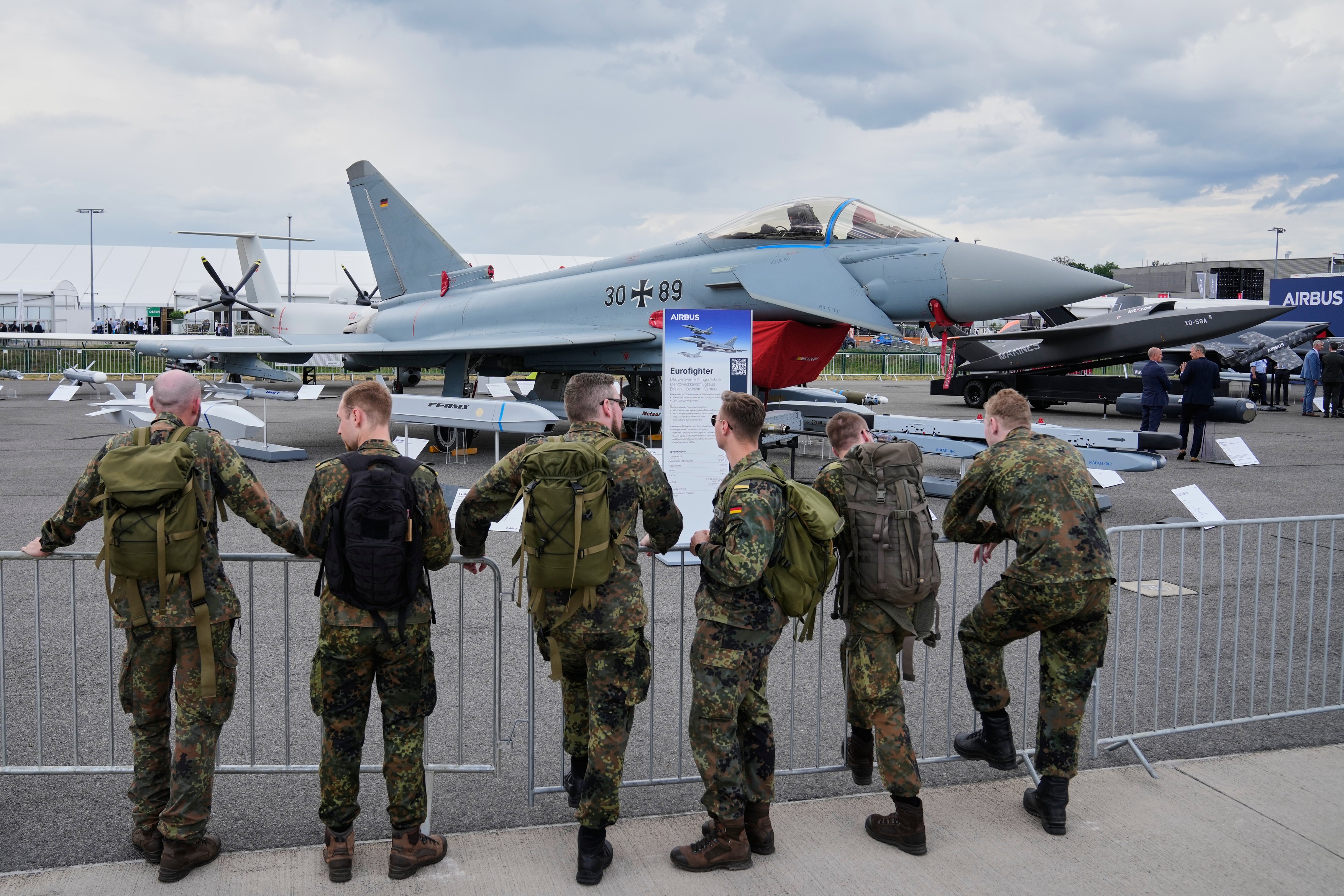
Germany, Europe's economic engine, is often perceived as poorly prepared in the event of a military attack, amid opinion polls that say most Germans are not prepared to fight for their country. A military sociologist explains to Euronews why this picture underestimates the ability of German society to defend itself.
Russia is waging a war of aggression against Ukraine and a hybrid war against Europe as a whole. At the same time, the US is withdrawing from its role as the guarantor of Europe's military security.
In this context, Germany must take more responsibility for the defense of Europe, says Dr. Timo Graf, sociologist and senior researcher at the Bundeswehr Center for Military History and Social Sciences (ZMSBw).
Germany invests heavily in defense and is one of the main military backers of Ukraine in Europe. However, doubts persist about the Germans' willingness to defend their country.
Opinion polls say that a majority of the population is not ready to take up arms in the event of a military attack on Germany. Such conclusions frequently make headlines in the German and international press, unsettle Germany's allies and undermine public confidence in the country's resilience, says Dr. Timo Graf.
A survey contradicts the perception
The sociologist admits that, on average, citizens in the Nordic and Baltic states are more willing to defend their country than in Germany, but says the polls are being misinterpreted.
“To avoid comparing apples and pears, it is necessary to take into account the differences between the defense systems (mandatory military service, voluntary military service or exclusively professional armed forces), as well as the historical experiences of military aggression – and especially the Russian one,” says Dr. Timo Graf.
The sociologist argues that the size of the population must also be taken into account.
“Compared to the Baltic and Nordic countries, Germany benefits from economies of scale. Lithuania has a population of just under three million and Finland less than six million, while Germany has around 83 million,” the researcher added.
The sociologist backs up his argument by citing data from the latest survey conducted by the Bundeswehr Center for Military History and Social Sciences, according to which more than 5 million men and more than 2 million women fit for military service say they would be willing to take part in armed combat.
“Therefore, there is no evidence to indicate an absolute lack of citizens willing to contribute to national defense,” says Timo Graf.
“Defense doesn't just start at the front”
Moreover, the sociologist says, the practical preparation of the population to defend itself cannot be reduced only to the desire to engage in armed struggle.
A country's ability to withstand attack depends not only on soldiers, but also on state, industry, civil defense and societal resilience.
“Not everyone has to serve in the military to make a significant contribution to national defense,” says Graf.
“The Myth of Pacifist Germany”
Since 2000, at least three-quarters of respondents have reported a positive opinion of the Bundeswehr and trust in the German armed forces.
“As of 2022, more than 60% of Germans considered Russia a direct military threat to Germany's security. Before 2022, the figure was only about a quarter to a third of the population (…) Based on this broad societal consensus, an absolute majority supports major financial investments in defense (64%), as well as the reintroduction of military service (53%),” says the sociologist.
Graf also challenges the idea that Germany is a deeply pacifist society.
“Empirical studies on pacifism as a guiding principle of foreign and security policy, based on ZMSBw survey data, show that even before 2022, no more than 27% of Germans could be considered convinced pacifists,” says the researcher
In contrast, a clear majority of at least 60% were pragmatists or realists who considered diplomatic as well as military instruments to be legitimate means of German foreign and security policy.
After 2022, the proportion of pacifists dropped to 13%, while the share of realists rose to almost 70%, according to the ZMSBw survey.
“Germany is the largest economy and most populous country in Europe. In absolute terms, it spends more on defense than any other European nation and is the strongest supporter of Ukraine. The majority of citizens support this policy and see Russia as a direct threat to Germany's security. If Germany itself were to come under military attack, many millions of people would be ready to fight with a weapon,” concludes Dr. Timo Graf.


