Kovesi announces “a landmark ruling” of the EU Court of Justice. Success of the European Public Prosecutor's Office in a dispute with the Court of Auditors of the Union

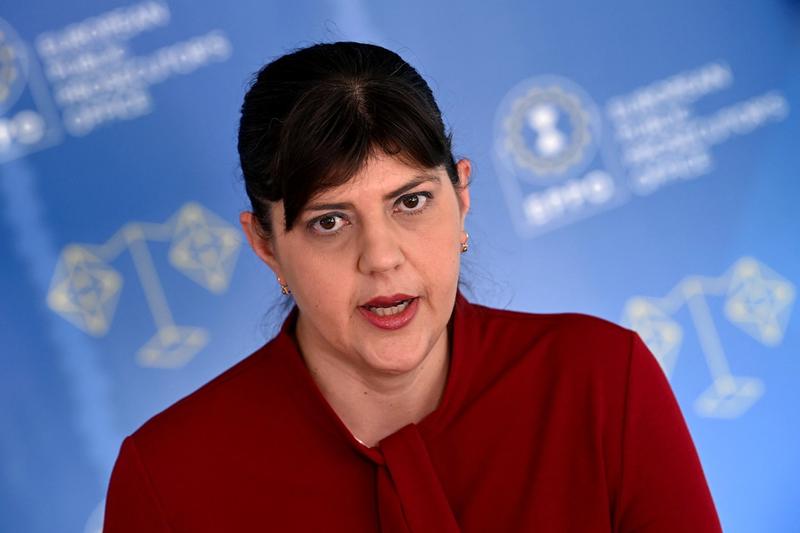
The Court of Justice of the European Union cancels the refusal of the European Court of Auditors to authorize the hearing of its own staff in the framework of an investigation by the European Public Prosecutor's Office (EPPO). The chief prosecutor of the European Public Prosecutor's Office, Laura Codruţa Kovesi, appreciates that it is a landmark decision as it establishes that EPPO investigations are in the interest of the European Union, informs News.ro.
The European Public Prosecutor's Office (EPPO) announces, on Wednesday, in a press release, that the General Court of the European Union annulled the decision of the European Court of Auditors (ECA) to reject the EPPO's request to authorize the disclosure by staff members of information obtained in the exercise of their duties.
Kovesi: Confidentiality cannot block the establishment of the truth
“This is a landmark judgment, the consequences of which will, I hope, be fully understood by all EU institutions, bodies, offices and agencies. The Court of Justice of the EU has made it clear unequivocally: EPPO investigations are in the EU's interest, and the institutions that receive requests to lift immunities cannot determine the conditions under which the EPPO is authorized to carry out these investigations. Confidentiality rules and immunities exist to protect the proper functioning of the institutions, not to to prevent the establishment of the truth”, declared the chief prosecutor of the European Public Prosecutor's Office, Laura Codruţa Kovesi.
According to the EPPO press release, the Court ruled that the “Union interests” that can justify the refusal of permission to disclose information related to the professional activity in judicial proceedings must necessarily be interests of considerable importance, vital for the European Union, which was not evident from the contested decision.
“In addition, the Court clearly ruled that the position of the European Court of Auditors – which linked the hearing of witnesses to the issue of the immunity of the persons subject to the investigation – was based on an incorrect interpretation of Union law”, the quoted press release also states.
“The Court found that the European Court of Auditors has not taken any valid decision and that it is in the interest of the European Union to allow the EPPO to gather additional evidence during the investigation, including through the testimony of officials of the European Union. This decision will allow the EPPO to continue its investigation by impartially gathering evidence in favor of or against the person or persons subject to the investigation and to take any measures that may be appropriate in accordance with the applicable legal framework,” the press release added.
Complaint made a year ago
On April 28, 2025, the EPPO announced that it had filed an action at the Court of Justice of the EU against the refusal of the European Court of Auditors to cooperate in a criminal investigation.
The European Public Prosecutor's Office complained about the decision of the European Court of Auditors to reject the hearing of some of its own employees.
“At the end of 2022, based on a report by the European Anti-Fraud Office (OLAF), the EPPO opened an investigation into persons working at the European Court of Auditors. The purpose of any EPPO investigation is to establish the accuracy of the facts reported, as well as their relevance as a criminal offence, by impartially collecting evidence in favor of or against the person or persons who are the subject of the investigation. In order to be able to do this in this particular case, the EPPO has requested the European Court of Auditors to authorize the hearing as witnesses of a number of staff members”, explained the European Public Prosecutor's Office in the press release.
On December 9, 2024, the European Court of Auditors rejected this request.
Previously, on several occasions, the EPPO requested the European Court of Auditors to authorize a search of its electronic archives and to lift the immunity of the persons targeted by the investigation to allow them to be heard. These requests were also rejected.
“Repeated lack of cooperation”
“This repeated lack of cooperation from the European Court of Auditors has prevented the EPPO from making progress in its investigation, with a view to achieving its objective of establishing whether the allegations are well-founded and whether or not they should be the subject of criminal prosecution before the competent criminal court. In accordance with the applicable rule of the Staff Regulations of the European Union, authorization is required to be heard as a witness, as they will be called upon to disclose information they have knowledge by virtue of their functions at the European Court of Auditors. However, although Union law gives the EU institutions the power to refuse such authorization, its purpose is not to give these institutions a say in the substance of the judicial proceedings,” the European Public Prosecutor's Office stated.
The institution appreciates that, in the European Union, which is a system based on the rule of law, “when a possible crime affecting the Union budget is investigated, it is up to the prosecutor – in this case, the European Public Prosecutor's Office – to gather relevant evidence in accordance with his powers under the applicable criminal procedural law, to evaluate this evidence and to decide whether or not the case should be sent to court”.
The EPPO is the independent prosecutor's office of the European Union. It is responsible for investigating, prosecuting and prosecuting crimes against the EU's financial interests.