EU 2040 plan: The price of carbon will double in the next decade. Romania, vulnerable to disasters

The European Union wants to reset the economic model for the coming years, with a package of measures that could significantly change the daily life of European citizens. A high-ranking official of the European Commission explained to Adevărul the strategic directions of the Community Executive, with an emphasis on a major reform of the carbon market and the accelerated increase in the price of emission certificates, double the current level. He also drew attention to Romania's structural vulnerabilities in the face of extreme climate phenomena.
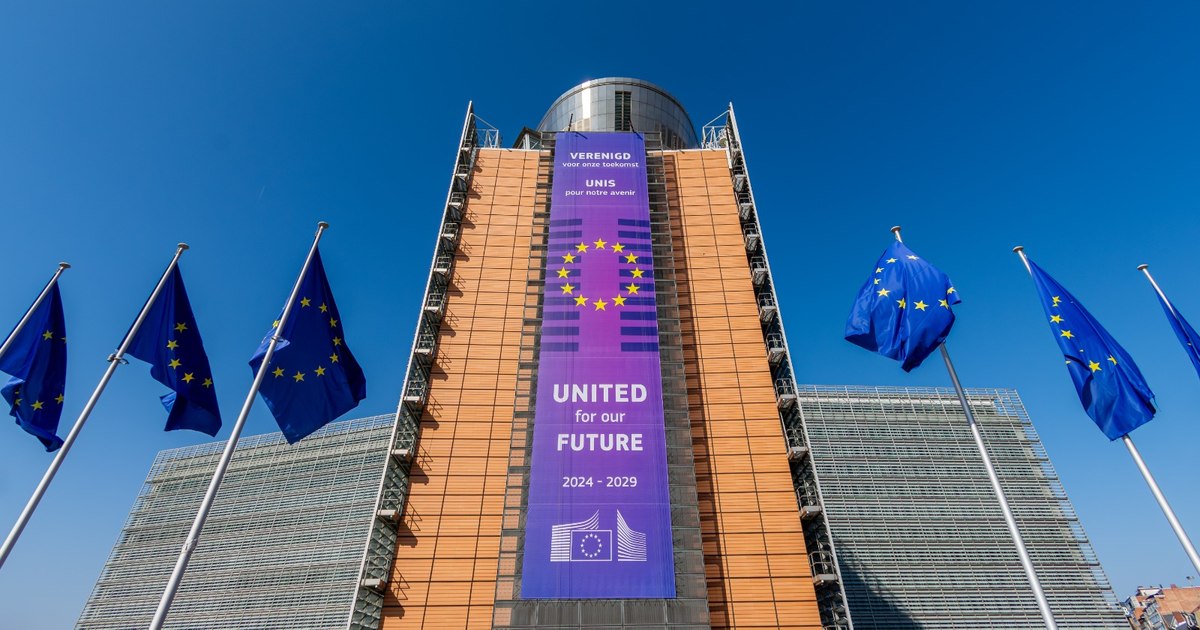
Brussels prepares to reset European economy PHOTO Shutterstock
In the new international context marked by the war launched by the Russian Federation against Ukraine and the instability of global supply chains amid the conflict in the Middle East, the green transition will be reinterpreted in Brussels not only as a climate objective, but also as an element of national security and strategic autonomy.
“Another dimension of the climate agenda, in addition to competitiveness and ensuring a transition that makes the European economy more robust and competitive, is the dimension of security and independence. This is related to what we have already been facing for a long time in the context of Russia's war of aggression against Ukraine. As an example, two weeks ago we had a discussion with military and general experts about the relationship between defense, security and climate change. This concerns both ensuring that our defense capabilities are not affected by dependence on imported fossil fuels, including the ability to operate in the field using, for example, electricity provided by solar panels, as well as the impacts of climate change that are already occurring,” said the European Commission official.
July 15, Key moment: The new climate target and the explosion of the carbon price
The European Commission is preparing for July 15 a legislative proposal to revise the Emissions Trading System (ETS), with an extremely ambitious objective, namely to reduce emissions by 90% by 2040.
“The idea is that by the end of the next decade we will have a significantly higher carbon price. Today the cost of carbon is around 75 euros per tonne. We are working with the assumption that in 10 years the price of carbon will reach around 150-160 euros per tonne. At the same time, however, we know that we will be in a very different situation from an emissions perspective. There will be much less emissions, but where they continue to exist, they will be more expensive. This is the principle on which the ETS works. The system allows for investment to be planned based on the fact that the price of carbon will increase in the next ten years.” explained an official of the European Commission.
Funding and support mechanisms for vulnerable states
In parallel with the tightening of the rules, the European Commission claims that poorer states will benefit from dedicated financial instruments. Romania is directly targeted by these mechanisms.
The Modernization Fund, the new Industrial Decarbonization Bank (estimated at €100 billion) and an additional €30 billion investment acceleration mechanism are presented as pillars of the transition.
Also, the extension of ETS2 to buildings and road transport will be compensated by the Social Fund for Climate, intended to reduce the impact on the population and combat energy poverty.
Another strategic component on the table in Brussels directly targets the link between military security and sustainability. The European official points out that, beyond the devastating ecological impact that armed conflicts directly have on the environment, the new global paradigm forces a rethinking of the way in which military logistics are conceived. The central objective is not only to reduce the carbon footprint of armies, but to increase their resilience in theaters of operations by creating dual structures, capable of operating independently of classic supply networks.
“What we are looking at more in this dialogue with the defense sector is how we can create synergies between what is needed for defense and climate action. For example, dual infrastructure – how to make infrastructure more resilient to climate change. Or, for example, for military purposes, how do we make sure that the generators used by the military are not dependent on imported fossil fuels. Obviously, there is always an impact on the environment – conflicts have a huge impact. If we look at Ukraine, it is very clear. Or the fires in the Strait of Hormuz area – the release of greenhouse gases is massive.” the official explained.
Romania is exposed to climate risks due to infrastructure problems
At the level of Romania, the Commission's assessments indicate significant vulnerabilities in the face of climate risks, including the lack of insurance mechanisms and infrastructure insufficiently adapted to extreme phenomena.
“We also analyzed how much of the damage associated with climate change is actually insured in Romania, and the percentage is only 1%, which means an extremely low insurance coverage of climate risks throughout the country. (…) Regarding the vulnerability of the transport infrastructure, Romania is, not surprisingly, among the most exposed countries. In addition, regarding the railway infrastructure, the fact that Romania is not yet fully integrated into the European Traffic Management System Rail (ERTMS) is a problem. The lack of dynamic information exchange through this system prevents timely decision making and early warning planning for such extreme events.” stated the official from the European Commission.
Climate disinformation
The European official draws attention to the fact that climate policies are increasingly the target of misinformation, in a geopolitical context where climate change is becoming the subject of informational confrontation.
“If we compare these costs with the cost of inaction, with the costs of climate change that is already happening, and if we also take into account the costs of adaptation, we will see that investment in adaptation and reducing greenhouse gas emissions is actually cheaper than the costs of climate change itself. We know that this is not always explained clearly enough by politicians. We also know that there is an enormous amount of misinformation and disinformation, often fed from the outside. We can see that both climate change and climate policies are being used as tools to manipulate and antagonize society against these measures. That's why it's important to put the facts in the foreground.” the official pointed out.