The US is putting pressure on Vilnius regarding Belarusian fertilizers. Lithuania found itself in a trap

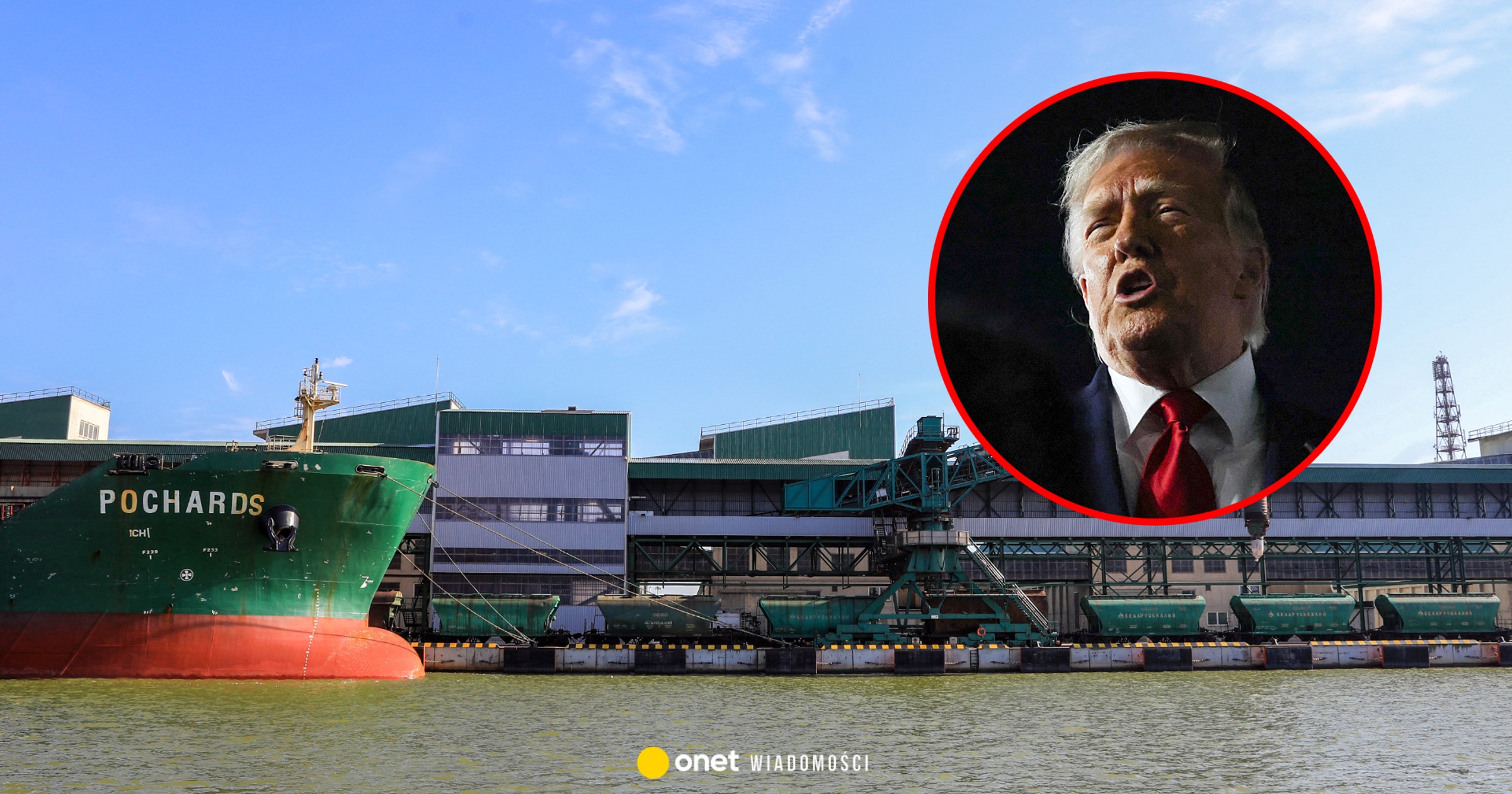
The US claims that the transit of Belarusian fertilizers should be allowed again, because it is necessary for the global fertilizer market and food security.
The transit of Belarusian potash through Lithuania meant exports worth billions of dollars. Klaipėda was not just a convenient route. Transit through Klaipėda was the most important export artery for Minsk. Since 2009, Klaipėda has remained the main transhipment port for Belarusian fertilizers.
It's about much more than just fertilizers
Over the last decade, Belarusian potassium exports have fluctuated within limits 5–7 million tons per year, brought in USD 2–3 billion. (approx. PLN 7.3–11 million) and provided up to 9%. all export earnings of Belarus.
After Lithuania stopped rail transport and transshipment of Belarusian fertilizers through Klaipėda in February 2022, Minsk not only lost the Lithuanian port, which had to be replaced with Russian ones. Lukashenko's level of independence from Moscow has decreased significantly. Instead of a window to the world through Lithuania, the president of Belarus received Russian railways, Russian terminals and a Chinese buyer who can dictate the price. Now there is a chance to regain the route that once provided billions of dollars and made Belarus an important player on the world market.
The proposal from the USA, Lithuania's strategic ally, is: an offer that is virtually impossible to refuse. The problem, however, is not only that it is equally difficult to agree to it. The problem is that since 2020, Belarus has become a de facto territory dependent on the Russian Federation, which the Kremlin uses to exert military and political pressure on Lithuania. Additionally the transit of potassium is prohibited by European Union sanctionsand to lift these sanctions, the consent of not only Lithuania itself, but above all Brussels, is needed.
However, the US is putting public pressure on Vilnius.
Why? It's not all about fertilizers. Fertilizers have become one of the elements of a great geopolitical gamethat we are witnessing.
The administration of Donald Trump, the US president, is striving not only to return Belarusian potash to the market, but also to gain a tool to influence Lukashenko, reduce Minsk's dependence on transit through Russian ports and railways, and at the same time to show Brussels that the strongest cards in Eastern Europe are in the hands of Washington. The US demands are a test of the European Union's political coherence.
Walking on thin ice
Kęstutis Budrys, Minister of Foreign Affairs of Lithuania, admitted that The US is increasing the pressureto allow the transit of Belarusian fertilizers through Lithuania. Ignas Dobrovolskis, adviser to the prime minister, claims that no negotiations are taking place, but at the same time thanks the USA for mediation in matters relating to relations with Minsk.
In turn, Gitanas Nauseda, the President of Lithuania, assures that Vilnius does not feel pressure from the US in connection with the transit of Belarusian fertilizers and sticks to European sanctions.
Valdemar Doveiko / PAP
Gitanas Nauseda, President of Lithuania
At first glance, these statements may seem inconsistent and contradictory. However, if you look closely, you may get the impression that this is it the same message, expressed by different officials to different addressees.
- Lithuania says to Washington: we hear you;
- Vilnius informs Brussels: we continue to comply with sanctions;
- Officials send a message to civil society: there is no secret agreement;
- Vilnius says to Minsk: there is no hope that the pressure worked.
Lithuania found itself in a trap
The Donald Trump administration's strategy is to: “separation of Minsk from Moscow”, begins with demanding that Lithuania pay a political price for Washington's experiment. For Minsk, this is a chance to return to big politics. Lukashenko is not risking anything – he just has to wait.
Vilnius has only two options and both are unfavorable:
- or it will agree to the US proposal – that is, it will enter into conflict with Brussels, undermining the sanctions mechanism against Russia and Belarus;
- or it will refuse – that is, it will incur the wrath of an ally, without whom it is difficult to imagine the defense of NATO's eastern flank.
For a superpower like the USA, this is just another game. For a small country like Lithuania, it is like being a pawn on a large chessboard. That is why US pressure is so painful for Vilnius. Washington is asking Vilnius to open the door, the key to which is held not by Vilnius, but by Brussels. Lithuania cannot open them on its own, it has no right to do so. All she can do is stand in the doorway and explain why the door is still closed.
In chess terminology, the location of Lithuania is the so-called zugzwang: every move means a deterioration in her position.