The consequences of such activities will be far -reaching because the global financial system is closely related. When Washington weakens his financial barriers, others feel pressure to follow in his footsteps, to remain “competitive”. In this way, the “Race to the bottom” begins, which can lead to the instability we have recently observed in 2008.
Today's world is much more fragile – marked by geopolitical conflicts, unstable supply chains, slow economic growth and governments burdened with record levels of debt.
So this time the effects can be much worse.
Financial system as a political weapon
Regulatory independence is of great importance. Independent Polish Financial Supervision Authorities, such as the American Securities and Stock Exchange Commission or the Federal Reserve, exist in order to isolate long -term supervision from short -term political interests. They do not serve presidents or prime ministers – they serve society. However, Trump wants to change this balance.
Pursuant to recent executive ordinances, the Polish Financial Supervision Authorities are now obliged to submit their strategic plans to the White House. Over time, Trump will probably go further, transforming these agencies so that they serve political goals.
It's not just about internal policy. Trump and his allies signaled interest in using the financial system as a geopolitical pressure tool, politicizing access to capital, enforcement of sanctions and financial flows to exert pressure on both allies and opponents.
If the United States follows this path, their financial system will not only become more shaky – it will become a political weapon, increasing financial instability of such a dangerous global landscape.
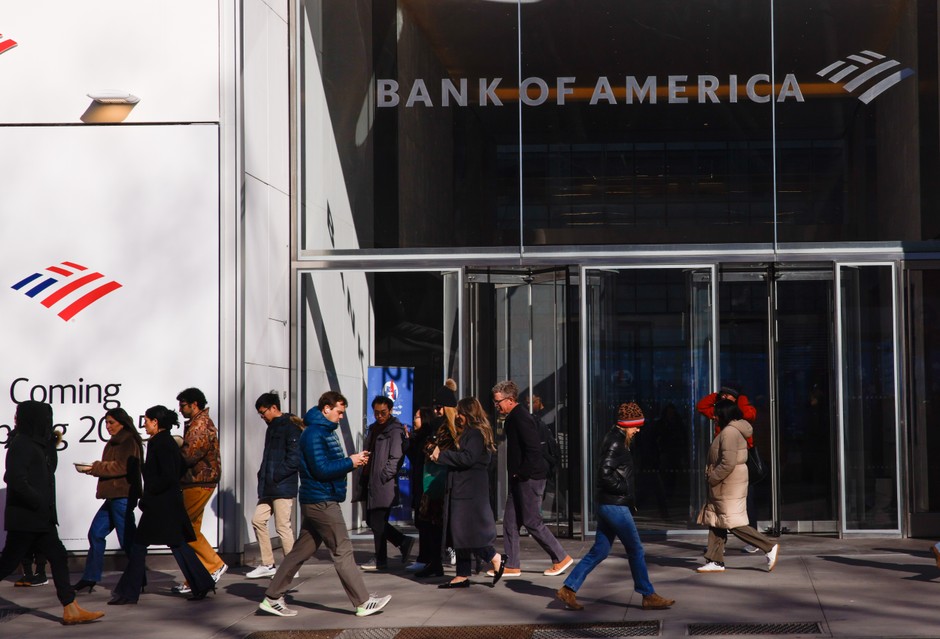
Bank of America Branch in New YorkKena Betancur / Getty Images
American deregulation will not be limited to the United States – its effects are widely heard around the world. For example, when American banks are subject to looser rules, their global competitors will often demand the same. This pressure is already visible. The United Kingdom offers “Brexit dividends” related to milder regulations, and EU officials press the “simplification” of financial supervision.
We have seen it before: in 2023, delays in implementing the US Global Banking Standards “Basel 3” forced Europe and Great Britain to postpone their own implementation. And if Trump again gets into the destruction of supervisory authorities, others may feel forced to follow in his footsteps, not wanting to leave their banks in an adverse situation.
Result? Weakened global financial system, more susceptible to speculative bubbles, crises and expensive government rescue programs.
Disassembly of financial security
But the threat goes beyond the financial regulations, because Trump and his allies openly question the independence of the federal reserve.
Central banks must serve the long -term condition of the economy, not the short -term needs of politicians applying for re -election. However, legal challenges that currently face the Supreme Court may go so far that they will give the White House the right to release members of the Central Bank Board.
Continued article under video material
This is not just a legal issue. If the federal reserve loses its independence, the United States may face higher inflation, currency instability and more frequent crises – these effects are known from countries where central banks have been politicized. And again, the consequences will be felt far beyond the US borders.
So, when Trump threatens to dismantle key financial security, Europe cannot afford inactivity. The EU not only cannot bend under pressure, but also has to fulfill the leadership vacuum that the United States can leave behind.
“Safe marina”
European governments and regulatory authorities must maintain strong, independent supervision. However, this does not mean clinging to outdated recipes. The EU may be a leader by simplifying unnecessary bureaucracy, while offering a stable, predictable environment rooted in the rule of law.
In the uncertain world, global investors are looking for clarity, responsibility and immunity. In the era of growing uncertainty, Europe has a chance to become a safe haven – both in economic and political terms.
This is a choice between stability and crisis. The Trump program for the second term may be presented as “economic freedom”, but its effects may be far from “liberation”. And the world in which financial supervision is politicized and regulations are gutted is a world susceptible to the crisis.
Financial markets develop thanks to trust and predictability. Undermining institutions that provide both is a recipe for global instability.
The rest of the world cannot wait with the reaction. Time for preparation has just come.
Thorsten Beck is the headmaster of the Banking and Finance School in Florence and a professor of financial stability at the European University Institute (EUI).Vasso Ioannidou is a financial economist at the Bayes Business School at City St George's, the University of London.
I’m Ashley Davis as an editor, I’m committed to upholding the highest standards of integrity and accuracy in every piece we publish. My work is driven by curiosity, a passion for truth, and a belief that journalism plays a crucial role in shaping public discourse. I strive to tell stories that not only inform but also inspire action and conversation.