In May this year Greek investigators stopped an inconspicuous car near the town of Komotini in northern Greece and opened the trunk. It contained 25 guns, carefully wrapped in nylon. The weapon was thus protected against moisture and ready for further transport around Europe. Strikingly, none of the weapons had a serial number.
While the number of shootings increases in Berlin, Stockholm, Antwerp, Marseille and Rotterdam, and rival drug gangs increasingly reach for weapons, investigators are observing a new trend: now the illegal weapons market is also flourishing.
The information obtained by the journalists of “Welt am Sonntag”, which comes from Turkish security circles and the findings of the European police agency Europol, is terrifying.
Especially between Turkey and Europe, an increasingly dense network of production, smuggling and distribution of illegal weapons is emerging. And Germany is one of the most important destination countries.
The article continues below the video
The route often passes through the border area between Greece and Turkey and the Meric River, which is called Evros on the Greek side. From there, the weapons go through Greece and the Schengen area to Central and Western Europe. The find in Komotini is not an isolated case: A few months earlier, investigators had discovered 147 pistols and 190 magazines in the Evros region, which were supposed to have been smuggled across the border in transport cases..
The route through Greece is only part of the problem. Despite extensive illegal logistics there, according to Europol Another current smuggling route also remains crucial: the Western Balkans. Weapons from former conflict areas and converted alarm weapons [hukowa] they still reach the European Union via the Balkan route. Many of these weapons originally date back to the wars of the 1990s and are still circulating on the European black market today. However, in addition to old weapons stocks, new production structures are increasingly being created.
Weapons are no longer just smuggled, but produced specifically for the illegal market. Turkish security services now regularly encounter secret workshops and illegal factories. In Pendik, near Istanbul, investigators discovered a production facility with more than 3,000 gun parts and almost 1,900 locks. Subsequent raids in Istanbul, Adana, Sakarya and Konya (all cities in Turkey) revealed thousands of additional components. According to investigators, over 70,000 were seized in Konya alone. individual parts for the so-called ghost weapons.
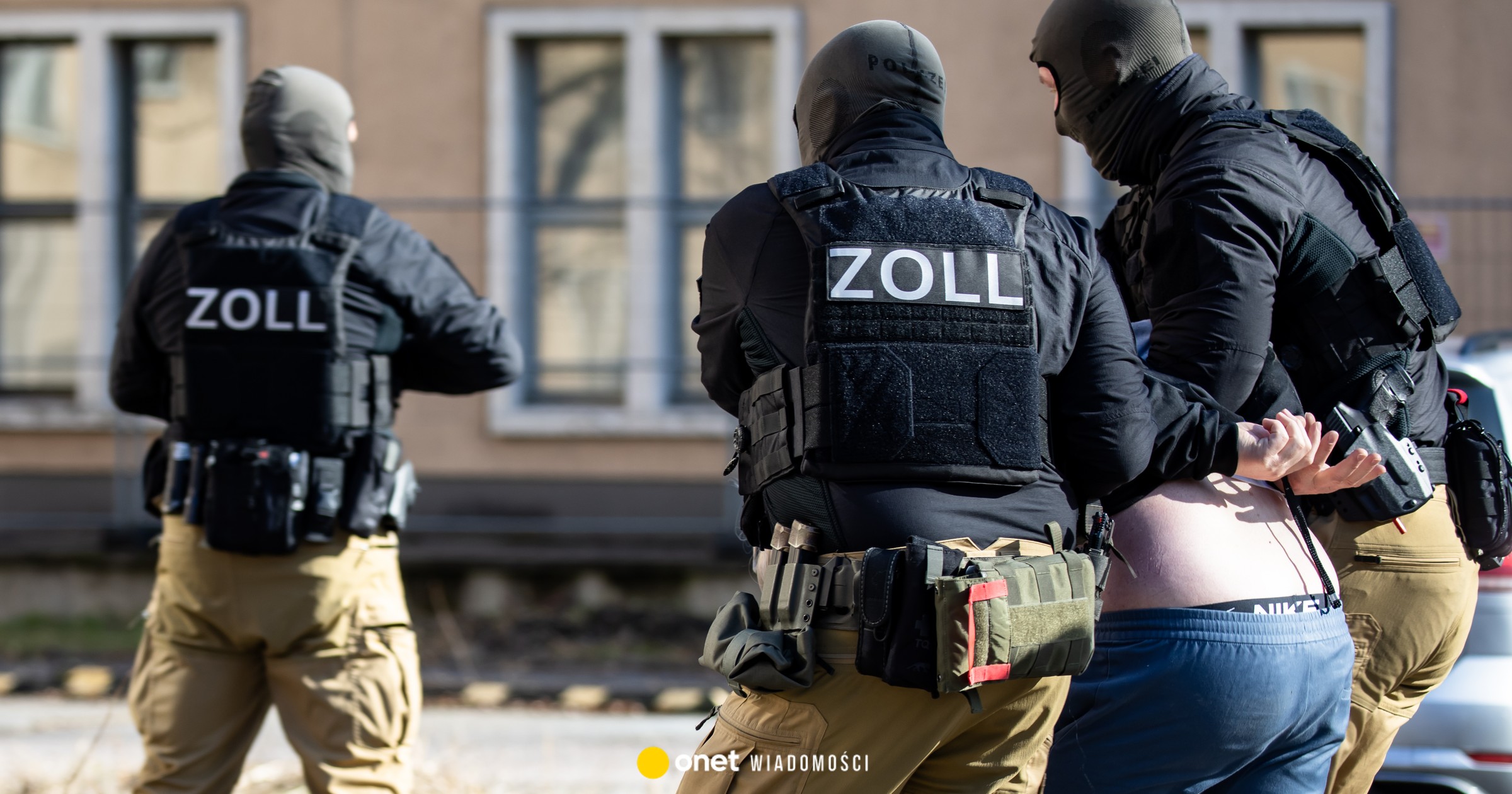
Investigators have been observing for years that Türkiye is increasingly becoming an important center and haven for organized criminal groups. They appear there many times wanted gang leaders, for example from drug networks, mafia groups or the biker community. Weapons from Turkey have recently appeared in Berlin in particular. In response to the increasing LKA violence [krajowa policja śledcza w Niemczech] created a special unit called “Ferrum”. At the same time, the capital prosecutor's office established the “Telum” investigative group. Both units are intended to deliberately combat weapons-related structures and the perpetrators behind them.
“The most disturbing thing is the quantities”
Many of these weapons resemble well-known models from Western manufacturers. Pistols are particularly common they look like Glock weapons. Europol is observing this trend with concern. The agency warns against a new generation of counterfeit weapons. These are high-quality replicas of famous weapon models, which are often difficult to distinguish from the originals in terms of appearance. Unlike known “spirit” weapons, they are apparently produced in much larger quantities.
— The most disturbing phenomenon is the quantities in which these weapons are produced, says a Europol investigator in an interview with “Welt am Sonntag”. This assessment is based on border findings, criminal seizures and findings from ongoing investigations.
There is also a second tendency. More and more often, smugglers do not transport complete weapons, but only their most important elements, i.e. barrels, locks and other parts. These parts are transported across the border separately and only then assembled. Missing plastic elements can be added later. Sometimes 3D printers are used for this purpose. In this way, a hybrid weapon is created that is fully functional and its origin is practically impossible to determine.
According to Europol demand for weapons remains consistently high. The European police agency primarily considers drug networks as its main recipients. Firearms are used to secure drug supplies, intimidate competitors, extort racketeering, and commit intentional acts of violence. At the same time, weapons and drug smugglers often use the same routes.
Frontex warns against ceasefire
However, the security services are not solely concerned with the current arms smuggling route through Turkey. Since the beginning of Russia's war of aggression, European investigators have also been watching the developments in Ukraine with concern. There are currently huge amounts of weapons, ammunition and explosives circulating there.
The deputy executive director of the border protection agency Frontex, Lars Gerdes, recently warned the editorial staff of “Die Welt” about the consequences of a possible ceasefire or peace. Then there would be huge amounts of weapons in the country, and at the same time many people in urgent need of money.
According to Frontex's assessment, Europe may face a situation reminiscent of the period after the Yugoslav wars, but on a larger scale. Then, tens of thousands of weapons found their way onto the European black market, and they partly shape it to this day.
I’m Ashley Davis as an editor, I’m committed to upholding the highest standards of integrity and accuracy in every piece we publish. My work is driven by curiosity, a passion for truth, and a belief that journalism plays a crucial role in shaping public discourse. I strive to tell stories that not only inform but also inspire action and conversation.