4 June 20:20
In Siberia, archaeologists were able to date the burial of a woman and child found in the construction zone of the Kyzyl-Kuragino railway. TASS reports this with reference to the Institute of the History of Material Culture of the Russian Academy of Sciences.
Among the finds, earrings, a fragment of a Chinese mirror, decorations of a horse's bridle and a stirrup inlaid with silver, made in the style of Chinese decorative art, stand out.
“It is quite obvious that this is far from an ordinary burial. This is clearly the burial of the elite. The person who was buried here had a certain high social status, and the set of things found in the burial reflects this status. There are no more than a few dozen such burials in the entire Sayano-Altai region,” the press service quotes the director of the institute, Andrei Polyakov.
The remains of a woman with a newborn child were found in the burial. The ethnicity of the deceased cannot be determined unambiguously. At first, scientists believed that the burial was made in the 9th-13th centuries, but later they clarified that it was the second half of the 9th-10th centuries.
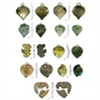
The burial was accompanied by a rare ritual practice – a “horse skin” (the skull and limbs of the animal along with the skin) was placed in the grave. The main find was a set of horse equipment consisting of 78 items, including two stirrups: a ceremonial one with silver inlay in the style of Chinese art of the late Tang era (860-907) and a simple one, typical of nomads.
“This is an almost complete set: bridle decorations, belt ends, scalloped plaques, leaf-shaped silver and tinned pendants, including images of paired predators, gilded buckles – all this finds analogies in very rich ancient Turkic burials with a horse and horse skin. At the same time, we have a very archaic set in front of us. Especially notable are the bronze gilded cheekpieces, which complemented the iron bits with intertwined bits, characteristic of the 9th-10th centuries. This is a very rare combination for the region,” the press service quotes Oleg Mitko, head of the Laboratory of Humanitarian Research at NSU.