As the SVRU notes, Russians have no alternative: sanctions have cut off access to new equipment, and import substitution projects in the Russian Federation have failed.
Without air communication, approximately 60% of the territory of the Russian Federation – the part where neither roads nor railways lead – is actually cut off from the rest of the country, the intelligence team added.
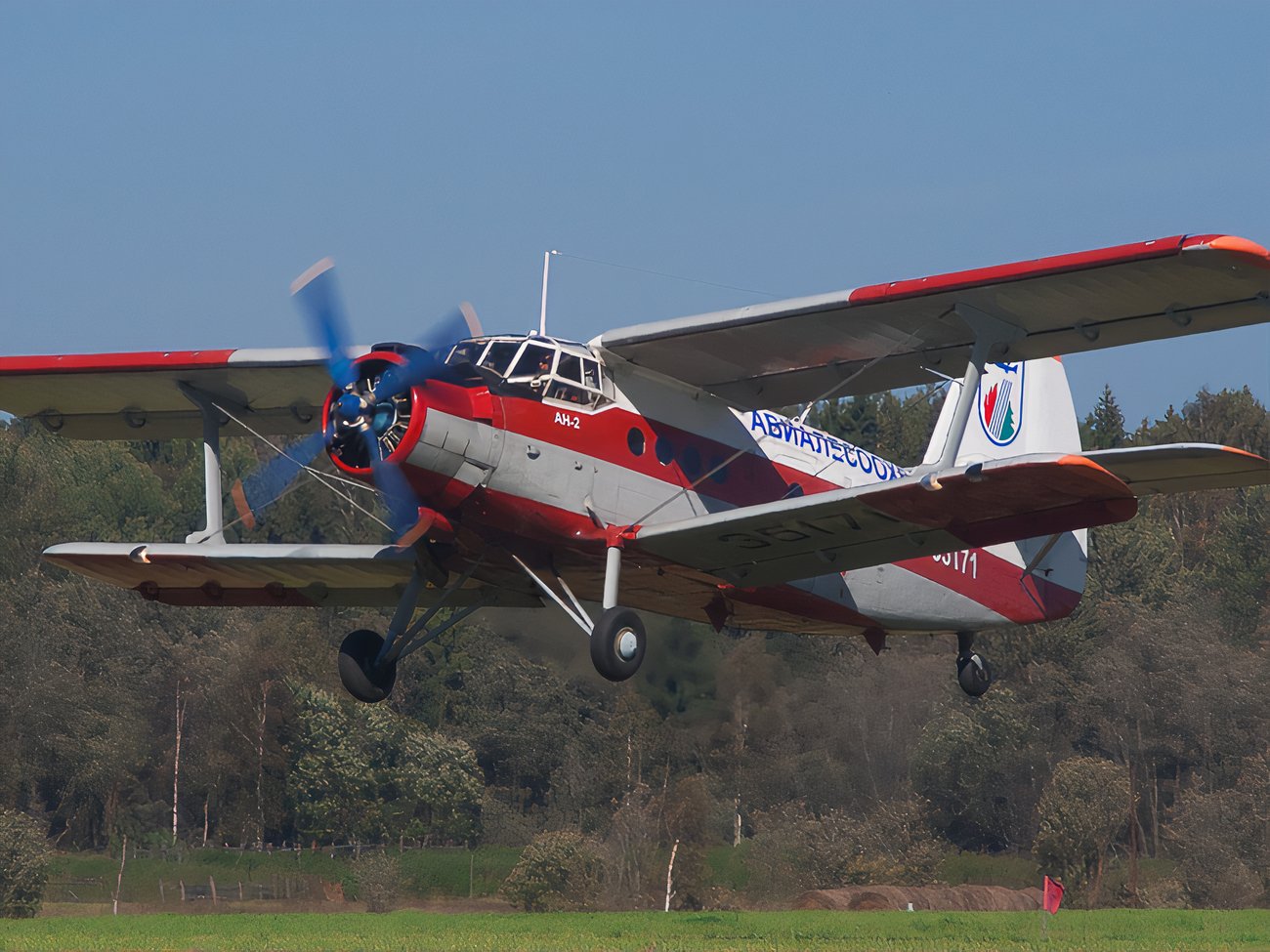
The AN-2, designed back in the 1940s, carried small aircraft for decades, first of the USSR, then of the Russian Federation. Over the entire period, more than 17 thousand aircraft were assembled in several countries, in particular in Ukraine, Poland and China. Most were written off and destroyed long ago, the SVRU said.
Today, according to intelligence data, only 249 aircraft remain in active operation in the Russian Federation; another 276 are listed as available in the Voluntary Society for Assistance to the Army, Aviation and Navy of Russia (DOSAAF). Since 2024, the Russian Federation has stopped the write-off of used cars and returned 16 units to the sky. The issue of passenger safety, as emphasized by Ukrainian intelligence, does not appear in these calculations.
At the same time, attempts in Russia to create modern replacements for the An-2 failed. The deadline for certification of the Baikal aircraft, which was supposed to displace Soviet and Ukrainian aircraft from the small aircraft fleet, has already been postponed several times – first to 2025, then to 2026, and now they are talking about 2027. The reason is technical problems and lack of funding.
Another project, TVS-2MS, a modernized version of the AN-2, which was technically considered a success, was actually canceled in Russia. At the same time, these aircraft will continue to be operated by the Mongolian company MUNKH AERO, but with American engines.
It is the engines that become the main obstacle to the resuscitation of 700 mothballed aircraft. American ones are inaccessible due to sanctions, but the Russian TVD-10B exists on paper and experts cautiously characterize the prospects for its mass production as “rather vague.”
Separately, the intelligence service noted that the initiators of the project claim that the fuselages of used cars are only worn out by a third, but industry experts do not believe this figure.
According to Kommersant, the Russian institute proposed replacing the engines, as well as updating the cockpit and instruments to extend the life of the aircraft until 2100. General Director of the Moscow DOSAAF Aircraft Repair Plant Pavel Nenastev told the newspaper that the cost of restoring one aircraft will be up to 25 million rubles, and the entire fleet – 14.5–21 billion rubles, although the aircraft themselves cost 3.5–5 million rubles. He explained that after 2022, supplies of spare parts from Poland are parallel imports and the parts have risen in price “up to 10 times.”
Context
After the start of Russia’s full-scale invasion of Ukraine on February 24, 2022, the United States and the European Union banned the leasing of aircraft and the supply of spare parts for aircraft used in the Russian Federation.
In August 2022, Reuters, citing its own sources in the aviation industry, reported that Russian airlines, including state-owned Aeroflot, were dismantling passenger aircraft due to a shortage of spare parts caused by sanctions. And in April 2023, it became known that Aeroflot was sending its passenger aircraft to the capital of Iran, Tehran, for maintenance.
On December 11, 2023, the media wrote that the number of aircraft accidents in Russia tripled after the introduction of US and EU sanctions that banned the supply of spare parts and technical support for aircraft.
On January 6, 2026, the Center for Combating Disinformation (CDC) reported that the Russian MS-21 aircraft, which has been in development since 2009, is expected to not go into serial production until the end of 2026. In the CPD, this is due to systemic problems in the Russian aviation industry.